
What Is a Startup and When Does It Stop Being One?
What is a startup, how does it differ from a small business and when does it stop being one? Blank and Ries definitions, growth stages, signs of maturity.
Contents
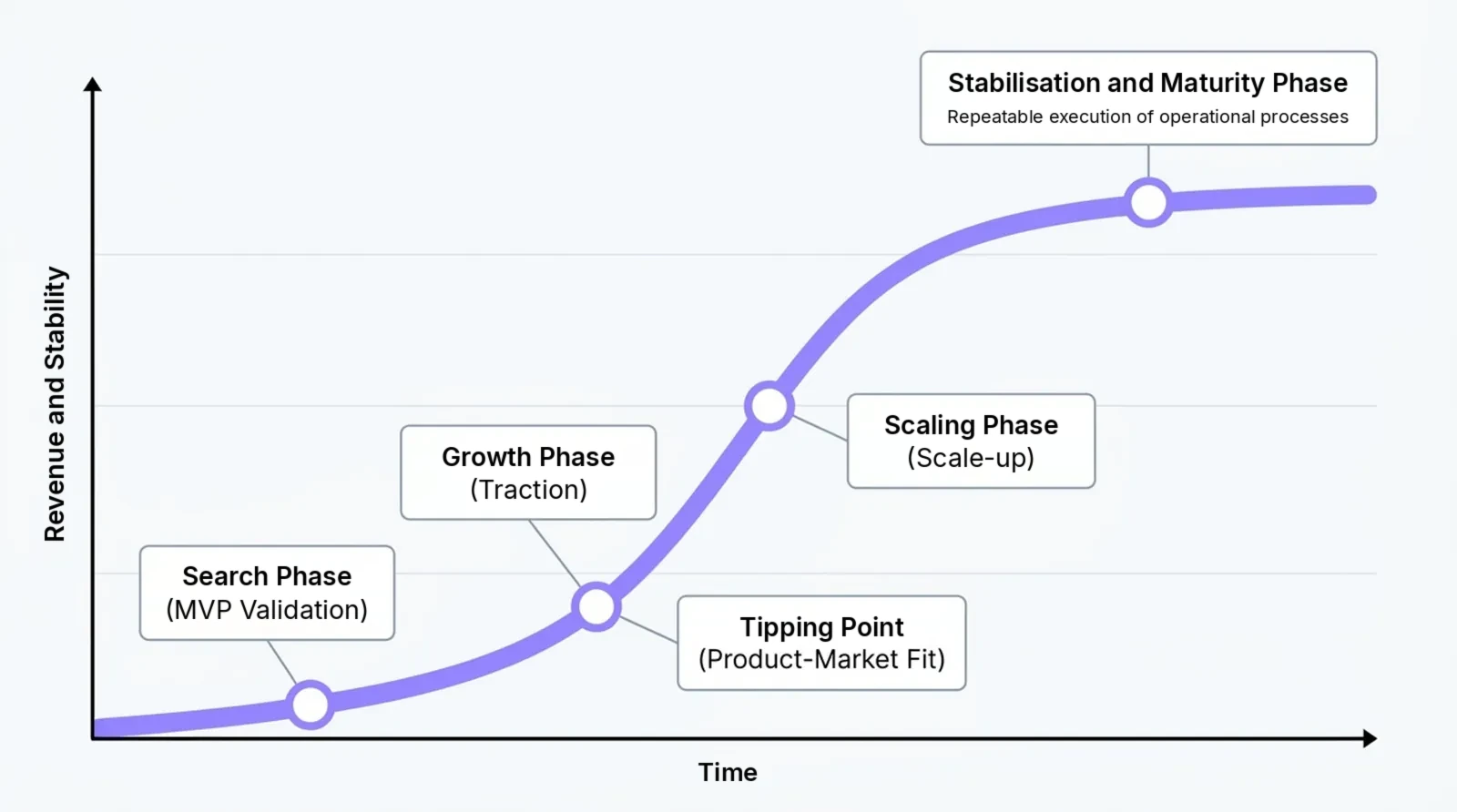
What exactly is a startup, and at what point does it stop being one? A startup is a temporary organisation searching for a repeatable and scalable business model under conditions of high market uncertainty. A company stops being a startup not after a set number of years, but when it ends its search phase: it has confirmed product-market fit, repeatable sales, sorted-out finances and stable operational processes.
What is a startup? Definition and key characteristics
The word "startup" has become a permanent part of everyday business language. However, it is often used too broadly - as a substitute for any small, fast-growing company. That is quite a simplification. Although startups are associated with technology and new ideas, the mere fact of registering a new business does not make it a startup.
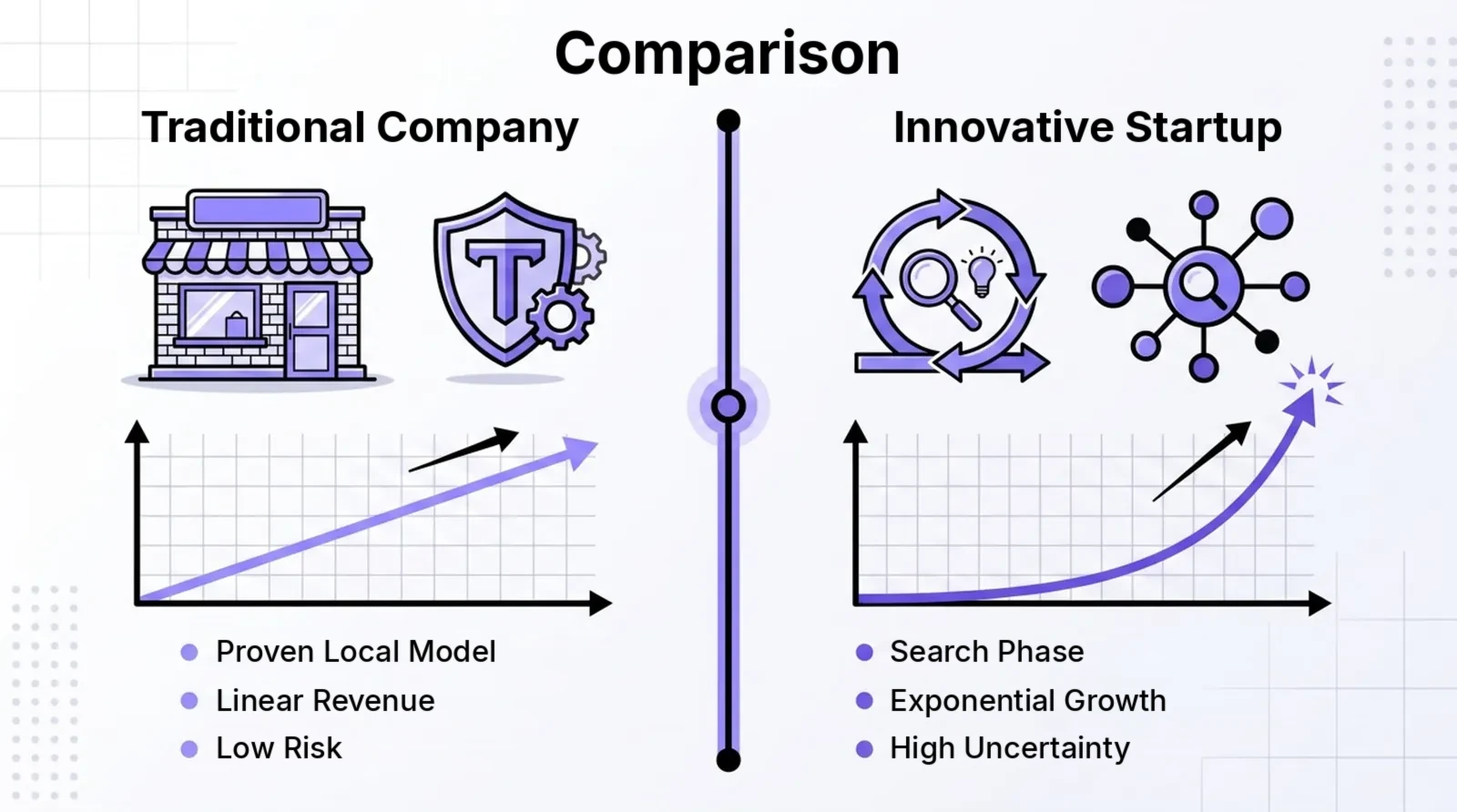
A newly opened grocery shop, a marketing agency or a transport company can grow rapidly and generate excellent profits, but in the strict sense they are not startups. Their operating model is known, proven and easy to replicate. In a startup, the key element is the absence of a ready-made template - the business model still has to be discovered and tested in practice.
Where did the term startup come from and when did it become popular?
The concept of a startup gained popularity with the rise of Silicon Valley. The term came to describe ventures that, instead of copying working formats, created entirely new products, services or ways of reaching customers. Today they are talked about even more often, because many of these projects have genuinely reshaped entire industries.
Practice shows that the definition of a startup depends less on the technology itself and more on the way it operates: what matters is whether the team is still testing hypotheses and collecting feedback, or is already executing a fully predictable plan.
The most important features that distinguish a startup from a traditional company
The basic difference comes down to one fact: a startup is in a phase of building and searching. It is not simply a small company fighting for customers in a known market. A startup acts as a testing ground until it proves that its product makes market sense and can be scaled.
In practice, this involves several elements:
- continuous testing and modification of the product or service,
- frequent changes to the offer, pricing and channels,
- making key decisions with a limited amount of data,
- a high risk that the market will not accept the proposed solution.
Startups stand out for their great flexibility - they can quickly change direction (pivot) when real market data contradicts initial assumptions. They usually start with a low cost base, aiming for rapid growth and expansion into wider markets.
The context of risk also matters. A true startup is a project built by founders who take full business and financial responsibility. An R&D project inside a corporation may create cutting-edge technology, but it does not operate like a startup - a large organisation can cover losses for years, whereas an independent founder has to validate the market quickly to survive.
Why are startups associated with innovation?
An innovative approach makes it easier for young projects to enter the market and compete with established players. It is worth remembering, however, that novelty does not have to mean complex deep tech. It can take the form of:
- a significantly improved product or service,
- a new operational process (e.g. fully automated customer service),
- an unconventional channel for reaching customers,
- a different model of organising work,
- a different monetisation or distribution model.
The point is to offer value that has been missing so far, or to do something familiar in a clearly simpler or cheaper way. A good example is The Point: the social platform did not take off, but Groupon, with its group-buying model, was built on its foundations.
Innovation also works for physical products. A Polish example is Misie Szumisie (a "shushing" plush toy) - a seemingly traditional toy that precisely addressed the real need of parents struggling to get their babies to sleep. This proves that building a startup does not require advanced software to create a new market category.
Which companies can be called startups?
The difference between a startup and a classic new company becomes clear when we look at the approach of two classics of entrepreneurship: Steve Blank and Eric Ries. Their definitions present a startup as a specific stage of business development, not a formal legal category.
Criteria for defining a startup according to Steve Blank and Eric Ries
Steve Blank defines a startup as a temporary organisation created to search for a repeatable and scalable business model. The key word here is "search" - the team does not yet know exactly what will work, so it tests, collects feedback and corrects its course.
Eric Ries, creator of the Lean Startup methodology, puts conditions of extreme uncertainty at the centre. In his view, a startup is a venture building a new product or service where there are no ready-made reference points. In practice, this means that:
- there is no guarantee that customers actually need the solution,
- there are no direct benchmarks to compare results against,
- forecasting results without market experiments is impossible.
That is why a startup has to operate in an agile way: quickly verify hypotheses and draw conclusions from facts, because initial business plans rarely survive contact with real users.
How is a startup different from a small business or a sole proprietorship?
A service outlet, a shop or a construction company operates on models that have been known for decades. Risk still exists, but it is measurable - it is easy to check market rates, costs and customer behaviour at direct competitors.
A startup begins where there is something new in the value proposition, the way the product is delivered or monetisation. Ambition also matters: the goal of a traditional small business is usually to become profitable quickly in the local market. Startup founders focus first on validating and refining the product (MVP), so that they can later scale it dynamically to a large number of customers without a proportional increase in fixed costs.
What stages of development does a startup go through?
A startup is a journey full of changing assumptions. From the founders' perspective, this means constantly collecting data and validating ideas. That is why exchanging experience within a startup community (such as SCP) is so important - it lets you test theory against the practice of other people building companies.
The idea and validation phase
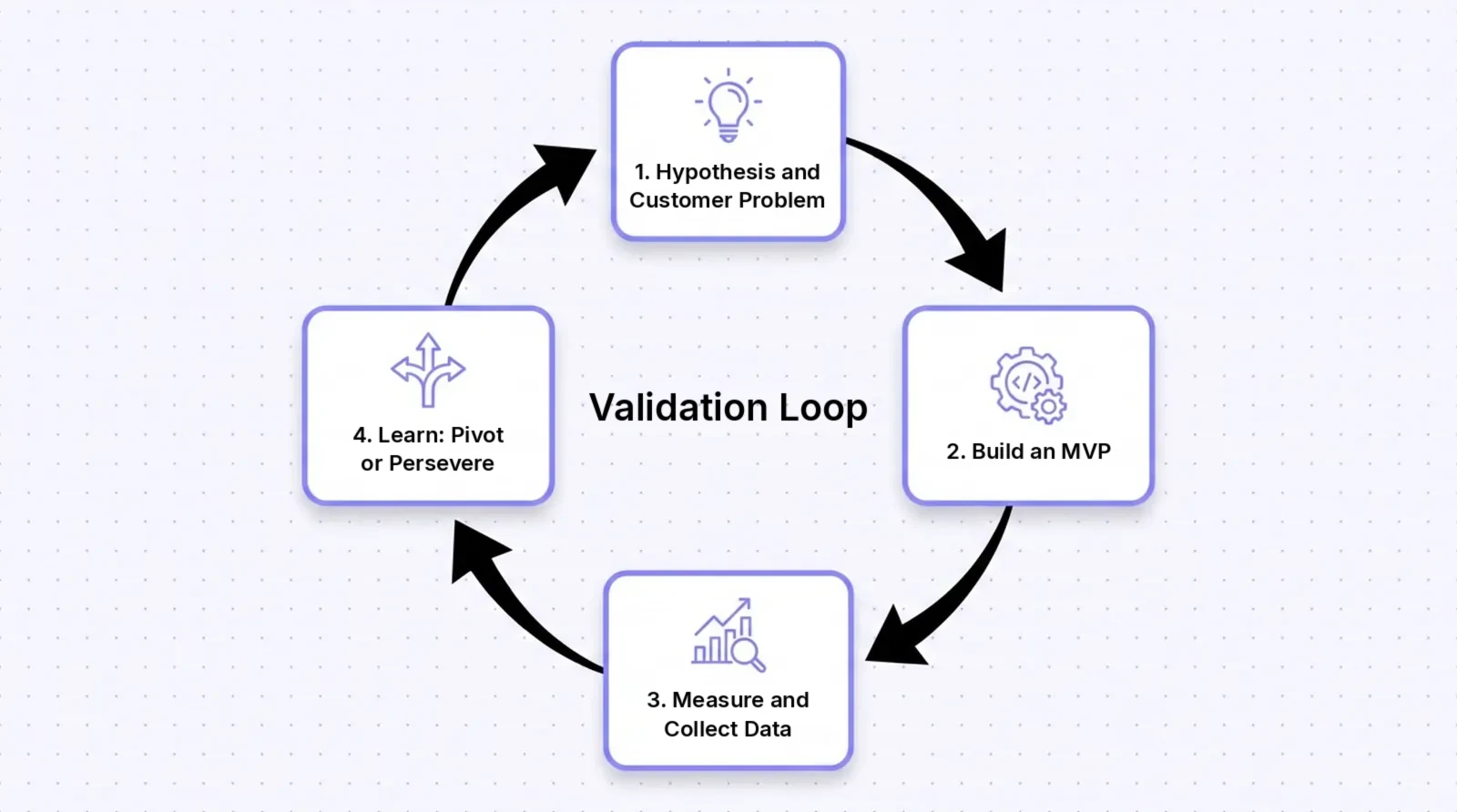
Everything starts with a hypothesis: what problem you solve, for whom, and why someone would pay for it. At the very beginning there is no market evidence. This is the stage of talking to customers, building a simple MVP and checking interest. Research shows that startup founders prototype about 2.3 times more often than traditional entrepreneurs, which captures the experimental nature of this phase well.
Validation is a series of attempts. Sometimes the idea is right but execution fails; other times the market shows no demand at all. The model is then modified or completely reformatted. Mistakes at this stage are natural. What counts is how fast you draw conclusions and make improvements based on honest feedback from users.
The scaling stage
When validation produces hard evidence, the company enters the scaling phase. It reaches product-market fit: demand becomes repeatable, customers come back and recommend the product, and sales no longer depend solely on the founders' own direct efforts.
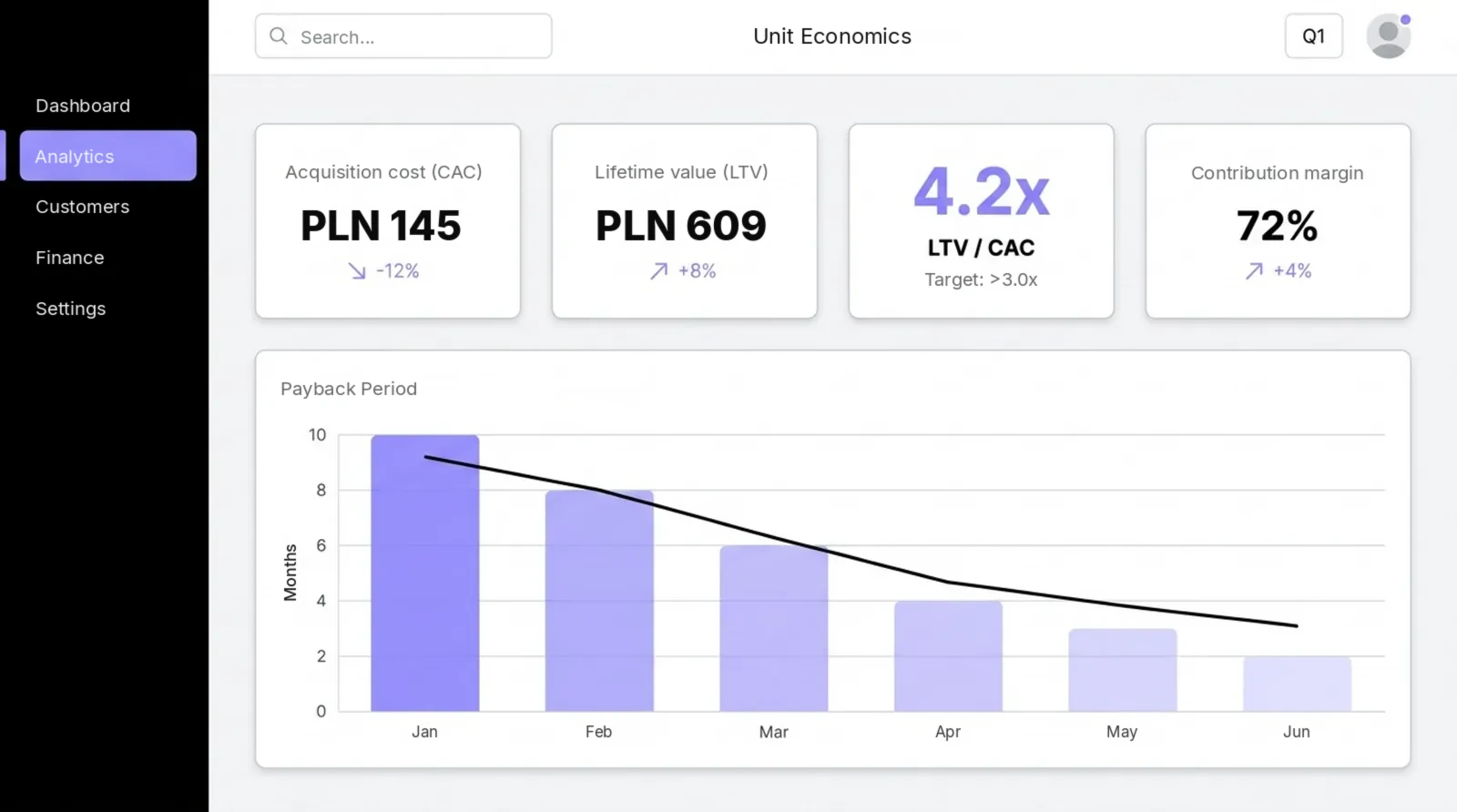
At this stage, precise unit economics become crucial:
| Metric | What it means in simple terms |
|---|---|
| CAC (Customer Acquisition Cost) | The average cost of acquiring one paying customer. |
| LTV (Lifetime Value) | The average revenue a customer generates over the entire period of using the product. |
| Contribution margin | The amount left from revenue after deducting direct costs of sales. |
| Payback Period | The time needed to recover the cost of acquiring a customer. |
With repeatable sales, the organisation stops wandering and starts replicating mechanisms that work. According to Startup Genome reports, companies in the Scale phase often grow by 50-100% a year and employ around 50 people on average. Instead of testing the basics, they invest capital in speed: they structure processes in sales, marketing and customer service so that growth does not require a linear input of the founders' work.
When does a company stop being a startup?
There is no fixed date in the calendar or specific revenue threshold. The transition is a process resulting from the evolution of the model: the company moves from a mode of constant searching to a mode of systematic execution.
The most common signs that the startup stage is over
For founders, the line is the moment when chaos is replaced by repeatability. The product has proven value, the sales process runs on hard data, and future financial results can be planned with high accuracy.
Capital stability appears: the company stops relying on successive rounds from business angels or VC funds, can offer the team market-rate salaries and finance ongoing growth from its own revenue. Investments stop being experiments and become planned expansion of resources, technology and structures.
Other clear signals include:
- achieving lasting profitability (break-even and operating profit),
- a merger with another entity,
- a takeover by a strategic investor (acquisition).
All these events mean that the original experiment has ended and the project has entered its maturity phase.
Scaling, stabilisation and business maturity
Once product-market fit has been achieved, the question changes from "does this work at all?" to "how effectively can we replicate it?". Stabilisation means closing the model and having a precise expansion plan. Depending on the industry, reaching this point takes anywhere from a few months (e.g. in simple SaaS models) to many years (e.g. in biotech or deep tech projects).
If the organisation can acquire customers predictably, maintains a healthy CAC to LTV ratio, and growing scale does not generate uncontrolled losses, we are dealing with a mature company.
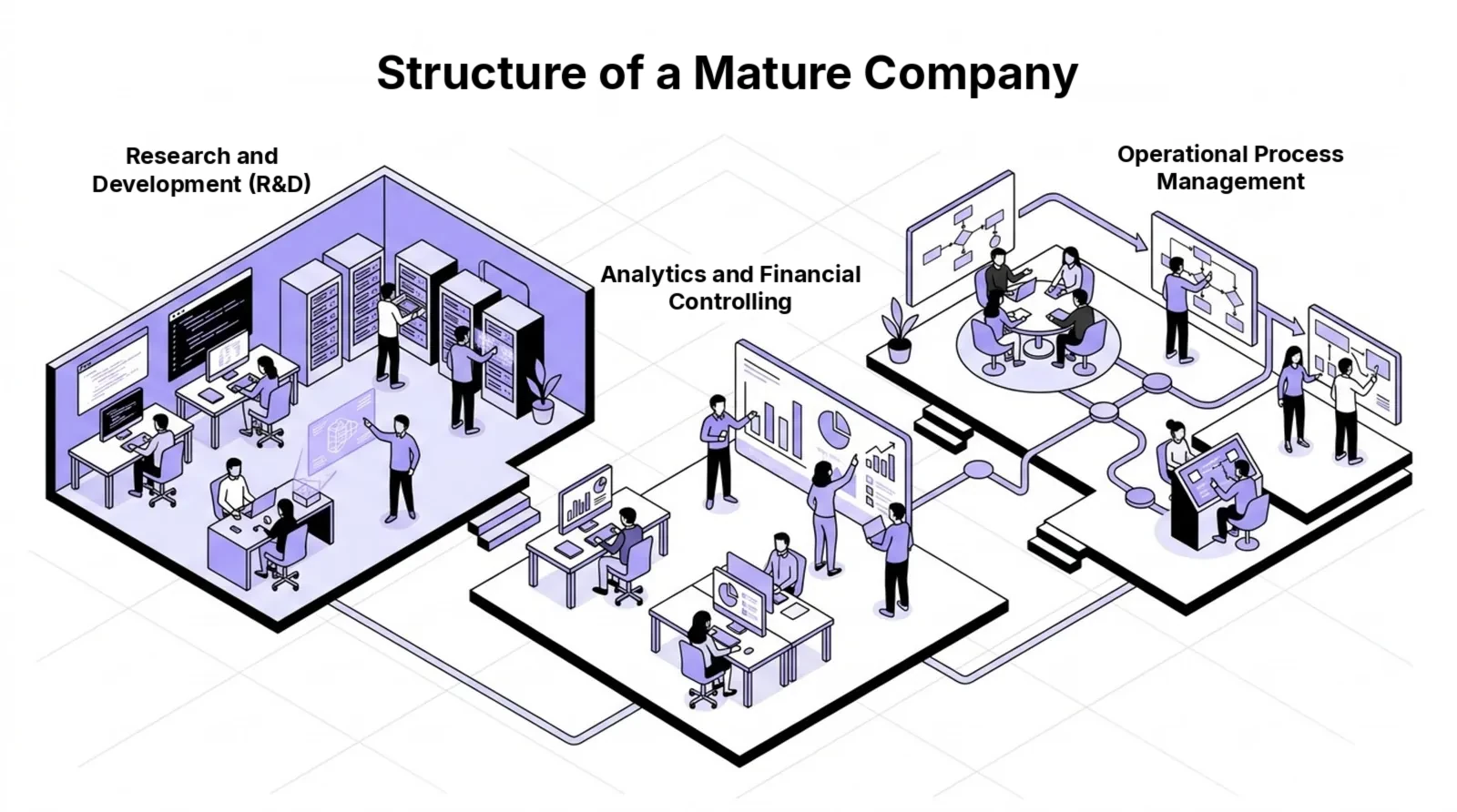
Such an organisation has a permanent management structure, defined departments, clear budgets and repeatable procedures. Market risk does not disappear, but it concerns margin optimisation, defending against competitors and managing people, not whether the product should exist at all. The difference therefore comes down to a simple division: a startup searches for a model, a mature business executes it.
Does every startup turn into a company?
No. The risk of failure is built into building a startup. The market may reject the value proposition, capital may run out before the right model is found, and macroeconomic changes may render the original assumptions obsolete. Shutting down at an early stage is a natural part of the ecosystem.
The end of the startup stage can take various forms:
- selling the technology or the team (acqui-hiring),
- a takeover by a larger player in the industry,
- deliberately slowing growth in favour of a stable, smaller company that is profitable locally,
- closing the project after unsuccessful validation.
So the end of a startup does not always mean the birth of a corporation. Whatever the outcome, this journey gives founders real experience. Direct contact with other entrepreneurs in the community makes it possible to diagnose problems faster and avoid typical pitfalls at each of these stages.
Differences between a startup and a mature company
The transition to a mature business requires a complete change in the way it is managed. The team's priorities, sources of revenue and methods of managing risk all change.
Independence, risk and uncertainty - how does the business environment change?
At the startup stage, freedom of decision goes hand in hand with daily uncertainty. Founders make decisions without ready-made procedures and regularly change product assumptions. The lack of predictable demand and a limited runway force a fast pace of work, which creates an opportunity for dynamic growth but also carries the risk of suddenly running out of resources.
In a mature company, the priority becomes repeatability and predictability. Risk is managed through processes, financial controlling and strategic planning. Instead of constant plot twists, what matters is cost optimisation, customer retention and operational quality. Early-risk investors give way to partners supporting long-term growth in scale.
Innovation and pace of growth after the startup phase
In the early phase, an innovative approach aims to win a place in the market. The team tests bold hypotheses and strives to verify assumptions quickly, before the money in the account runs out.
In an established company, innovation takes an evolutionary form: it consists of gradually improving features, optimising infrastructure and raising the standard of service. The company invests in specialised staff, R&D departments and systematised procedures. Growth may still be high (especially at the scaleup stage), but it now comes from a well-oiled sales machine rather than ad hoc experiments.
Summary - what to remember about startups and the transition to a mature business
A startup is not a marketing label, but a specific stage of building a company under conditions of uncertainty. It is a period of intensive validation, product testing and searching for a repeatable business model. At this stage, founders verify market hypotheses, drawing on support from mentors, knowledge from workshops and relationships built in the local community.
The transition to a mature business can be checked with a few simple questions:
- Do we have a precisely defined group of customers who consistently pay for the product?
- Is the sales process repeatable, and do unit metrics (CAC, LTV, margin) generate profit?
- Does the operational structure allow growth in scale without constant improvisation?
- Has the organisation's priority become replicating a proven mechanism instead of searching for a new value proposition?
When the answers are yes and backed by data, the company stops being a startup. Raising a funding round from a VC fund is only a tool that speeds up this process, not a marker of maturity.
It is worth remembering that the end of the startup stage varies - from building a stable tech company, through selling the business, to closing an unprofitable project. The entire startup ecosystem in Poland grows thanks to supporting initiatives (from PARP - the Polish Agency for Enterprise Development - programmes to global competitions such as Chivas The Venture, which in 2017 allocated USD 1 million to projects with a positive social impact). Transactions involving mature Polish tech companies, such as ElevenLabs and ICEYE, confirm that investors and the market clearly distinguish the search stage from the phase of mature business scaling.
Keep reading
All articles →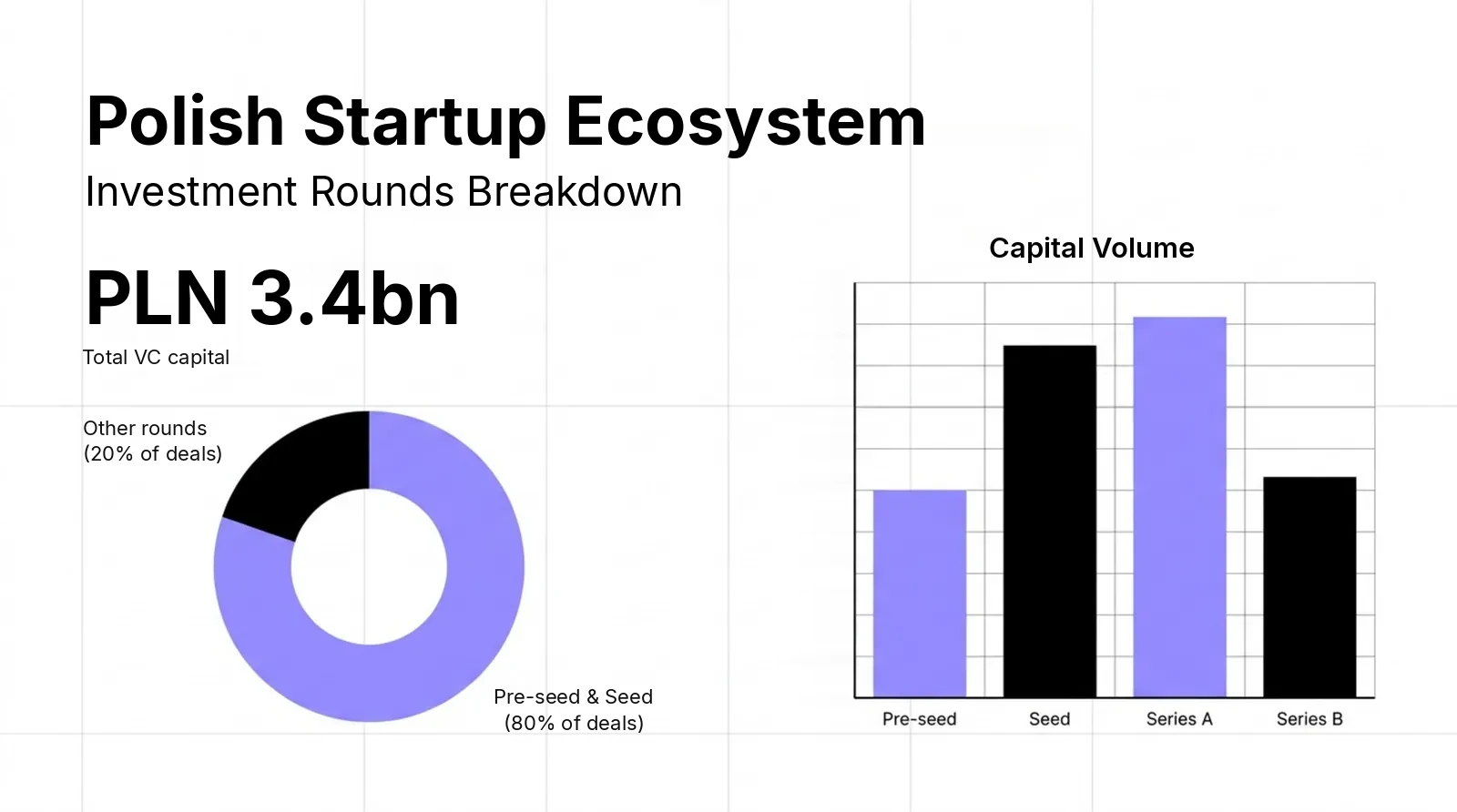
Startups in Poland 2026: The Ecosystem and Its Biggest Players
Startups in Poland 2026: key cities, VC funds, business angels, unicorns and support programmes. See how the Polish startup ecosystem really works.
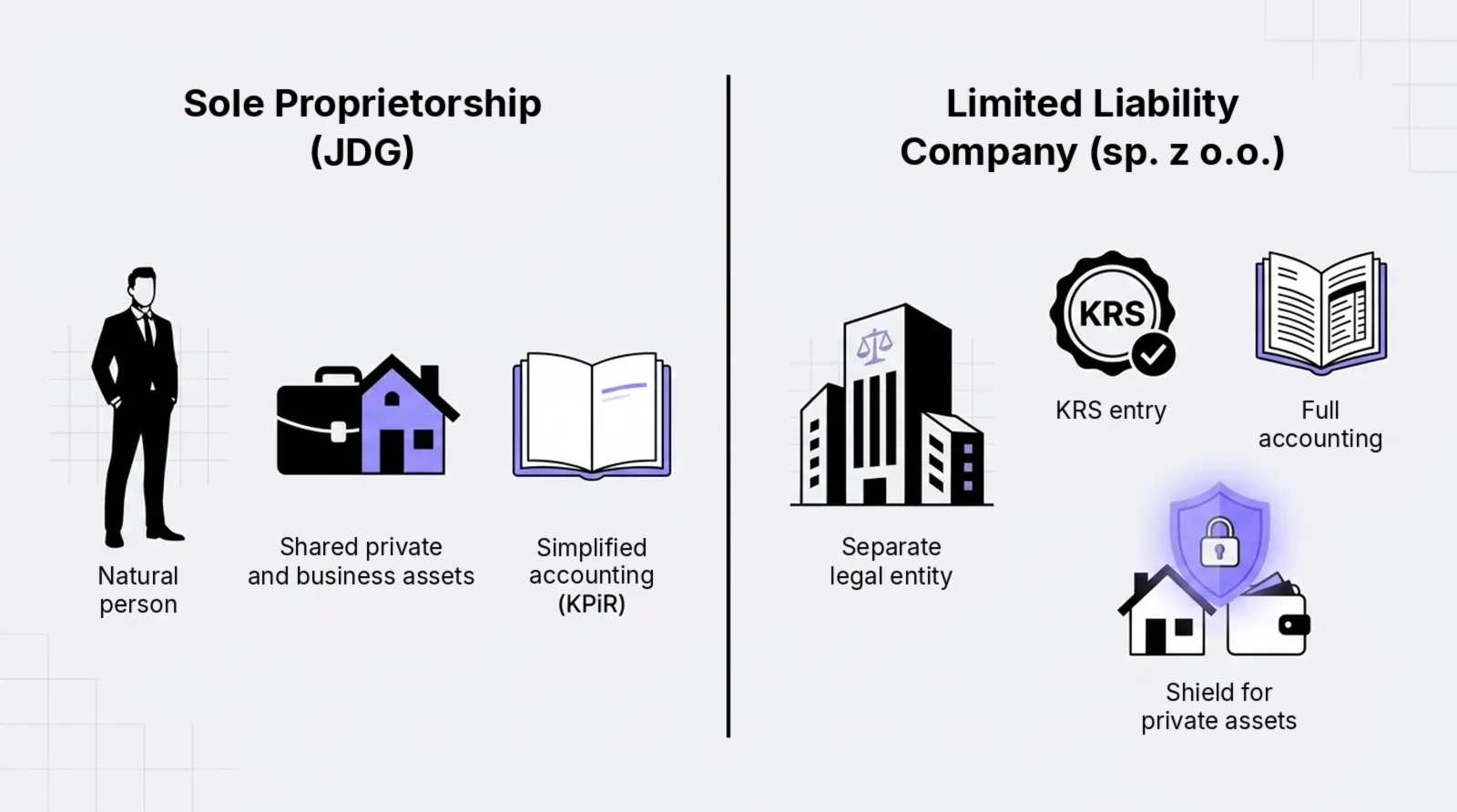
Cost of Starting a Company in Poland: Sole Proprietorship (JDG) vs sp. z o.o.
What does starting a company in Poland cost? Compare JDG and sp. z o.o.: registration fees, accounting, ZUS, taxes and a realistic startup budget.
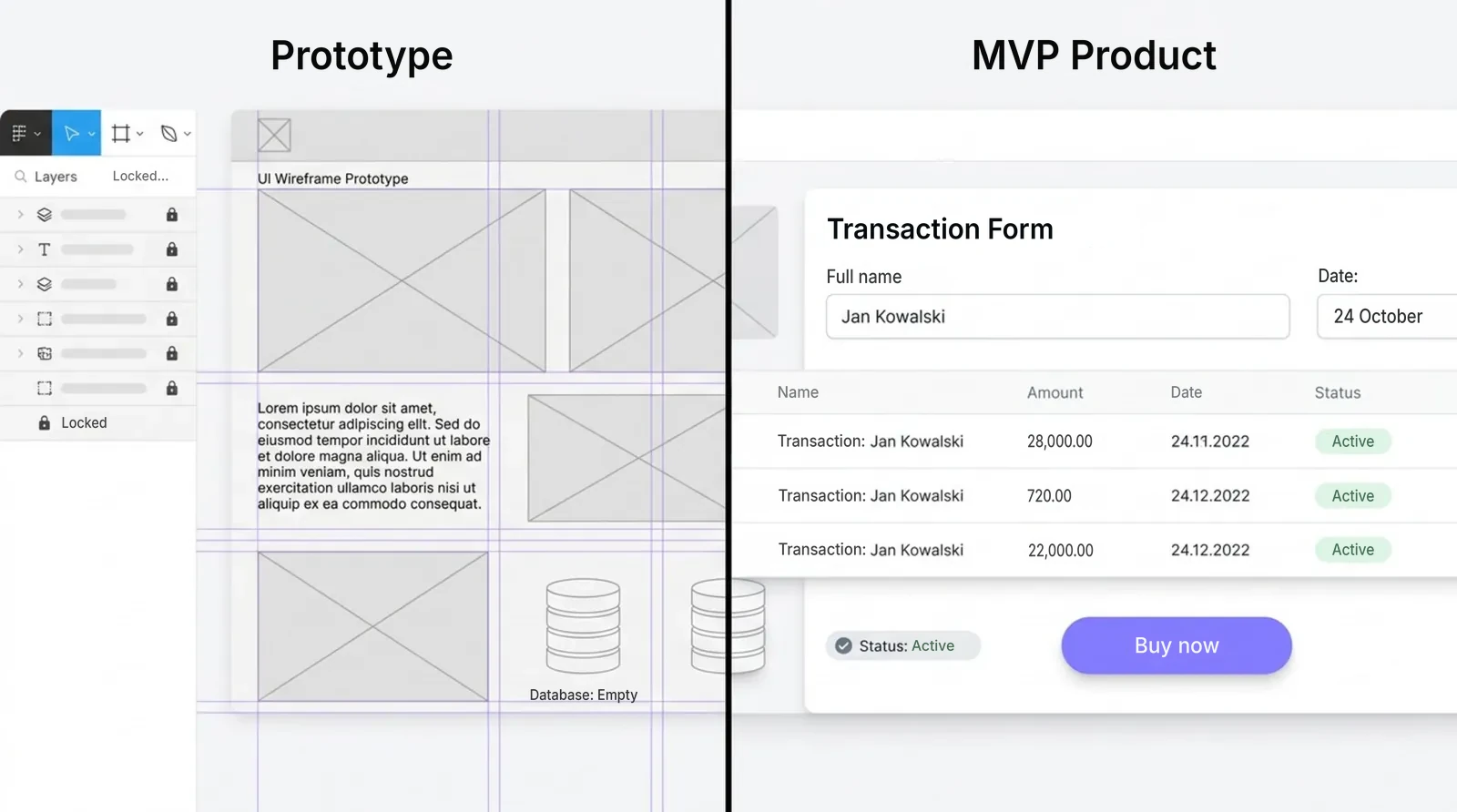
How to Build an MVP Without Losing Your Mind: A Practical Guide
How to build an MVP step by step: definition, process, key metrics, common mistakes, legal basics and examples of companies that started with an MVP.