
Product-Market Fit: How to Know Your Startup Has Found It
Product-market fit explained: the signals and metrics that show your startup has it, the red flags of missing it, and a step-by-step plan to find it.
Contents
How do you check whether your startup has product-market fit? Put simply: customers pay regularly, come back and recommend the product of their own accord, and the market generates demand by itself without you constantly pumping money into ads. It's the state in which, instead of trying to force the market to buy, you focus on handling real interest and delivering value.
What is product-market fit in a startup?
Product-market fit (PMF) is the moment when a product meets a specific, urgent need of a defined group of customers so precisely that the company can grow in a repeatable way. In practice, you see it in user behaviour: people use the product regularly, stay longer, pay and recommend it within their networks. Lack of PMF is the most common reason startups burn through capital and shut down. If you're building a company rather than a hobby project, market fit is your first validation goal.
Key definitions of product-market fit by Marc Andreessen, Steve Blank, Ash Maurya, Sean Ellis and Rahul Vohra
PMF can be described from several perspectives, depending on how you approach building a business. Marc Andreessen (Netscape, Andreessen Horowitz) popularised a simple definition: it's the state of being in a good market with a product that can satisfy that market. The key takeaway: in a receptive market, demand pulls the company's growth, rather than the founder forcibly pushing the offer.
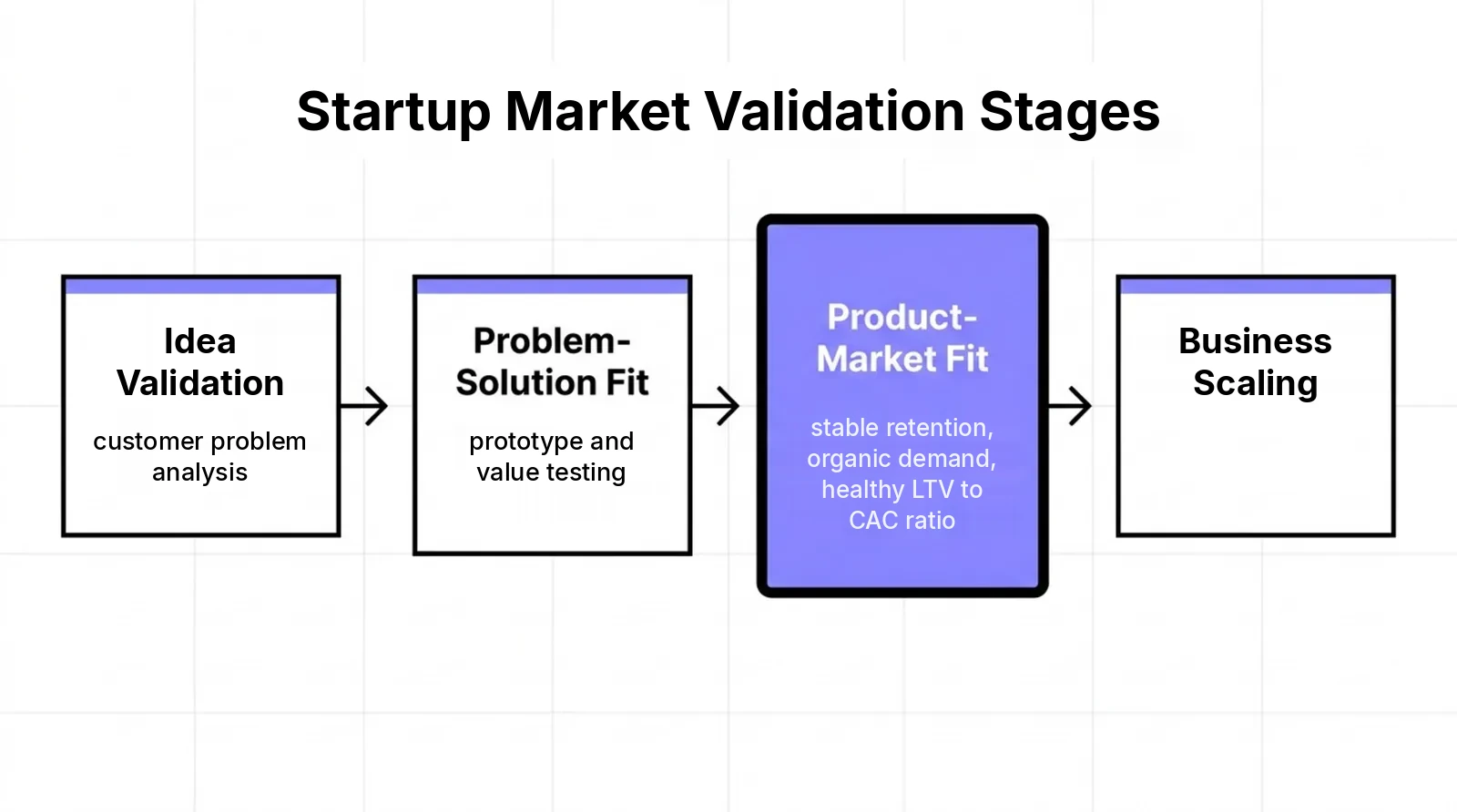
Steve Blank and Eric Ries (Lean Startup) focused on the process of reaching that state. They showed that PMF isn't created at a desk - it's forged in direct conversations with customers, hypothesis testing and continuous validation loops (build-measure-learn). Ash Maurya refined this path: first you confirm that the problem is real and painful (problem-solution fit), you check that the solution works, and only at the end do you verify market fit with numbers. This approach protects you from declaring success too early.
Sean Ellis (GrowthHackers) created a simple test based on the 40% rule. You ask users one question: "How disappointed would you be if this product ceased to exist?". A result of 40% or more "very disappointed" answers is a solid signal of fit. Rahul Vohra (Superhuman), in turn, noticed that PMF rarely applies to the whole market straight away. Usually the product is indispensable for a narrow group of core users, while for everyone else it remains optional. Vohra recommends refining the product primarily for this most engaged group, instead of diluting it for everyone.
How is product-market fit different from market validation and problem-solution fit?
Confusing these stages leads to wrong decisions and premature scaling. Idea validation only checks whether the defined problem actually exists and whether anyone is looking for a solution to it. It's the stage of initial hypotheses. Problem-solution fit goes a step further: it confirms that your specific solution addresses this problem and that the first users see the point of it.
PMF is hard proof: the market chooses your product, uses it regularly, pays market rates for it and doesn't want to give it up. Validation works with declarations, while PMF works with repeatable behaviours and financial metrics. You can have a validated problem and a working demo and still be far from market fit. With PMF, the market takes the initiative and pulls the product in.
Why does product-market fit decide a startup's success?
PMF is a hard condition for survival. CB Insights data shows that 35-43% of startups fail precisely because there is no market need. Without fit, a company falls into the valley of death: costs rise, sales are an uphill struggle, and cash melts away faster than revenue comes in. Investing in marketing and sales at this stage is like pouring water into a leaky bucket.
Once you reach PMF, the dynamics of your work change completely. Sales become repeatable, marketing delivers predictable results, and conversations with VC investors are based on hard traction rather than promises alone. This is the moment you stop just experimenting and start building scale safely.
How do you recognise that your startup has reached product-market fit?
You don't judge market fit by a single spike in your stats, but by a set of consistent, repeatable signals. The point is to check whether the market really needs the product and confirms it through action - not whether you managed to buy temporary traffic with a paid campaign. Real PMF shows in user habits and stable retention metrics.
In practice, you check four layers of fit: problem-solution fit (solving a real problem), behavioral fit (regular, habitual use of features), economic fit (healthy unit economics) and distribution fit (the ability to acquire customers repeatably without driving costs up). Only when these four elements work together is it time to scale.
The most important signals of product-market fit
You can see fit when customers buy the product, use it regularly, renew their access and bring in more users - and the business grows without the founders having to close every deal by hand.
High retention and returning users
Retention is one of the most unforgiving PMF indicators. It shows how many users come back to the product without constant reminders via notifications or remarketing. If you keep more than 30-40% of active users after 30 days, you have a strong foothold. The shape of the cohort retention curve is key: after the initial drop-off of casual users, the curve should flatten and run parallel to the time axis.
Analyse cohorts broken down by acquisition channel and customer segment. An aggregate average can blur reality - old cohorts can artificially inflate the result while new users quickly abandon the tool.
Organic recommendations and viral growth
When customers recommend the product to industry contacts on their own initiative, and the share of organic and referral traffic grows in your reports, you're looking at a clear signal of fit. It means the product's value is high enough that users are willing to put their own name behind it. At this stage, acquisition no longer depends solely on your ad budget.
Customers don't want to lose the product (NPS, reactions to outages)
How your user base reacts to a service outage can be an invaluable source of insight. If support is immediately flooded with dozens of questions from impatient customers during an outage, the product has become a key part of their daily work. Net Promoter Score works in a similar way: a consistent score above 50 points indicates high satisfaction and willingness to recommend.
It's worth asking customers a simple question: "What exactly will change in your company if we switch this tool off tomorrow?". If the person names specific losses in time, money or process security without hesitation, you're delivering real value, not just an optional add-on.
Falling churn and low attrition (below 5% per month)
The churn rate shows how many customers decide to leave. In SaaS models, churn below 5% per month is a good result, and below 3% means very strong attachment to the product. The direction of change matters most, though: steadily decreasing churn proves that the product is getting better and better at solving your customers' problems.
In B2B SaaS, Net Revenue Retention (NRR) becomes a key metric. A result above 100% means that revenue from a given group of customers grows over time (e.g. through plan upgrades or buying additional licences) faster than it's lost through cancellations. Benchmarks vary by business model, so always compare yourself with companies with a similar profile.
CAC falls, LTV rises - growth metrics
With clear PMF, customer acquisition cost (CAC) usually decreases, because the product gains recognition and support from referrals. At the same time, customer lifetime value (LTV) grows, because users stay longer. The standard healthy benchmark is an LTV to CAC ratio of at least 3:1, and the CAC Payback Period in SaaS should be under 12 months.
Demand exceeds supply - customers buy the product on their own
When you meet the market's needs, the sales dynamics change. Instead of hunting for customers, you're dealing with a flow of inbound enquiries, a calendar full of demos and referral sign-ups. The sales process gets shorter because customers come with a clearly defined need, and your main challenge becomes handling the growing volume efficiently.
Sean Ellis's 40% rule as a PMF measure
The Sean Ellis test comes down to a simple survey question: "How would you feel if you could no longer use this product?". There are three answers to choose from: "very disappointed", "somewhat disappointed" and "not disappointed".
If at least 40% of active users choose "very disappointed", you have a strong indication that the product has PMF. Keep the context in mind, though: the survey measures declarations, and it's mostly active users who fill it in. Treat this result as a filter that helps you identify your most engaged customer segment, and always compare it with hard data on retention and payments.
What signals point to a lack of product-market fit?
Lack of fit is a state in which, instead of building repeatable growth, a startup keeps fighting for individual deals while incurring high operating costs. Understanding these symptoms helps you avoid convincing yourself of success against the facts.
A typical symptom is chaos in the Go-To-Market strategy: testing too many segments in parallel, constantly changing messaging and no repeatable buying patterns. Below we've collected the most common red flags.
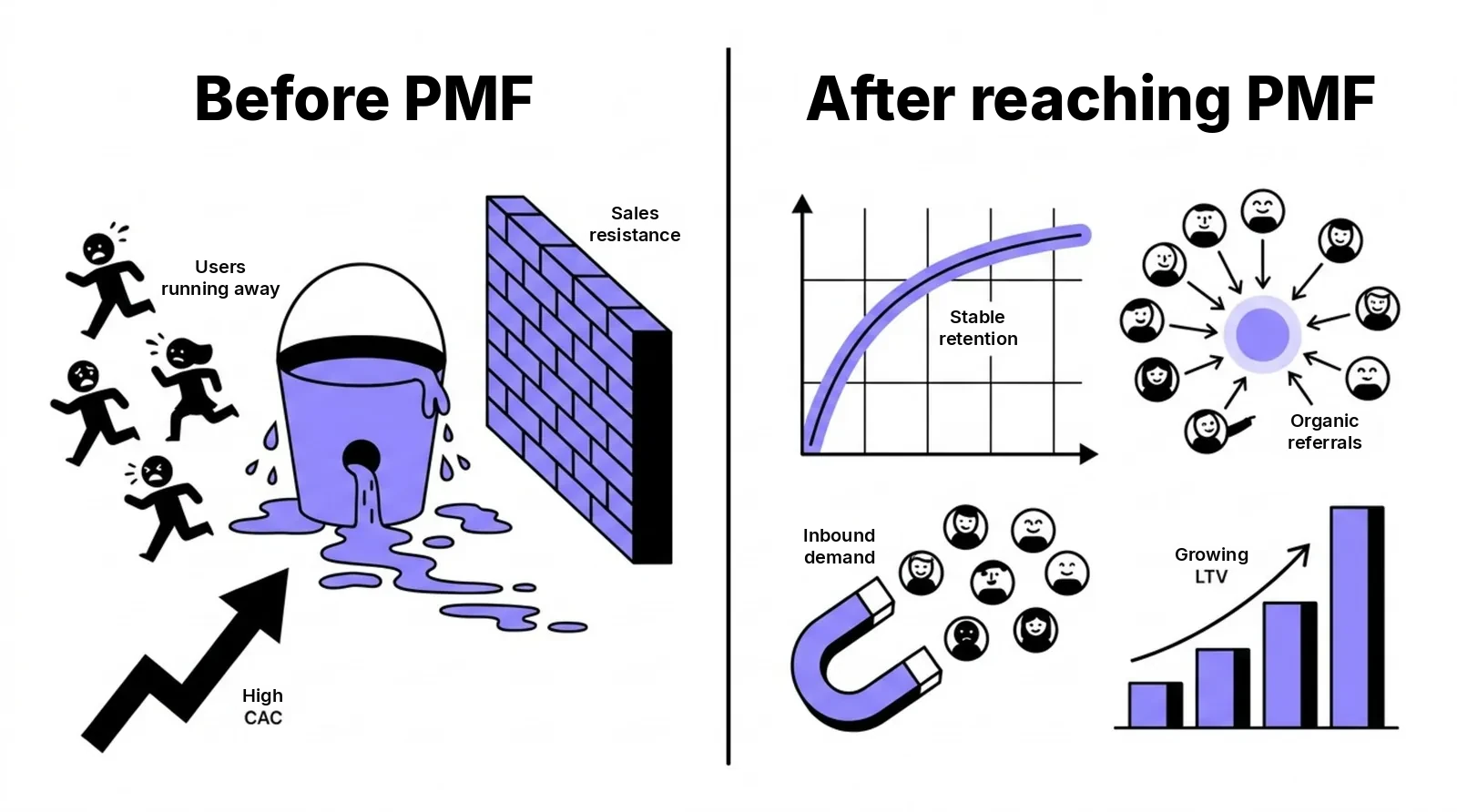
Common symptoms of not having reached product-market fit
If several of the signals below appear, you should pause scaling and go back to working on the offer, segmentation or the product itself.
No returning customers and fast churn
If users try the product once and abandon it within the first few days, and retention after a month drops below 20%, it means there's no lasting value in use. Building a user base on one-off visits doesn't pay off, no matter how big your marketing budget is. High churn proves that the product doesn't solve the problem in a habitual way.
Selling is hard, customers aren't engaged
When every deal requires long, exhausting negotiations and time-consuming efforts to convince the customer that they even have a problem, the market need is probably too low. A healthy sales process relies on repeatable buying motivations and a predictable decision cycle.
No clearly defined target group
Not having a well-defined ideal customer profile (ICP), and a situation in which every user uses the product in a completely different way, make it impossible to reach PMF. A product built "for everyone" in practice doesn't precisely meet anyone's needs, which blurs the technical roadmap and paralyses promotional activities.
Contradictory or negative feedback
When one customer finds the product too complicated and another finds it too simple, it shows the offer is aimed at too broad an audience. That kind of noise makes product decisions harder. If conversations with users focus on fundamental gaps rather than minor improvements, your user base still doesn't see key value in the product.
The startup has no competitive advantage
Not having a clear answer to the question "why should a customer choose us over existing solutions?" leads to problems with traction. Building a decent tool isn't enough if it doesn't offer a clear improvement in convenience, time or cost compared with the alternatives available on the market.
No revenue, or a small share of the customer's budget
Low monetisation and the need to keep offering discounts to retain customers are a clear sign of lack of fit. If the tool is seen as an unnecessary expense and is the first thing to go when costs are cut, it doesn't have the status of a critical solution. With PMF, customers pay regularly and accept a margin that allows the company to grow healthily.
How to find product-market fit - a step-by-step action plan
Reaching PMF is a process based on testing hypotheses, analysing data and making quick fixes. What matters most is the ability to draw conclusions from practice. Stubbornly sticking to your original concept in spite of the market's reactions is a straight road to exhausting your budget.
Get to know your target group and their needs
Instead of aiming the product at a broad market, focus on a narrow segment. Conduct in-depth interviews with 20-30 people representing your target group. Explore their daily habits, the workarounds they use for the problem, the words they use to describe their challenges, and their real budget constraints. Turn the findings into customer profiles that are used in day-to-day product work, not left on the shelf.
Define the product's core value
Choose one key feature that solves the customer's most important problem and polish it to perfection. Formulate a clear value proposition: who the product is for, what challenge they face and what specific result it delivers. A simple, precise tool lets you verify fit much faster than an extensive platform with dozens of features.
Build an MVP and collect data fast
Create a Minimum Viable Product (MVP), i.e. the simplest working version that delivers the chosen value. Release the product on the market without unnecessary delay. The goal of an MVP isn't technical perfection but collecting hard data on user engagement. Use no-code tools or proven frameworks to cut implementation time down to a few weeks, then make the test version available to a selected group of users.
Iterate on the product based on feedback
Analyse user behaviour systematically, remembering that telemetry data says more than verbal declarations. Make improvements to features, positioning and acquisition channels. Talk to customers who actively use the tool: find out what makes them come back, what can be simplified and which elements turned out to be unnecessary.
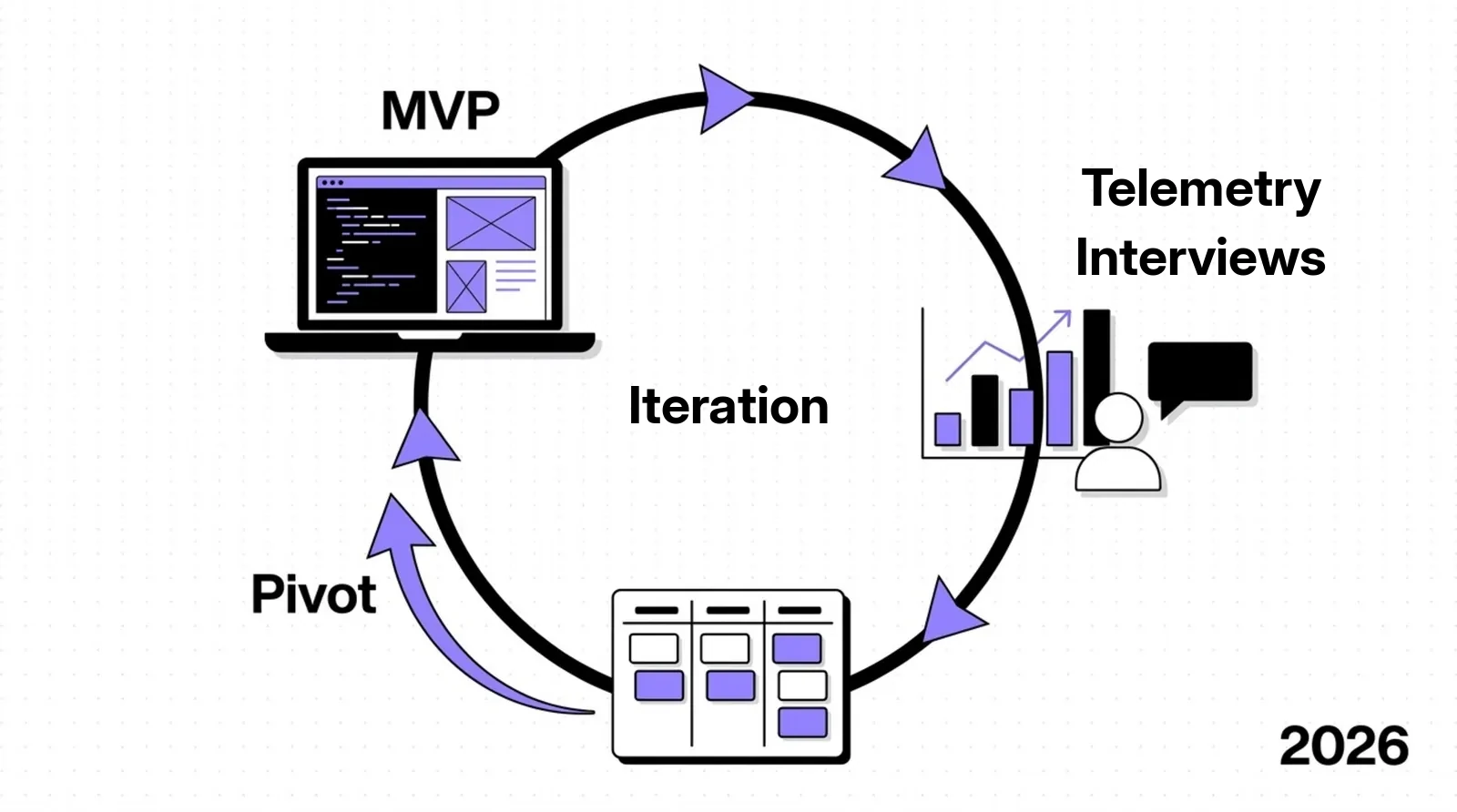
Measure the right metrics: LTV, CAC, churn, referrals, NPS
Managing the road to PMF consciously requires keeping an eye on metrics. Track retention, churn rates, in-product activity and the repeatability of key actions. Watch the LTV to CAC ratio, referral dynamics and Net Promoter Score. Define a direct customer outcome metric, for example:
- the number of working hours saved per week,
- percentage reduction in operating costs,
- shorter time to detect errors or incidents,
- measurable revenue growth generated by the tool.
Segment the market - look for PMF in specific niches
Most products build strong fit by starting with a narrow niche. Identify your core users - the people for whom your product is hard to replace. Study the specifics of their work and the reasons for such strong attachment. Refine the offer for this specific profile before you decide to expand into adjacent market segments.
Don't be afraid to pivot if market signals are negative
If successive iterations don't improve retention or sales dynamics, a change of direction (pivot) may be necessary. It can involve the target group, the monetisation model or the value proposition itself. A pivot isn't a failure but a rational response to market data. Scaling an unproven concept only speeds up burning through capital.
Examples, tools and metrics that support product-market fit
Verifying PMF becomes easier when you use structured tools and draw on other founders' experience. Sharing knowledge within startup communities, mastermind groups or workshops helps you avoid common mistakes when building sales processes and managing retention at an early stage of the company's development.
The Minimum Viable Product (MVP) and its role in finding PMF
An MVP is a tool for verifying business assumptions with minimal use of resources. It lets you check whether the solution really addresses the defined need, without costly development of the full version of the system. Confirming that users regularly come back to the MVP gives you the green light for further investment in the product.
How to use the Business Model Canvas in the fit process
The Business Model Canvas (BMC) lets you put the key pillars of a venture on a single sheet: customer segments, value proposition, distribution channels, revenue streams and cost structure. This makes it easier to verify whether the individual elements of the business model form a coherent whole and ensure unit profitability.
The most important metrics confirming product-market fit (NPS, churn, share of referrals)
Assessing fit requires analysing several operational and financial indicators at the same time. In practice, you check:
- Cohort retention: the percentage of active users 30, 60 and 90 days after sign-up.
- NPS: willingness to recommend the product on a 0-10 scale (a score above 50 as a strong quality signal).
- Use of key features: how often the product's core value is used.
- Share of referrals: the percentage of new deals coming from organic referrals.
- Consistency of qualitative feedback: how consistent the problems and benefits reported by customers are.
- CAC: stability or decrease of customer acquisition cost as volume grows.
- CAC Payback Period: the time to recover acquisition costs (in B2B SaaS, ideally under 12 months).
- LTV: the total revenue generated by a customer over the whole relationship.
- LTV:CAC: the ratio of customer value to the cost of acquiring them (target: at least 3:1).
- Gross margin: the profitability of delivering the service that allows stable scaling.
- Revenue churn: how revenue changes within fixed customer cohorts.
It's also recommended to monitor one main customer outcome metric that reflects real time savings, cost optimisation or revenue growth after implementing the solution.
| Area | Metrics | Signal confirming PMF |
|---|---|---|
| Engagement | Cohort retention, regular use, referrals | Retention curve flattening, growing share of organic referrals |
| Finance and unit economics | CAC, LTV, payback period, margin, revenue churn | LTV:CAC ≥ 3:1, CAC payback ≤ 12 months, falling churn rate |
| Sales and sales process | Repeatability of the buying journey and motivations | Consistent customer profile (ICP), shorter sales cycle, less resistance to buying |
Case study: PMF strategies in market practice
In its early days, Airbnb saw slow growth because the flat-sharing model aroused distrust. The founders verified users' needs directly on the ground: travellers were looking for cheaper, more authentic accommodation, but the barrier was poor presentation of the listings. Improving photo quality and profile verification made it possible to match the product to market expectations and kicked off rapid growth.
A similar fit can be seen in the history of other tech companies: Amazon offered an incomparably larger selection of books than traditional shops, SpaceX drastically reduced the cost of launching payloads into space, and Netflix eliminated late fees for keeping tapes thanks to a flat subscription. All of these companies identified a specific barrier and offered a product that the market accepted immediately.
How many customers do you need to confirm PMF in B2B and B2C?
The required sample depends on the business model and the value of a single transaction. At the qualitative stage, the standard is to conduct 10-20 in-depth interviews. For the Sean Ellis test, a sample of at least 100 active respondents gives reliable conclusions.
In B2B, Jason Lemkin points to a simple rule: winning 10 fully satisfied, regularly paying customers from outside your circle of friends is the first proof that the pattern is repeatable. In enterprise deals, PMF is confirmed on a small number of contracts with high LTV and zero churn. In mass-market (B2C) products, fast organic adoption and engagement matter most, with a lower value per user.
The most common challenges and traps in reaching product-market fit
The road to market fit can be full of misleading signals. Being aware of the typical traps helps you save time and keep your startup's cash flow healthy.
Why doesn't a good product without market fit grow?
Technological sophistication doesn't guarantee market success if the product doesn't solve a priority problem. Switching tools means cost and risk for the customer. If the benefit on offer doesn't clearly outweigh that effort, adoption stalls. Trying to mask this with advertising spend raises costs but doesn't create a lasting business.
Watch out for false product-market fit (false PMF). It can result from temporarily pumping up traffic with paid campaigns, a short-lived media buzz, giving away free plans, selling through personal connections, a one-off corporate pilot or grant funding. These factors improve short-term stats but don't prove repeatable demand.
Can you lose product-market fit once you've reached it?
PMF isn't given once and for all. Changes in the market environment, new regulations, competitors' moves or technological shifts can make your current offer less attractive. Maintaining your position requires constantly monitoring retention metrics and regularly collecting feedback from the market.
How to deal with competition and market changes?
The most effective defence is staying close to users and responding quickly to their changing needs. In line with Rahul Vohra's approach, it's worth continuously refining the product for your most satisfied customer segment, instead of diluting features under pressure from every new competitor. Building direct relationships with the market lets you catch warning signs well in advance.
When should you validate PMF and how do you recognise a startup's valley of death?
Verifying fit is an ongoing process that becomes critical before deciding to scale, opening an investment round or expanding into foreign markets. VC investors expect evidence in the form of repeatable traction, not just forecasts on paper.
Lack of PMF combined with rising spending leads straight into the valley of death - a situation in which a startup runs out of cash reserves before becoming profitable. The warning signs are organic stagnation, irregular sales results, constant changes to the offer's positioning and a high customer churn rate.
Frequently asked questions and myths about product-market fit
There are many oversimplifications around PMF. Checking them helps you keep a cool head when assessing your business situation.
How long does it take to reach product-market fit?
The time needed to fit the product to the market depends on the industry, the nature of the problem and the pace of the team's work. For some ventures it takes a few months, for others it requires several years and a series of pivots. The key success factor remains the pace of testing hypotheses in direct contact with customers.
Is a sale the only moment of truth for PMF?
Closing a deal confirms a customer's willingness to pay, but a single sale doesn't settle whether you've reached PMF. The first contracts may come from discounts or the founders' own effort. Full confirmation of fit comes only with a repeatable sales process, high retention and stable unit economics (LTV:CAC).
What should you do when all the metrics point to no PMF?
Clearly negative retention and sales data call for decisive action. The most appropriate solution is often a pivot: changing the target group, modifying the value proposition or rebuilding the monetisation model. Decisions should be based on hard data and interview findings, avoiding emotional attachment to the original idea.
Does PMF look different in B2B and B2C?
Although the basic principle - delivering irreplaceable value - stays the same, the metrics differ depending on the model. In B2B, the key factors are a repeatable sales process, NRR above 100%, low churn and high LTV. In B2C, what decides is the pace of organic adoption, viral referrals and daily user activity.
In AI-native projects, you need to analyse retention at the level of specific work tasks to tell the difference between briefly trying out a tech novelty and lasting value in use. On marketplace platforms, in turn, fit has to be achieved on both the demand and supply side at the same time, while maintaining adequate transaction liquidity.
Keep reading
All articles →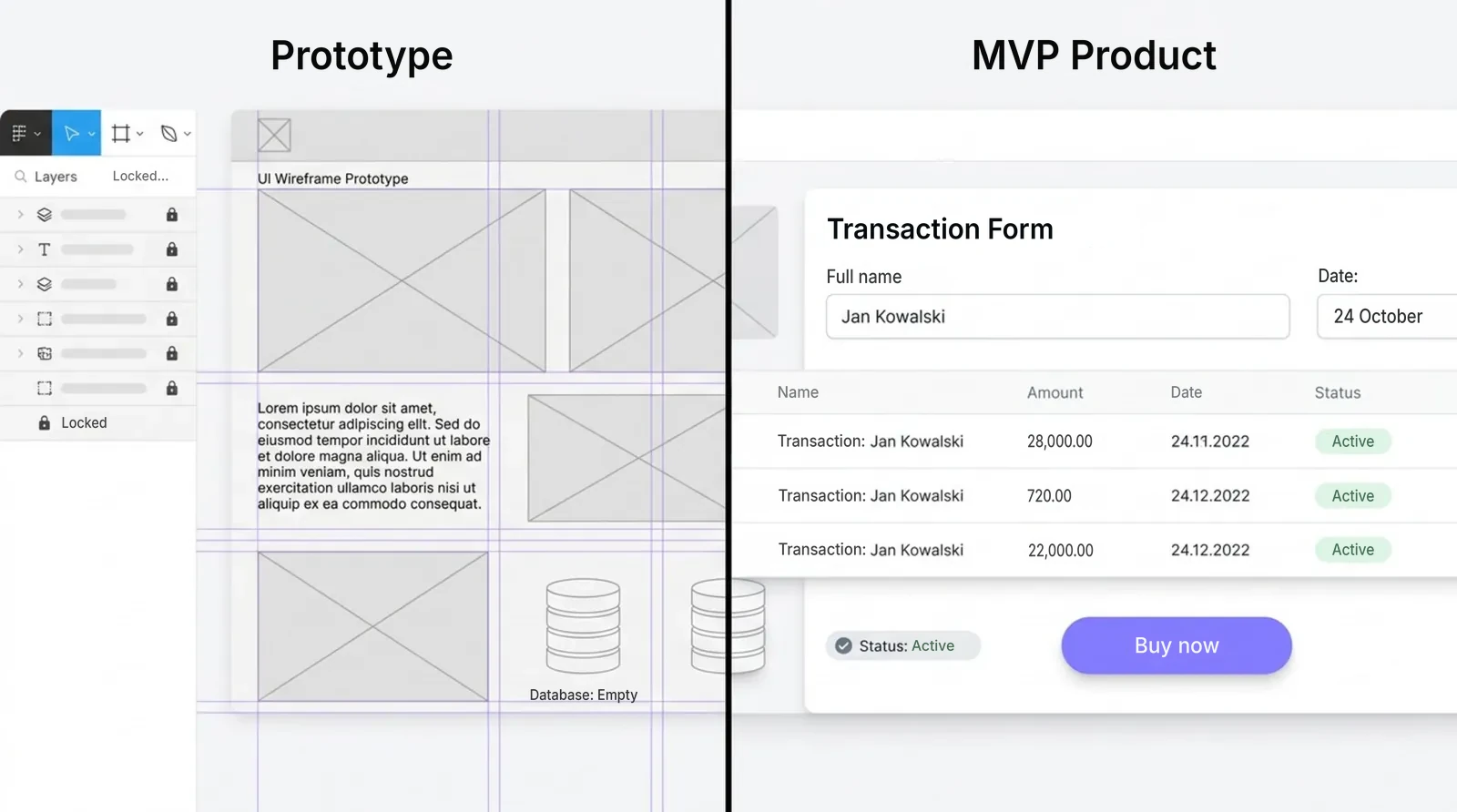
How to Build an MVP Without Losing Your Mind: A Practical Guide
How to build an MVP step by step: definition, process, key metrics, common mistakes, legal basics and examples of companies that started with an MVP.
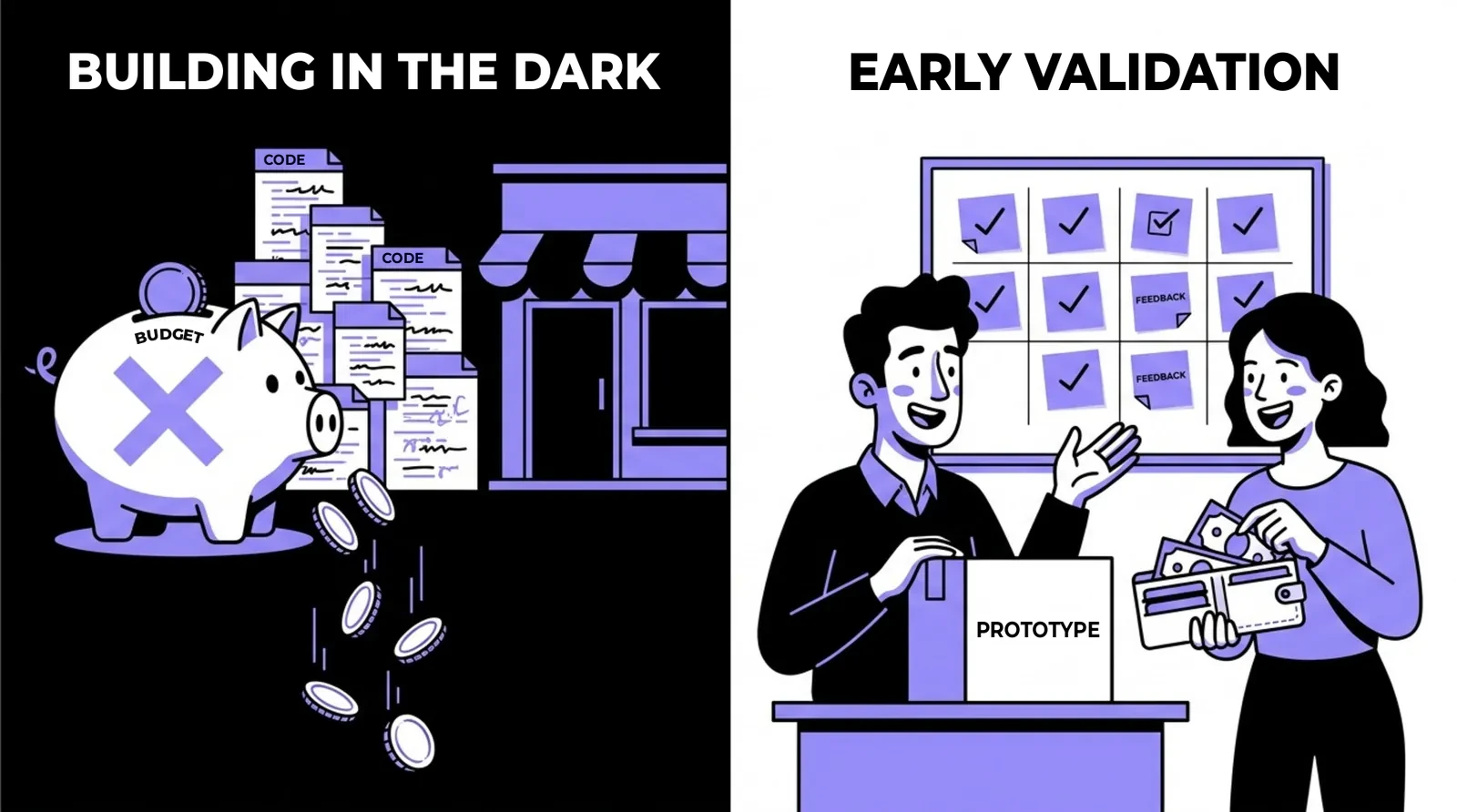
How to Validate a Business Idea Before You Spend a Penny
How to validate a business idea for free: customer interviews, competitor analysis, Fake Door tests, MVP and pre-sales. Find out if the market wants it.
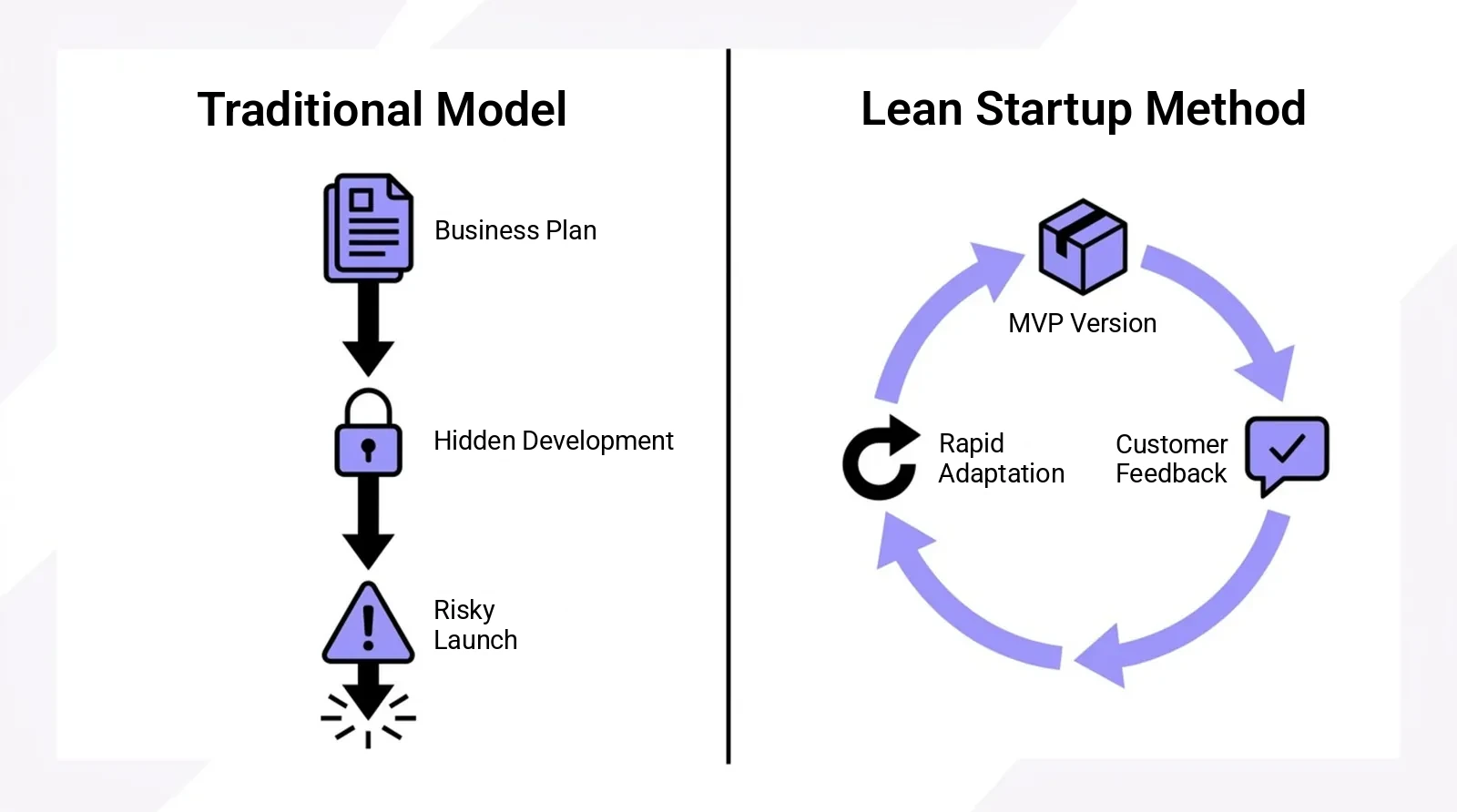
The Lean Startup Method: How to Build a Product Without Wasting Your Budget
The lean startup method step by step: the build-measure-learn loop, MVP, validated learning and pivots. Learn to grow a product without burning cash.