
How to Build an MVP Without Losing Your Mind: A Practical Guide
How to build an MVP step by step: definition, process, key metrics, common mistakes, legal basics and examples of companies that started with an MVP.
Contents
How do you build an MVP without burning your budget on features nobody needs? Focus on testing one key business hypothesis with the simplest working solution. An MVP is not a demo or an unfinished product - it is the fastest tool for checking, on a real market, whether you are solving the right problem and whether anyone is willing to pay for it at all.
What is an MVP and why is a minimum viable product key in practice?
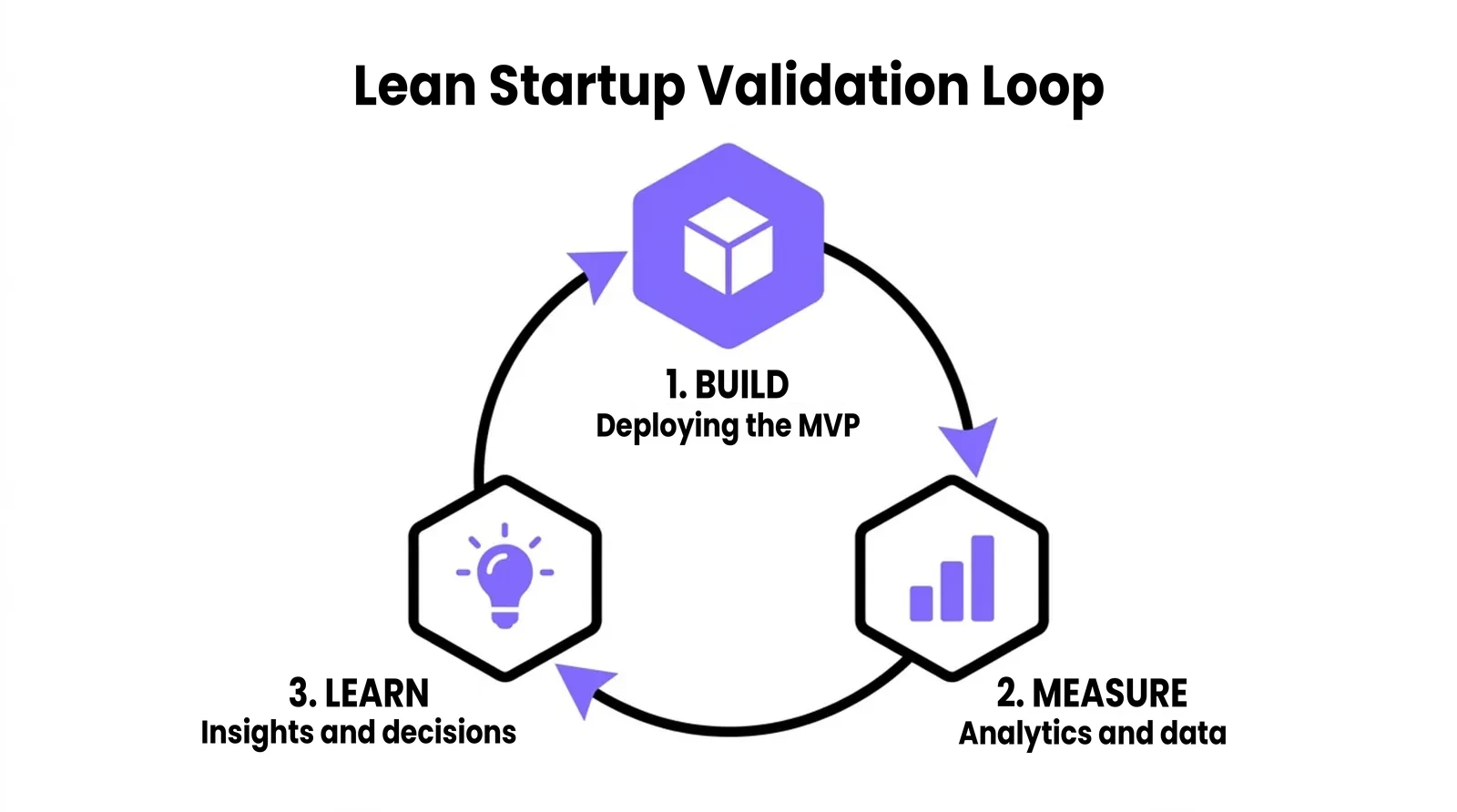
When you are building a startup, time and money run out faster than you expect. Instead of spending a year in a basement polishing a system nobody may want, the Minimum Viable Product approach (which comes from the Lean Startup methodology) lets you put your idea in front of the market quickly. You release the simplest version, collect real data, fix mistakes and only then decide on bigger investments.
What does MVP stand for?
MVP stands for Minimum Viable Product. In practice, it is a version of the product with a minimal set of features that lets you win your first users and collect honest feedback from them.
Let's break these three words down:
- Minimum - the product has only the features that solve one core user problem. You deliberately cut everything else so you don't burn through your budget and can launch sooner.
- Viable - the solution has to actually work and deliver value. It can't be a makeshift thing that falls apart. The product must be stable enough for users to go through the whole journey and judge how useful it is.
- Product - a working solution or service that you actually put in the hands of your audience. It has to be enough to collect data and decide on the next steps.
To sum up: an MVP is not a stripped-down final product, but the smallest credible market proof you need to decide on the company's further development.
How is an MVP different from a prototype and a finished product?
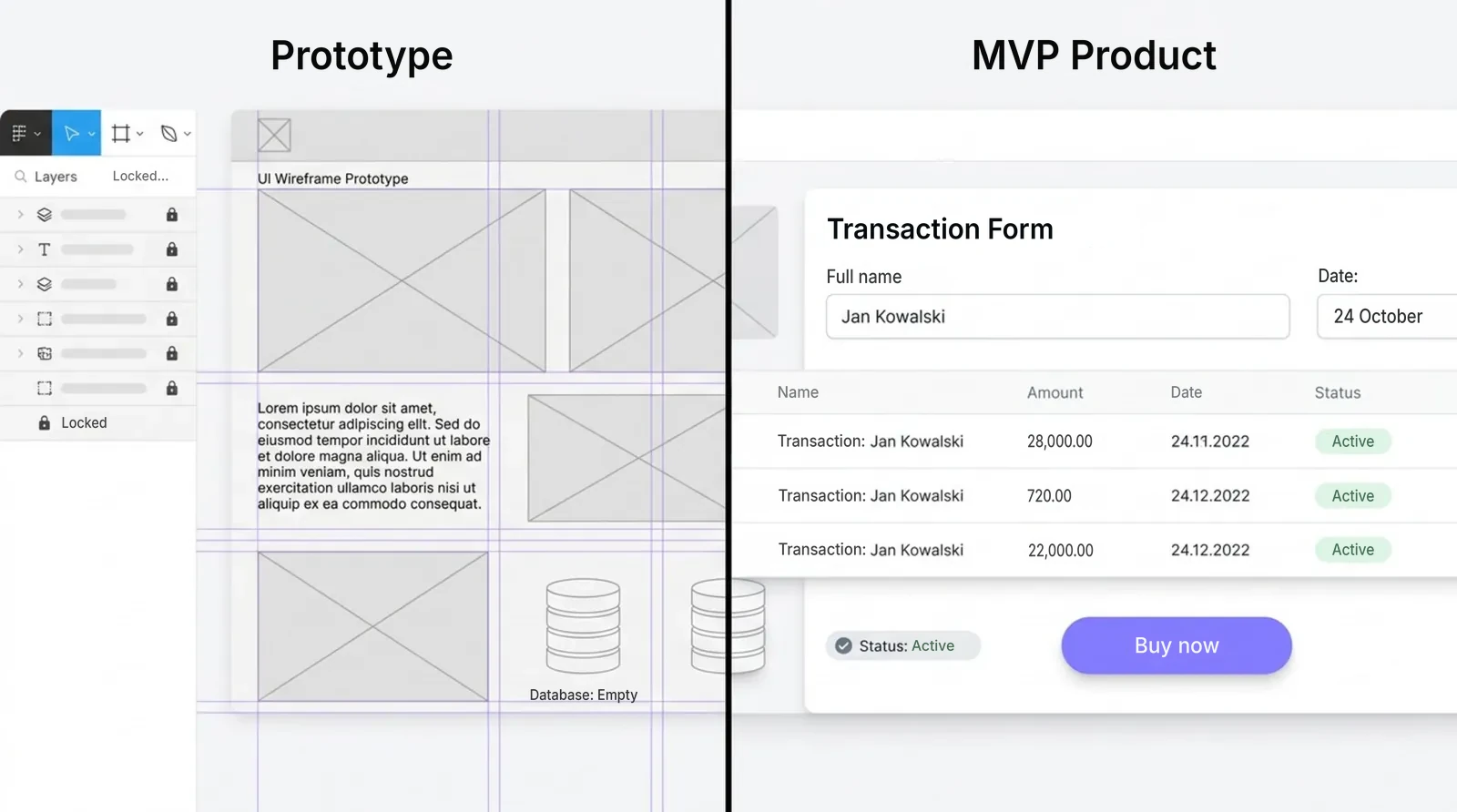
A prototype and an MVP are two completely different stages of work. A prototype (e.g. a clickable mockup in Figma or a conceptual model) is used to check technical feasibility or interface usability under controlled conditions. A prototype usually has no working technology behind it and doesn't sell.
An MVP is a product live on the market that solves a specific problem in real conditions. A prototype validates the design concept itself, while an MVP tests the business model: do users come back, do they recommend the product and, above all - do they reach for their wallets?
What are the core features of a good MVP?
A good MVP is not just about having few features. Above all, it is an effective research tool that must meet two conditions:
First: it must be usable and stable. Fewer features doesn't mean it's okay to have bugs that prevent people from using the service. Those 2-3 key options have to work flawlessly.
Second: it must deliver immediate value. Users have to feel right away that the product solves their problem better or faster than the methods they have used so far.
In practice, every MVP rests on three elements:
| Element | What it means in an MVP |
|---|---|
| Product / service | Specific, minimal value delivered to the user. |
| Acquisition channel | How your first users learn about the solution and start using it. |
| Feedback collection | A mechanism for gathering qualitative feedback and quantitative data. |
If you release a product without a built-in system for measuring behaviour and collecting feedback, you lose the main point of building an MVP.
Benefits and goals of building an MVP for startups and companies
For a team building a new product, an MVP is the safest way to validate market assumptions with minimal capital outlay.
Reducing business risk
Building a full product on unverified hypotheses is the shortest path to wasting time and budget. An MVP works like a fuse: you release a smaller scope, check how your audience reacts and verify whether demand actually exists before you invest in advanced architecture.
Testing hypotheses and getting user feedback
Every startup begins with assumptions: about the customer's problem, their willingness to buy and the usefulness of the solution. An MVP lets you test those assumptions in practice. Instead of relying on what people say in surveys, you look at what users actually do and collect direct feedback from them.
Optimising costs and resources
Limiting the scope of work to key features drastically shortens time-to-market. Instead of burning through your savings or money from business angels on unnecessary extras, you focus resources on what generates your first traction.
Learning fast from the market
Working with an MVP is based on a continuous loop: deploy, measure, learn. This lets you quickly correct mistakes in the product, adjust your business model or pivot if it turns out that your original target group isn't interested in the offer.
The MVP building process - step by step
Building an MVP requires iron discipline in cutting features. To avoid diluting the product's value, go through a structured validation process.
Analysing market needs and identifying the main problem
Before you write the first line of code, define one burning problem your potential customers face. Don't build a Swiss Army knife that tries to solve ten things at once. Focus on the biggest uncertainty: is this particular pain severe enough that someone will pay to get rid of it?
Choosing the key features of the minimum version of the product
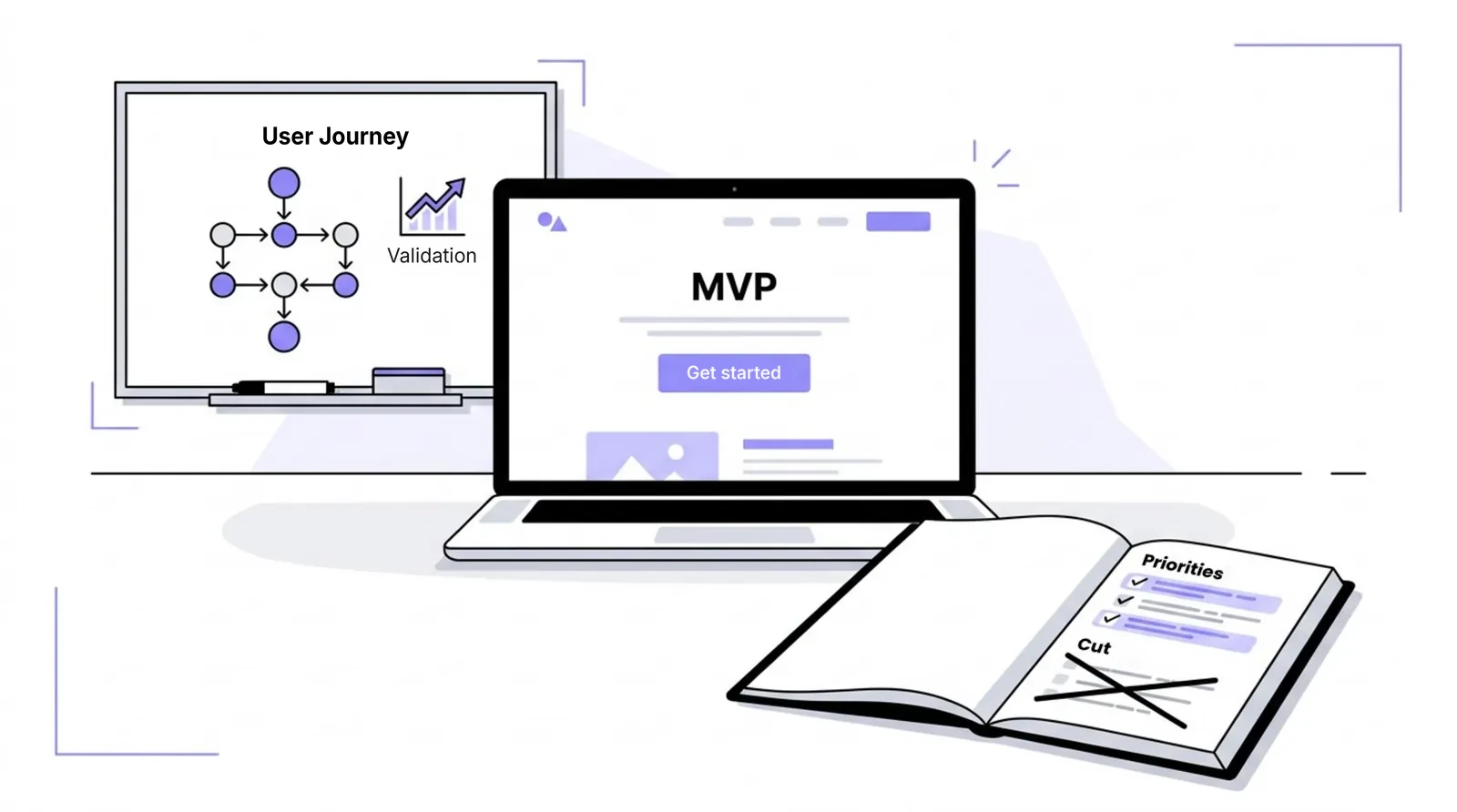
Once you've defined the problem, make a list of features and apply the 80/20 rule ruthlessly. Choose no more than 2-3 elements that directly deliver the promised value. If your list has a dozen or more items, it's a sign you are still trying to build too big a version.
Designing the first usable version
Your MVP doesn't need to impress with elaborate design, but it must be fully functional within the chosen scope. For example: in a simple invoicing tool the interface can be minimalist, but the tax calculations have to be one hundred percent correct. And in MedTech solutions, security and data protection can't be skipped under the pretext of minimalism.
Testing the MVP with real users
Releasing the MVP is the start of the actual research work. Collect quantitative data (traffic, conversions, drop-offs) and qualitative data (in-depth interviews, live conversations). Remember that kind words from friends are not validation - what counts are hard signals, such as regular use of the tool or someone adding their payment card.
Measuring metrics and analysing results
Define clear success metrics before you make the product available, so you don't end up interpreting the data to fit a conclusion you've already made. Above all, monitor:
- activation (whether users reach their first goal in the product),
- time to value,
- retention (whether users come back regularly),
- conversion to paying customers,
- cost of delivering the service (COGS),
- churn reasons.
Iteration: learning and making improvements
Based on hard data, you make a decision: improve what works, change your approach or shut the project down. Deciding to drop an idea that isn't showing promise at the MVP stage is a success of the validation process - it saves your time, energy and capital.
The most common mistakes when building an MVP
Even a good idea will fail if the team falls into typical execution traps.
Designing an overly complex MVP
Adding more features "just in case" before facing the market is the easiest way to run out of cash. An MVP overloaded with options becomes expensive to maintain, hard to diagnose and blurs the picture of what customers actually like.
Not validating assumptions with users
Building a product in isolation from customers leads to decisions based on wishful thinking. If you don't talk to users regularly and don't analyse their behaviour in the product, you're developing the tool blindly.
Treating the MVP as the final product
Releasing an MVP and then stopping further testing is a common mistake. An MVP is not the final version but a starting point for regular iterations based on customer behaviour.
Ignoring legal issues and data security
The idea of minimalism doesn't exempt you from complying with the law. Missing terms of service, ignoring GDPR (RODO in Polish) or failing to secure copyright can block the company's growth and make talks with investors during pre-seed or seed rounds impossible.
Legal aspects: how to build an MVP that complies with the law
For a product to be fully viable as a business, it has to be formally safe. Sorting out the basic legal matters right from the start protects you from costly disputes.
The MVP, terms of service and customer agreements
If you charge for using your tool, you are providing a service that needs a clear legal framework:
- Terms of service for electronically supplied services - essential with open access (e.g. a classic B2C SaaS or self-service B2B model). They must specify the technical requirements, payment rules, complaints procedure and the rules for cancelling a subscription.
- Individual pilot / implementation agreement - the standard when testing B2B solutions with selected business partners. It defines the scope of liability, the level of support and the terms for moving to a commercial agreement.
Personal data protection in an MVP
Even a simple subscriber list or sign-up form involves processing personal data. As the data controller, you need to take care of:
- a clear privacy policy stating the purposes, legal bases and retention period of data processing,
- data processing agreements (DPAs) with all external tool providers (hosting, analytics, mailing),
- applying privacy by design and privacy by default - collect only the data that is necessary for the product's core function to work.
Intellectual property when building an MVP
If your code, logo or mockups are being created by external contractors or friends after hours, make absolutely sure you have written agreements transferring the economic copyrights to you or your company. Unclear rights to the code is one of the first problems uncovered during due diligence by VC funds and business angels.
MVP examples in practice: case studies of well-known companies
The biggest tech companies started with simple, often fully manual processes:
Which companies started with an MVP?
- Airbnb - the founders built a simple website offering air mattresses in their own living room for rent during a local conference, to check whether people would be willing to sleep in a stranger's flat at all.
- Dropbox - before the advanced cloud architecture existed, the creators published a short video showing how a file-syncing folder works, collecting thousands of sign-ups for the waiting list.
- Groupon - started as an ordinary WordPress blog; discount coupons were generated manually and emailed to users as PDF files.
- Zappos - the founder took photos of shoes in local shops and put them online. When an order came in, he bought the pair at retail price and shipped it to the customer, testing demand without his own warehouse.
- Zynga - tested interest in new game ideas with simple landing pages before any programming started.
Key takeaways from real MVP launches
The experiences of these organisations show some key patterns:
- Validate first, automate later - complex code is worth writing only when handling the process manually can no longer keep up with demand.
- Verify purchase intent - the most valuable proof is a user's willingness to pay for the solution, not what they say they think.
- Develop the product gradually - every new feature should follow directly from the behaviours and needs validated at the previous stage.
What's next after the MVP? The next steps in product development
Releasing the first version is only the moment you enter the phase of real management decisions.
The decision: grow, pivot or withdraw the product
Once you've collected hard data and feedback, you choose one of three scenarios:
- Scaling and growth (Go) - the hypotheses have been confirmed, retention and conversion are growing; you move on to optimising the architecture and building more features.
- Change of direction (Pivot) - the problem is real, but the proposed form of the product, pricing model or customer segment isn't working; you change the parameters of the offer while keeping what you learned from the tests.
- Closing the project (Stop) - the market shows no interest, and the cost of acquiring a user exceeds the potential profit; you close the project and redirect resources to a new business opportunity.
Expanding functionality based on what you've learned
If the results justify further development, set priorities based on feedback from your most engaged users. Introduce changes one at a time, measuring their impact on key business metrics each time.
Building an MVP is above all about managing market uncertainty with limited resources. The biggest risk isn't releasing a tool that's too simple, but spending months building a complex system nobody needs.
At Startup Community Poznań we bring together founders, investors and startup operators who face these challenges in practice. If you're working on your MVP, looking for honest feedback or want to swap experiences with people building their own products - come to our next meetup and talk to practitioners from the local ecosystem.
Keep reading
All articles →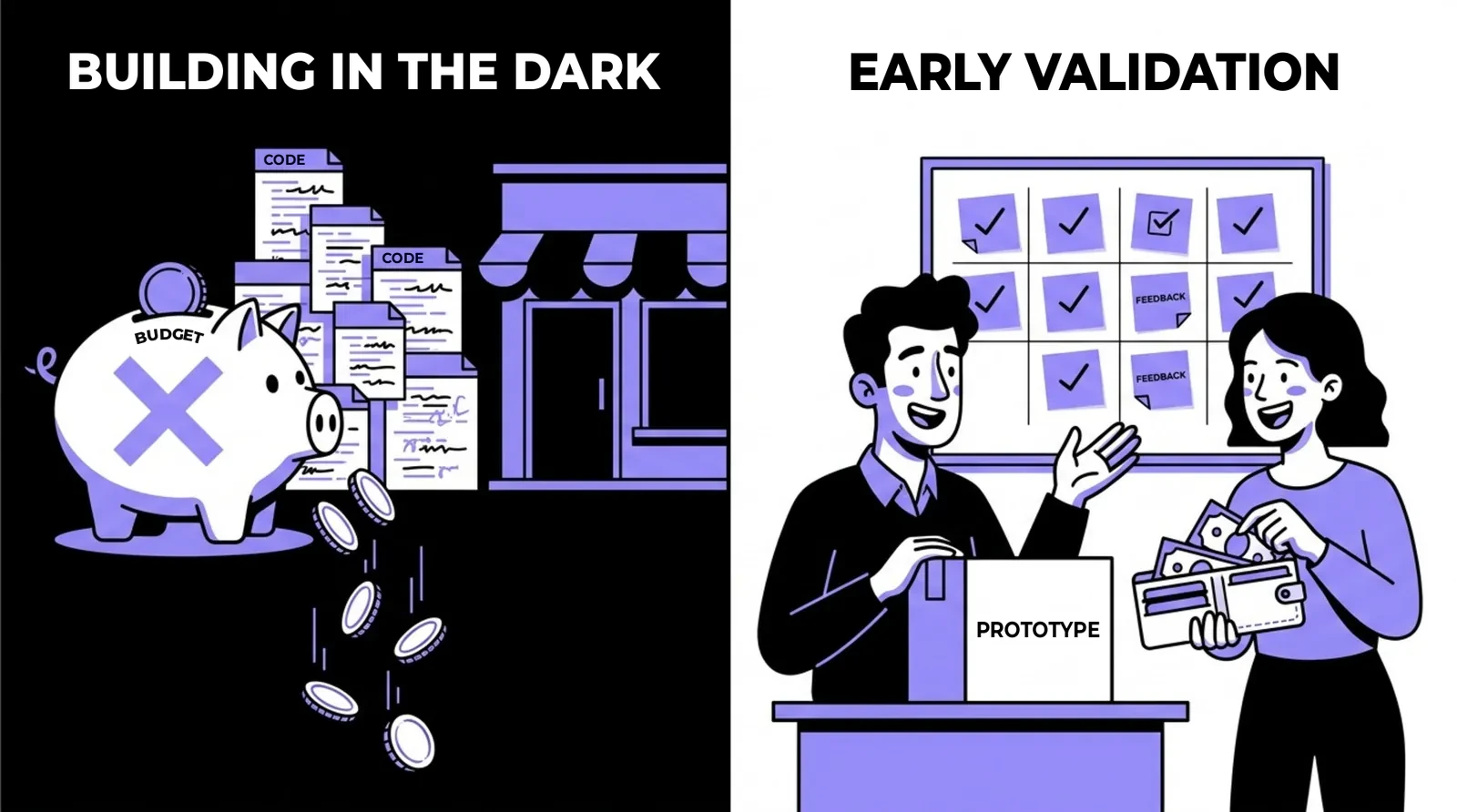
How to Validate a Business Idea Before You Spend a Penny
How to validate a business idea for free: customer interviews, competitor analysis, Fake Door tests, MVP and pre-sales. Find out if the market wants it.
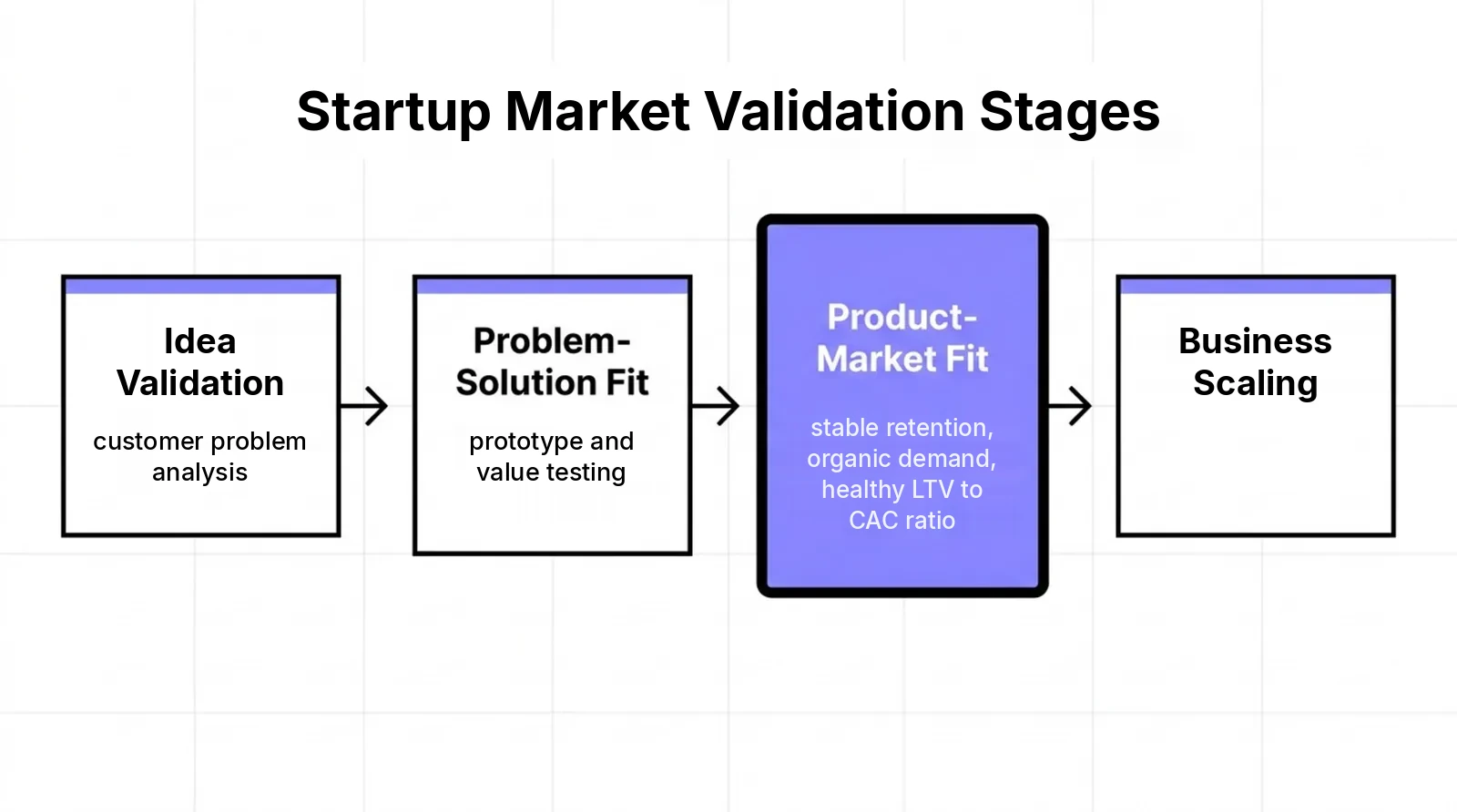
Product-Market Fit: How to Know Your Startup Has Found It
Product-market fit explained: the signals and metrics that show your startup has it, the red flags of missing it, and a step-by-step plan to find it.
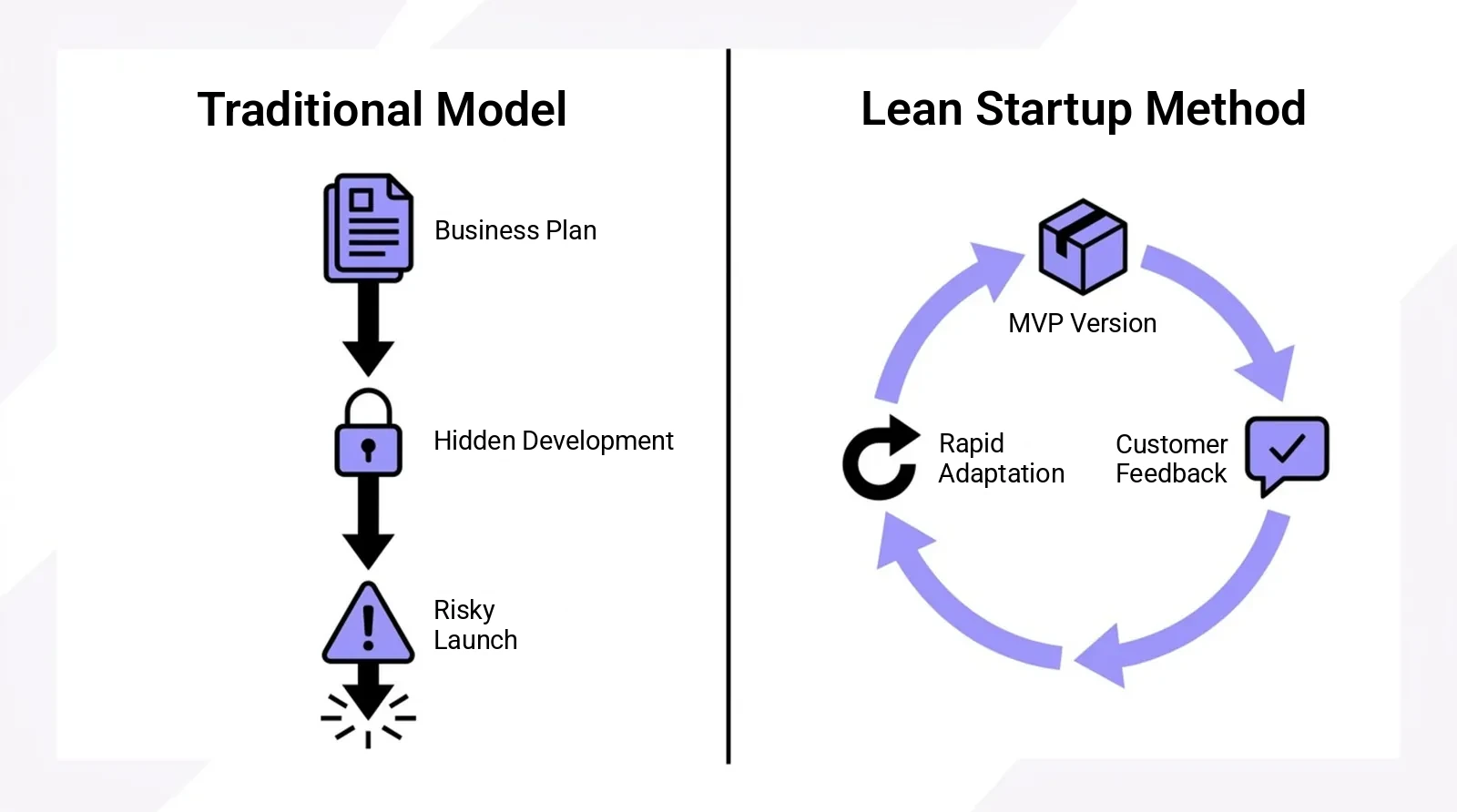
The Lean Startup Method: How to Build a Product Without Wasting Your Budget
The lean startup method step by step: the build-measure-learn loop, MVP, validated learning and pivots. Learn to grow a product without burning cash.