
The Lean Startup Method: How to Build a Product Without Wasting Your Budget
The lean startup method step by step: the build-measure-learn loop, MVP, validated learning and pivots. Learn to grow a product without burning cash.
Contents
How do you build a startup and develop a product without burning through your budget right at the start? The lean startup method answers this directly: instead of spending your savings on untested ideas, you create a simple MVP, test it on the real market and make decisions based on hard data from users.
What is the lean startup method and why did it change how products are built?
Lean startup is an approach to building companies and products based on quickly testing assumptions in practice. Eric Ries described this model in 2010, drawing on his own experience of building tech startups and on mistakes that cost him a lot of time and capital. The core principle is simple: instead of spending months polishing a "perfect" product behind closed doors, you release a basic version and immediately check whether the market responds to it at all. Ries defines a startup as an organisation set up to build something new under conditions of extreme uncertainty.
Although the method grew out of the tech world, it works in almost every industry - from services to hardware and medicine. Above all, it is a change in how you approach work: instead of rigidly sticking to your initial business plan, you continuously verify your business model and adjust it to what real customer behaviour shows.
Who created lean startup? Eric Ries, Steve Blank and their contributions
The main face of this approach is Eric Ries, who tested an iterative way of working at the startup IMVU and gathered his conclusions in the book "The Lean Startup". It is not a collection of loose motivational tips, but a concrete framework based on experiments and facts.
The foundations for the method, however, were laid by Steve Blank, Ries's mentor and the creator of the Customer Development concept, who kept repeating that there are no facts inside the building - only opinions, and real knowledge lies with customers. Ash Maurya, author of "Running Lean" and creator of the Lean Canvas template, also made his contribution. Together they created tools that help founders reduce risk and build products that solve real problems.
What are the core principles of lean startup?
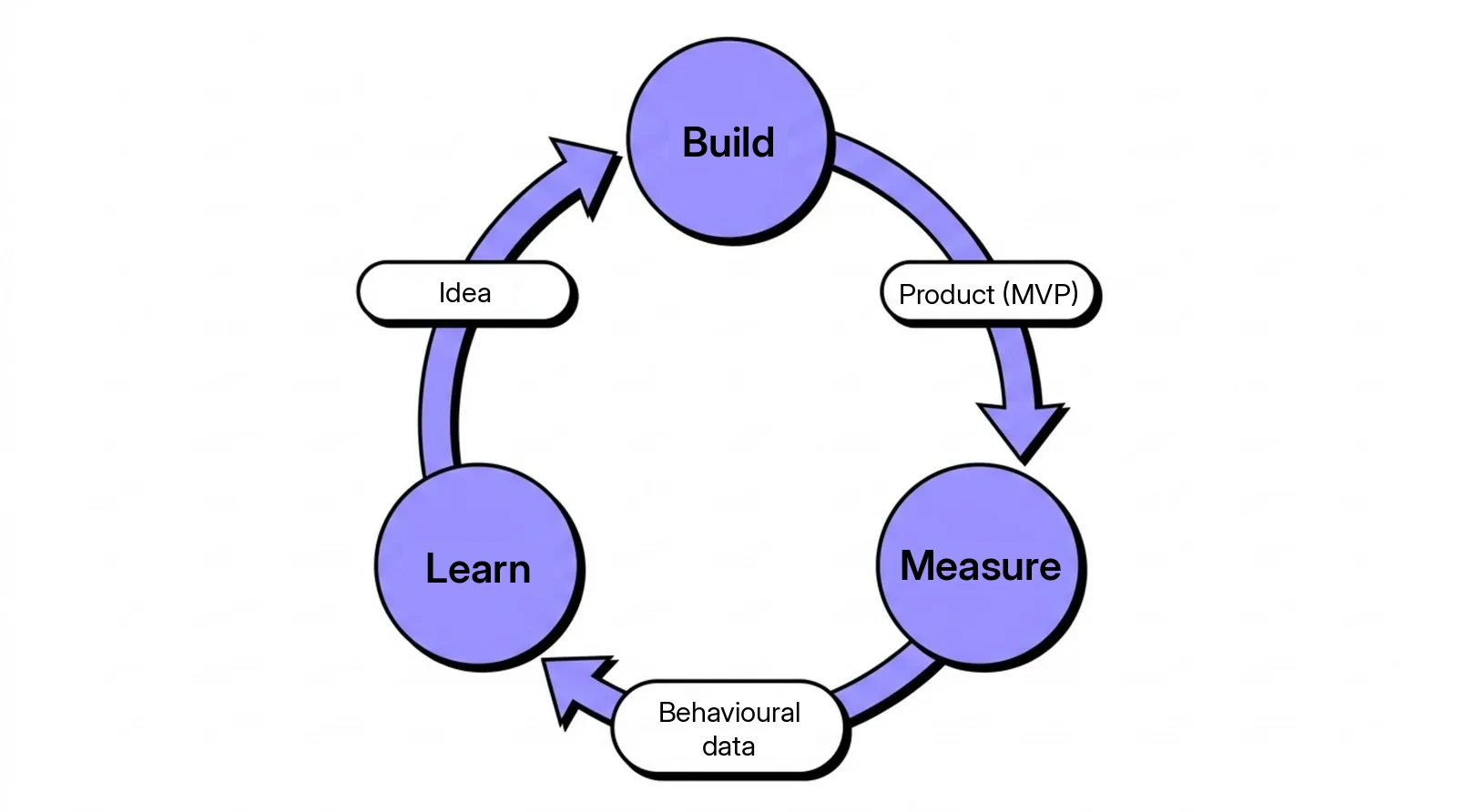
At the heart of the method is the repeatable build-measure-learn loop. Instead of investing months in an elaborate platform, you create a Minimum Viable Product (MVP), put it in the hands of your first users, measure their behaviour and draw conclusions. The essence of the process is so-called validated learning - gathering hard evidence about what works and what needs to be fixed immediately.
The key is to formulate clear business hypotheses (about the product's value and the mechanisms of its growth) and to be ready to change direction (pivot) when the data shows that your original assumptions were wrong. That way you don't waste resources developing features nobody will use.
How does lean startup differ from lean management and classic business methods?
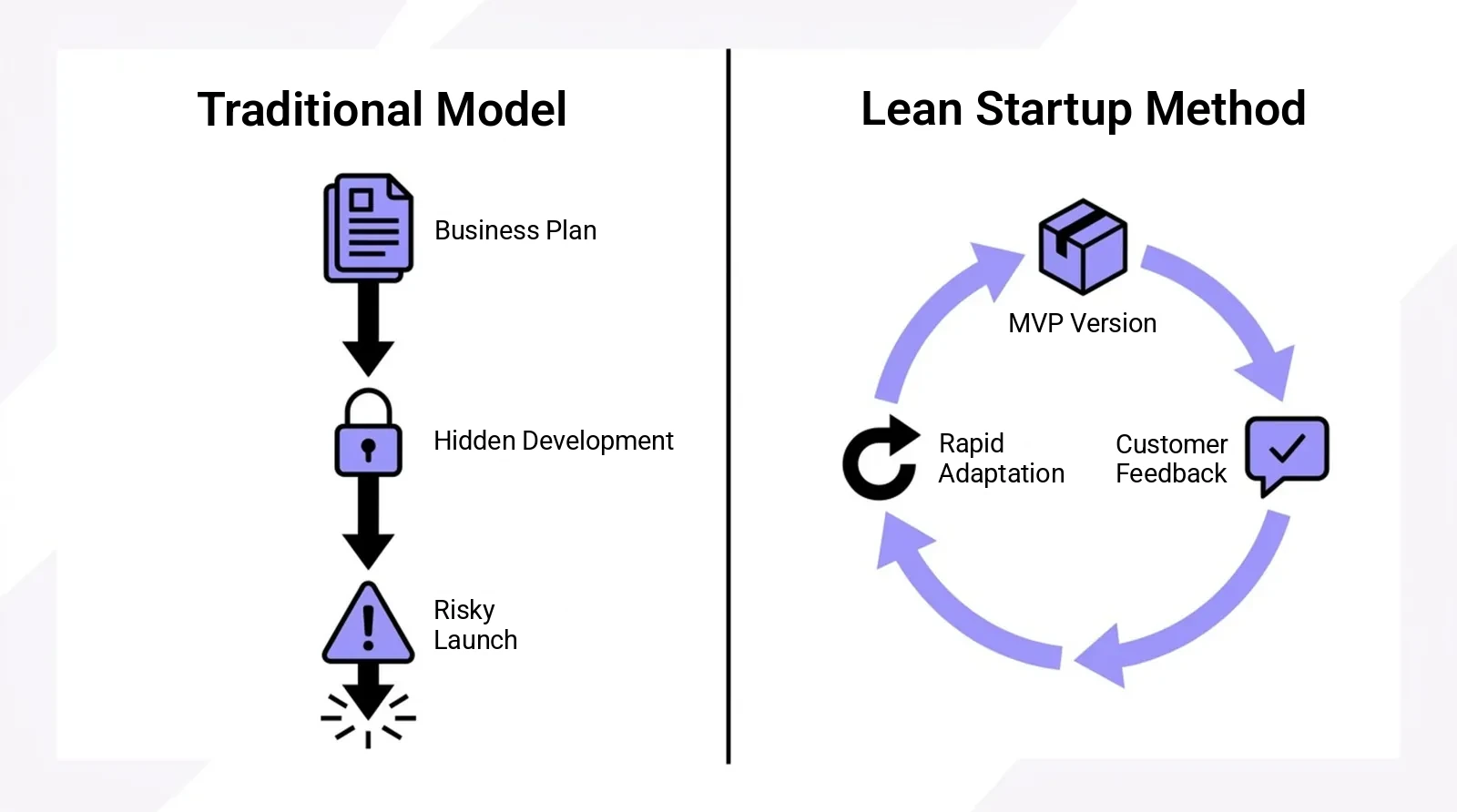
Lean management and lean startup grow from the same root of eliminating waste, but they answer completely different challenges. Lean management (developed, among others, in Toyota's factories) is used to optimise existing processes: it improves quality and removes downtime in a company that already has a finished product and proven customers. Lean startup focuses on working under uncertainty and helps answer the fundamental question: what is worth building in the first place?
In the traditional approach, you write a thick business plan and build the product in secret until launch day. An example of this risk was Kodak, which invested in a line of birthday cards on the back of the success of its wedding cards, and discovered production and logistics problems only just before the launch. A startup rarely has the means for stumbles like that. Lean startup relies on early contact with the market, which is safer than guessing needs at your desk.
How does the lean startup method help you avoid wasting your budget?
For a young startup with a limited runway, lean startup works like an insurance policy. Instead of seeing product development as a straight line from idea to big launch, you treat it as a series of cheap, controlled experiments. The goal is to shorten the time it takes to reach your first paying customers with minimal financial outlay.
What matters most is the speed at which you gather real knowledge from the market. Before you spend your savings on advanced code or complex infrastructure, you test interest on a small scale. If the idea doesn't catch on, you find out within a few weeks, not after a year of expensive work.
How does the build-measure-learn cycle work?
The build-measure-learn loop is a practical framework for product work that takes you from initial assumptions to a solution that fits the market.
You start with the build stage: you create the simplest version or prototype that lets you test a specific hypothesis. You don't need a complete system - a solution that delivers the key value and lets you check how your audience reacts is enough.
The next step is measure: you analyse how users interact with your MVP. You check the value hypothesis (whether the product actually solves their problem) and the growth hypothesis (how people find out about your solution).
Finally comes learn: you draw conclusions from the data and decide whether to keep developing the current direction or to pivot - that is, change strategy while keeping the overall vision. You repeat the loop until you arrive at a repeatable, scalable model.
What is an MVP (minimum viable product) and why does it reduce risk?
An MVP (Minimum Viable Product) is the most basic version of a product that contains only the features needed to test your key business assumptions and collect honest feedback. The goal of an MVP is not to impress the market with technical polish, but fast validation of the idea.
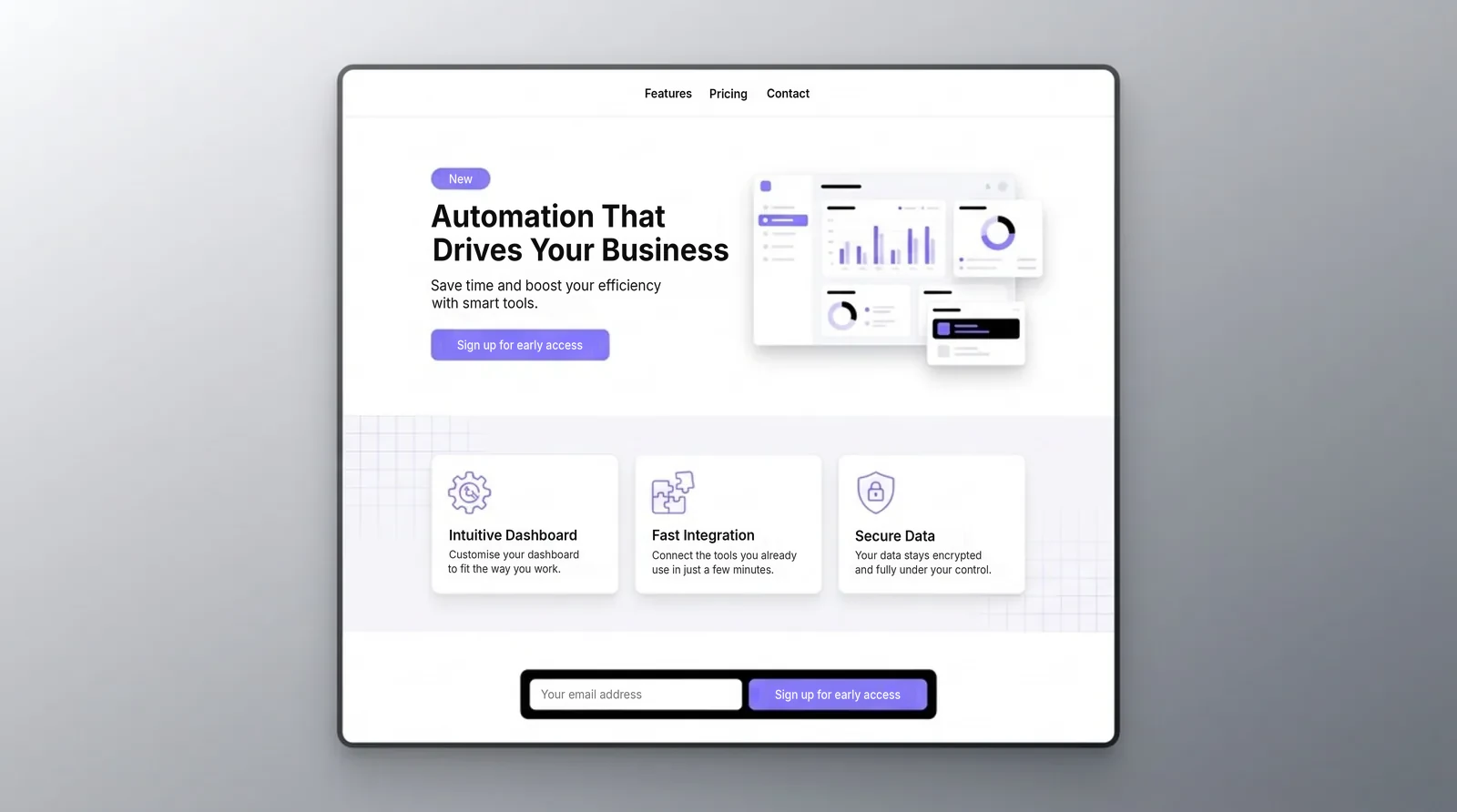
This drastically cuts your risk. Instead of building a full platform for twelve months, you check within a few weeks whether anyone is willing to use it. A classic example is Dropbox: before the founders wrote complex file-sync code, they published a simple video showing how the service worked. An avalanche of sign-ups confirmed the demand. Sometimes a simple landing page describing your value proposition is enough - if nobody leaves an email address, that is a clear signal that your assumptions need checking.
What is validated learning and how do you measure how well ideas perform?
Validated learning means making decisions based on hard facts, not intuition. Eric Ries points out that what users say in surveys can be misleading - what counts is what people actually do when they have your product at their disposal.
To assess results, you need specific metrics. At the early stage these might be:
- the number of waitlist sign-ups,
- the conversion rate on your website,
- the share of users who return to the tool on the following days.
Once the product starts working, you move on to business metrics: retention, customer acquisition cost (CAC) and customer lifetime value (CLV). Behavioural data gives you a clear picture of the situation and makes it easier to plan the next iterations.
When should you pivot and when should you stick with the original model?
Deciding to pivot is one of the key moments in a startup's life. You don't make it based on a passing mood, but on trends in the data. If after several iterations users keep dropping the product and engagement metrics aren't growing, it's time to change strategy.
If, on the other hand, retention is stable and your base of paying customers is growing steadily, you continue in the current direction. The key is timing: pivoting too early can kill a good idea, while pivoting too late drains your budget.
| Signal from the data | What it usually means | Possible decision |
|---|---|---|
| Lots of first trials, few returns | The product sparks curiosity but doesn't solve a real problem | Pivot the value proposition or change the customer segment |
| Stable retention, growing conversion to paid | The model is starting to match market needs | Continue and scale the current solution |
| Successive tests bring no clear conclusions | The experiments were badly designed | Rebuild the tests and choose more precise metrics |
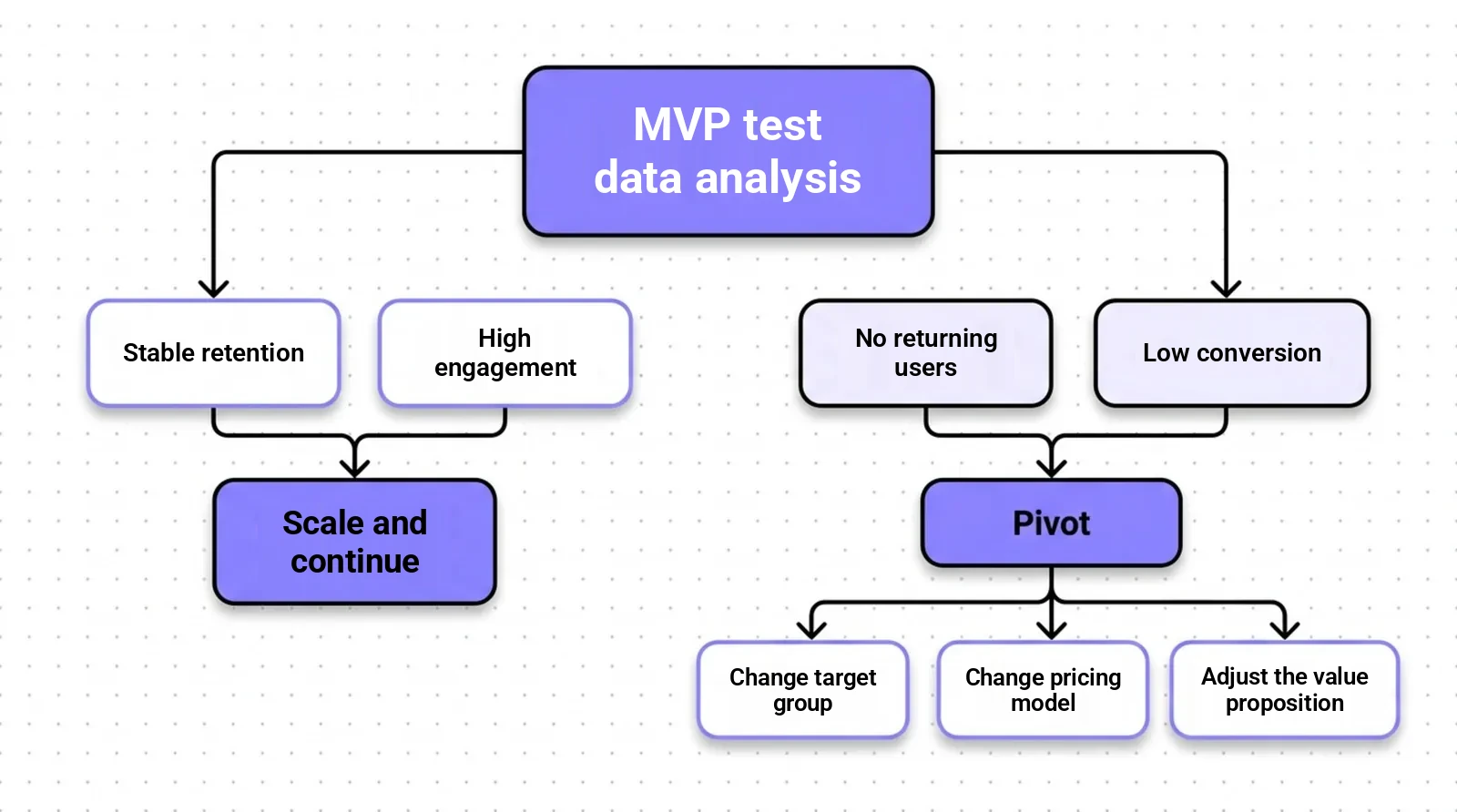
A pivot doesn't have to mean throwing the whole project in the bin. It often involves changing the target group, the pricing model, the distribution channel or the technology itself.
Steps to implement lean startup in practice - how to build a new product effectively?
Implementing lean startup principles requires discipline and openness to criticism. Every stage of work should rest on facts, not on attachment to your first idea. Building a startup is a continuous process of verifying assumptions, and direct contact with users is needed from day one.
Defining business hypotheses and testing them
Instead of writing multi-page analyses, formulate two basic types of hypotheses:
- Value hypothesis: how does the product solve the customer's problem and why will they want to use it?
- Growth hypothesis: how will new users find out about the solution and what will make the number of users start to grow?
Remember that rejecting a wrong hypothesis is a natural part of the process. Spotting a mistake quickly saves time and money for a direction that makes sense on the market.
Building and testing an MVP with real users
Once you have your hypotheses, you move on to creating an MVP. Depending on the industry, this might be a simple landing page, a manually run service (where you perform the processes by hand behind the scenes) or a functional prototype with one key feature. What matters is that the tool works reliably and lets the user experience the main value.
Next, you test the solution on the market. An example of an efficient test was the SafePacz project (laptop webcam covers), where rapid prototyping on 3D printers allowed the team to gather feedback and quickly redirect sales from the demanding B2C market to the more profitable B2B segment.
Collecting data and key product metrics
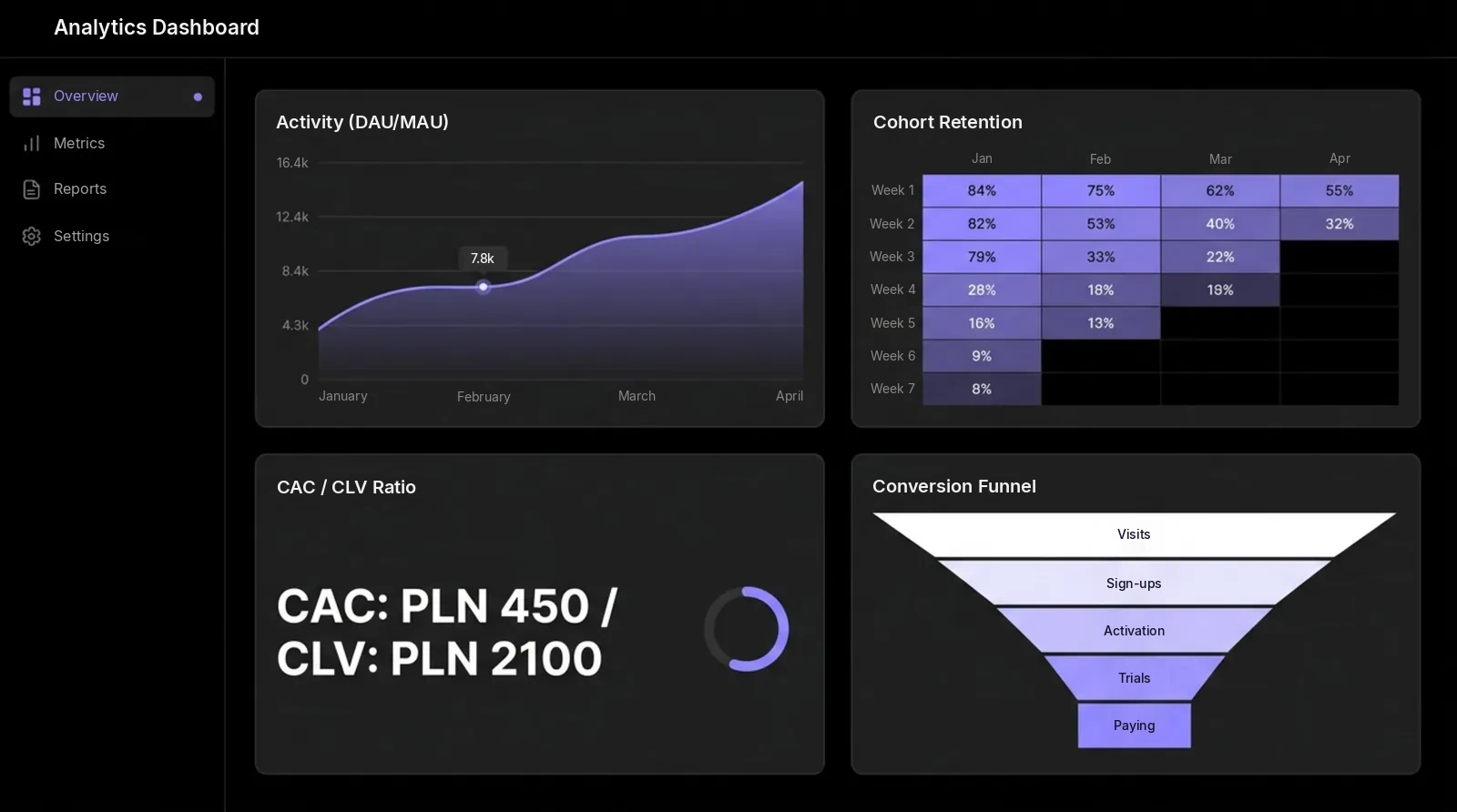
While testing your MVP, focus on metrics that reflect real business value. Avoid vanity metrics, such as page views or social media likes on their own, because they rarely translate into the company's survival.
Metrics worth watching:
- number of active users (DAU/MAU),
- retention (the percentage of people returning to the product after a week or a month),
- Customer Lifetime Value (CLV),
- Customer Acquisition Cost (CAC) relative to customer value.
Behavioural data shows the truth about your product without distortion.
Deciding whether to continue or change the concept based on data
Once you have collected the data, you face a choice: keep developing or modify your assumptions. If the metrics confirm your hypotheses, you roll out further iterations. If there's no interest and the numbers don't add up, you pivot. An early course correction is proof of good resource management, not a failure.
Benefits of using lean startup - more than saving money
Lean startup isn't just about cutting costs. It's a way of working that builds a habit of continuous learning in the team and of responding quickly to signals from outside. As a result, the organisation becomes more agile and copes better with real market challenges.
Learning market needs faster
Thanks to short feedback loops, you immediately see how customers react. You don't waste months preparing features nobody needs, and your decisions are based on up-to-date knowledge from the market.
Building a product that fits its users
When you involve your audience in creating the product from an early stage, you hit their needs precisely. The result is a solution that addresses a specific user pain point.
This approach was used, among others, by the Polish clothing brand Miapka Design. The company's founder started with short product runs, regularly collected feedback from parents and used it to refine each new model of children's clothing, building lasting relationships with her customers.
Reducing business risk and the cost of wrong decisions
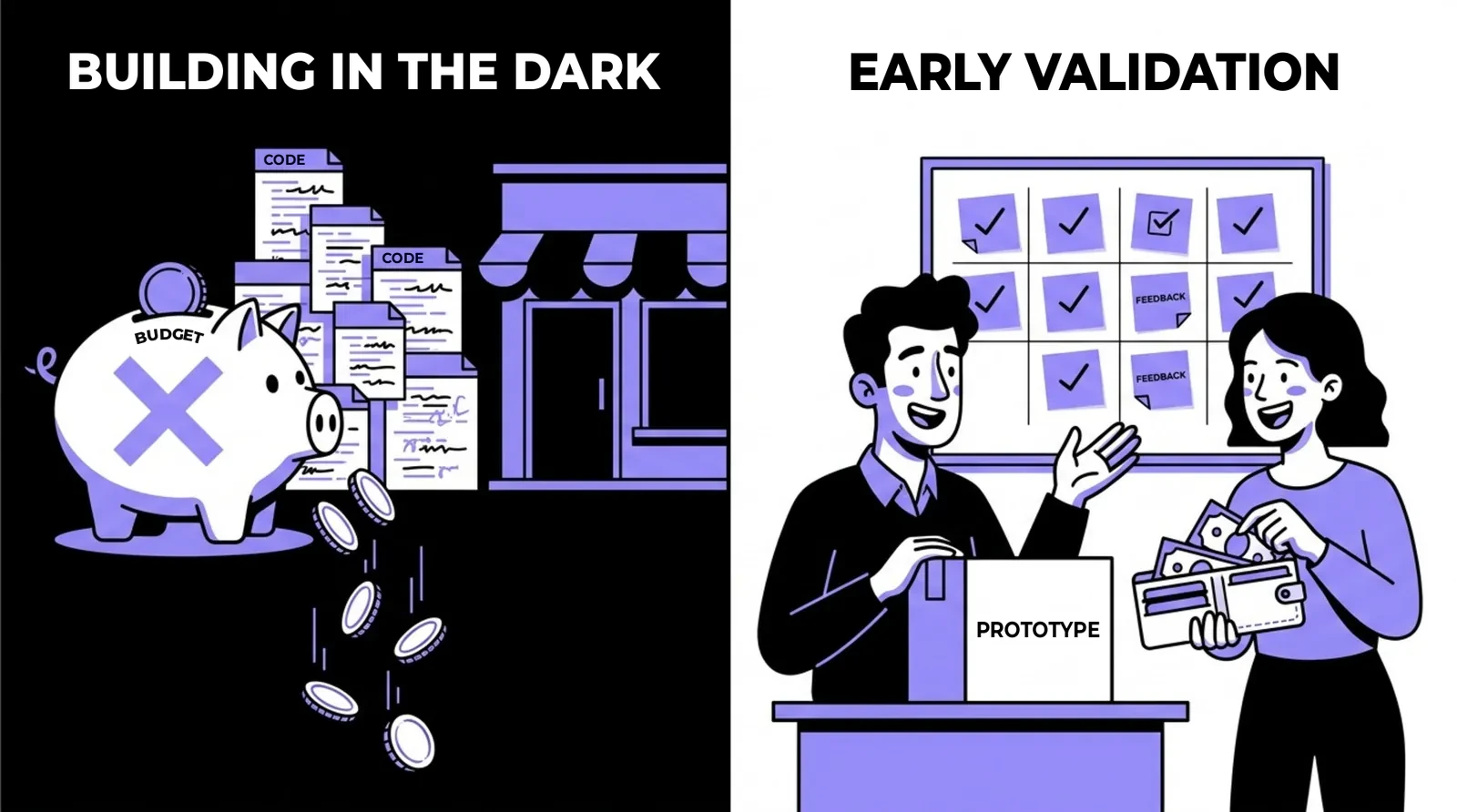
Early tests let you catch flaws in the concept at the prototype stage. You risk the small fraction of the budget needed for a simple experiment instead of spending all of it on an untested product. If an assumption turns out to be wrong, you change your approach without painful financial losses.
Scaling the project iteratively
You don't have to wait to enter the market until the product is complete. You develop it step by step, funding the next stages from your first revenue or on the basis of hard market evidence, which makes later funding conversations easier.
Typical challenges and mistakes when implementing lean startup
Although the build-measure-learn loop sounds intuitive, in practice it's easy to fall into traps. Lean startup requires a methodical approach, not haphazardly throwing half-baked ideas at the market.
The most common pitfalls and wrong assumptions
The most common mistake is confusing an MVP with a product that is simply faulty or made without care for quality. An MVP should be as simple as possible in terms of the number of features, but the key value has to work flawlessly. If you give users something that doesn't work, they will simply leave and won't give you any valuable feedback.
Other risks include relying solely on verbal declarations instead of behavioural data, and the so-called pivot loop - constantly changing the idea without learning from previous tests. It's also worth remembering that in regulated industries or deep tech (e.g. medtech, biotechnology), an MVP won't be a simple app, and the cheapest test may be a lab study or a formal and legal analysis.
How to avoid wasting resources while using lean startup?
Approach every experiment like a study: define a clear hypothesis, a success threshold and the budget worth spending to obtain that piece of information. Instead of asking how to build the cheapest prototype, ask: "what is the biggest risk in this project and which test will verify it fastest?".
Invest in gathering evidence, not in building more features just in case. Every further expense should be justified by knowledge gained in the previous step.
Getting started with lean startup - practical tips for your team
Implementing lean startup is above all a change in the way your team thinks. Start with small experiments. Even if you're developing the project after hours, you can set aside a few hours a week for conversations with potential customers and for verifying your assumptions.
How to prepare to implement lean startup step by step?
Start by defining the overall product vision, then break it down into measurable value and growth hypotheses. Make sure the team understands the purpose of the experiments and isn't afraid to discard assumptions that miss the mark.
Choose the simplest tools that let you make contact with the market: a simple landing page, a prototype in Figma or a manual service. Analyse the results regularly and plan your next actions based on them.
Tools and reading that support the lean startup process
It's worth reaching for the classic sources: "The Lean Startup" by Eric Ries, "Running Lean" by Ash Maurya and Steve Blank's materials on Customer Development.
The basic toolkit includes:
- MVP: a simple version of the product to verify the value proposition,
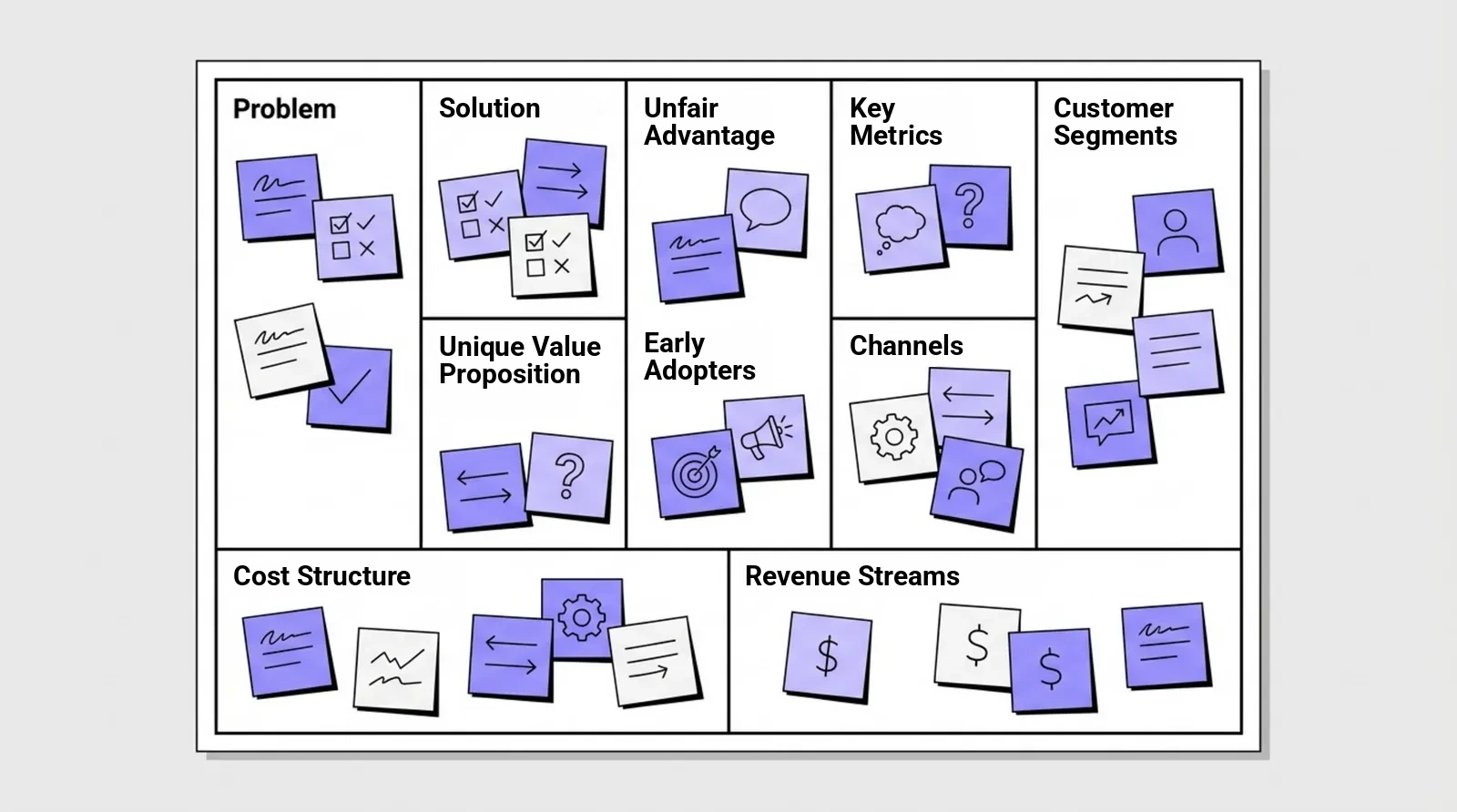
- Lean Canvas: a one-page business model focused on the problem and the solution,
- Customer Development: structured interviews with users,
- A/B tests: comparing the effectiveness of specific variants of messaging or features.
Where to look for support and advice?
Building a product alone can be hard, which is why it's worth testing your assumptions against other people. Being part of the founder community helps, as does taking part in meetups, workshops and startup community gatherings. Talking to mentors and people who have faced similar problems lets you quickly spot weak points in your plan and gain practical, first-hand knowledge.
Summary: lean startup as the key to developing a product without unnecessary costs
Lean startup is an approach to building a business under uncertainty through regular testing, data collection and working with real feedback. It lets you replace guesswork with hard facts and protects your budget from being invested in solutions the market doesn't need.
You fund the next stages of work only when earlier tests have confirmed that the chosen path makes sense. That way, step by step, you build a product that responds to customers' real needs and has solid foundations for further scaling.
Keep reading
All articles →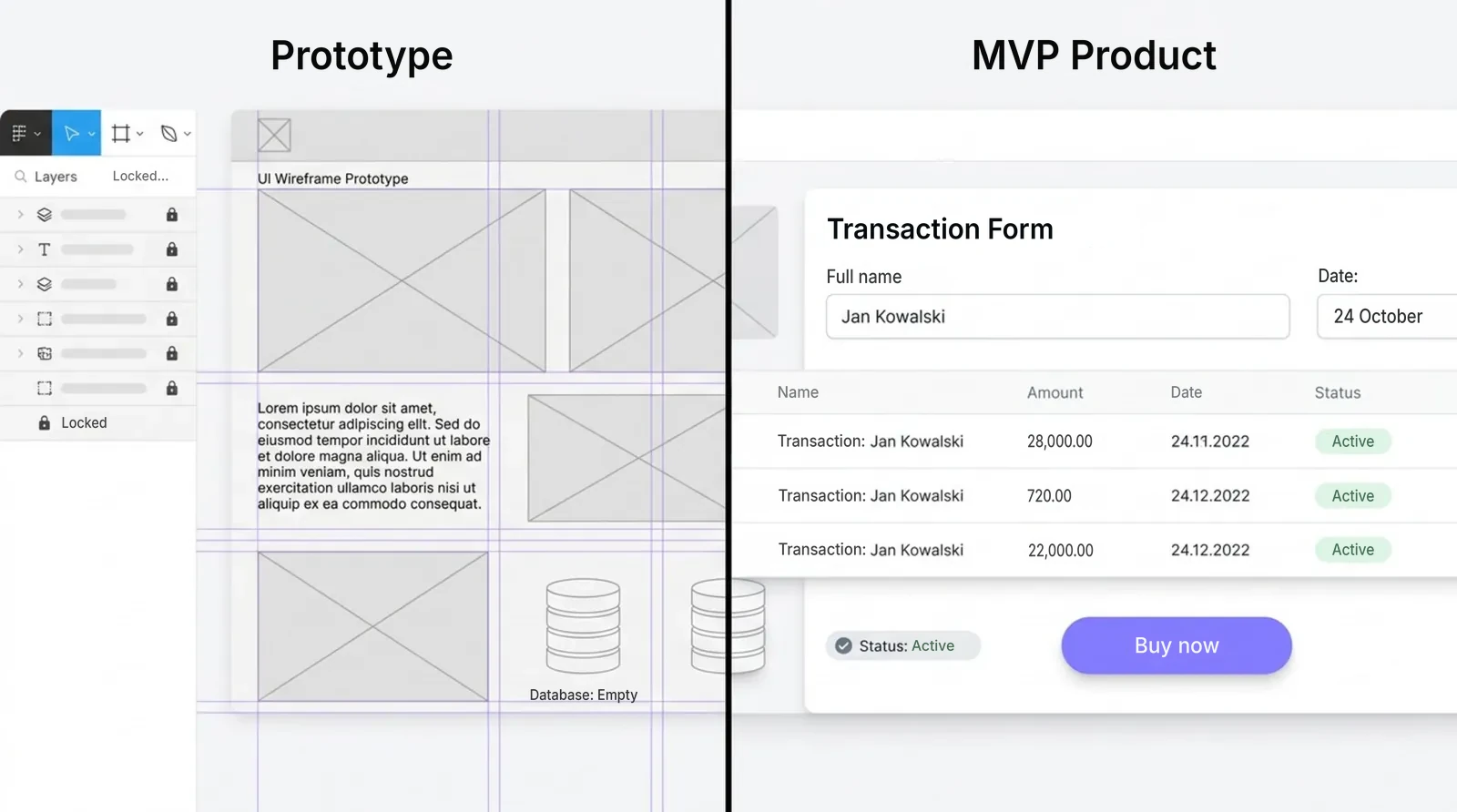
How to Build an MVP Without Losing Your Mind: A Practical Guide
How to build an MVP step by step: definition, process, key metrics, common mistakes, legal basics and examples of companies that started with an MVP.
How to Validate a Business Idea Before You Spend a Penny
How to validate a business idea for free: customer interviews, competitor analysis, Fake Door tests, MVP and pre-sales. Find out if the market wants it.
Product-Market Fit: How to Know Your Startup Has Found It
Product-market fit explained: the signals and metrics that show your startup has it, the red flags of missing it, and a step-by-step plan to find it.