
Startups in Poland 2026: The Ecosystem and Its Biggest Players
Startups in Poland 2026: key cities, VC funds, business angels, unicorns and support programmes. See how the Polish startup ecosystem really works.
Contents
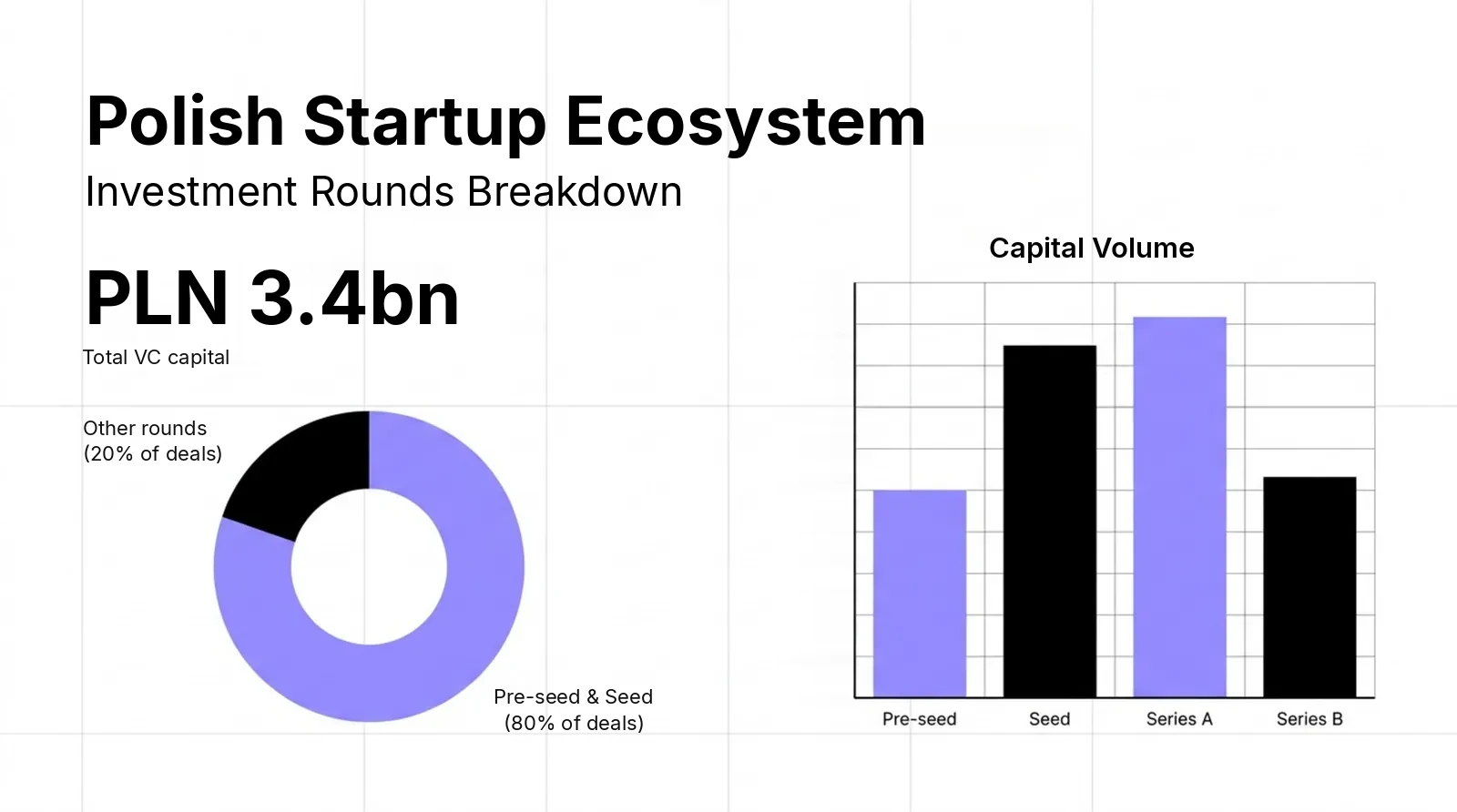
What does the Polish startup ecosystem look like in 2026, and where should you look for capital and valuable connections? The domestic tech market is accelerating fast - in 2025 alone, VC funds invested PLN 3.4 billion in Polish companies, with SaaS, AI and deep tech projects leading the way.
Below you will find a concrete map of the key cities, investors, rounds and communities that help founders grow products in Poland and on foreign markets - from local initiatives such as Startup Community Poznań to nationwide events that bring the ecosystem together, such as Startup Community Summit.
In 2025, Polish tech companies raised PLN 3.4 billion from venture capital funds (up 28% year on year, excluding mega-rounds). In Q1 2026 the nominal figure was PLN 2.1 billion, of which as much as PLN 1.81 billion came from a single ElevenLabs round. Without it, the market would have closed at PLN 308 million, which shows how strongly individual global successes affect the statistics. Today Poland is one of the most active VC markets in Central and Eastern Europe, where SaaS remains the most popular business model, and the country is increasingly described as a stable base for building and registering business structures.
Startups in Poland 2026 - what defines the ecosystem?
In 2026 the Polish startup market is shaped by strong technical talent, the business maturity of founders and private capital, complemented by public programmes. There is no shortage of challenges, but there is a clear shift towards building products for foreign customers from day one.
What are the key elements of the Polish startup ecosystem?
The ecosystem currently rests on three pillars: engineering skills, growing business know-how and investor experience. As Juan José Güemes of IE University noted during IE Venture Day Poland 2026, Polish founders are increasingly quick to combine technology with the ambition to scale beyond the country's borders.
Industry organisations also play an important role, such as the Startup Poland Foundation, which represents the community's interests at, among others, the European D9+, B9+ and S9+ summits in Luxembourg. Practical tools supporting the market include:
- SP Matcher - an AI platform that makes it easier to match startups with investors,
- SP Events Radar - an aggregator of tech and networking events.
Initiatives like these help build valuable connections and make it easier for founders to navigate the market at every stage of a company's development.
How has the startup landscape in Poland changed in recent years?
Just a few years ago, the Polish market was focused mainly on building the foundations. Today we increasingly see companies that compete globally from the start and attract foreign capital and experienced specialists.
It is worth looking at the numbers without excessive optimism, though. While the early stages are doing very well - in Q1 2026 as many as 35 deals (nearly 80% of all investments) were pre-seed and seed rounds - financing at the scaleup stage remains a challenge. Companies that need capital for further growth (Series B rounds and later) often have to look for it from foreign funds.
Which industries dominate Polish startups in 2026?
Although SaaS remains the most common business model in Poland, the strongest momentum is seen in AI, automation, deep tech, life sciences, cybersecurity, e-commerce and fintech.
Companies building marketing and sales tools hold a strong position:
- LiveChat (listed on the Warsaw Stock Exchange since 2014, serving more than 37,000 customers in over 150 countries),
- SALESmanago (more than 3,000 customers in 50+ countries),
- Brand24.
In operations and online sales, companies such as Booksy, Selmo and Packhelp are winning international markets. In office process automation, Autenti (digital signatures) and ClickMeeting (webinars and video meetings) are proving themselves. The artificial intelligence sector has also made a real leap, as confirmed by the high-profile ElevenLabs and Wordware rounds.
The most important technology trends in Polish startups in 2026
In 2026, artificial intelligence, automation and deep tech are becoming standard in digital products. Polish teams are not only implementing global technologies but also building their own solutions on top of them, which they successfully sell on foreign markets.
How are artificial intelligence and automation shaping new companies?
AI in Poland has gone through a huge evolution. Projects such as ElevenLabs and Wordware closed record funding rounds and gained recognition worldwide.
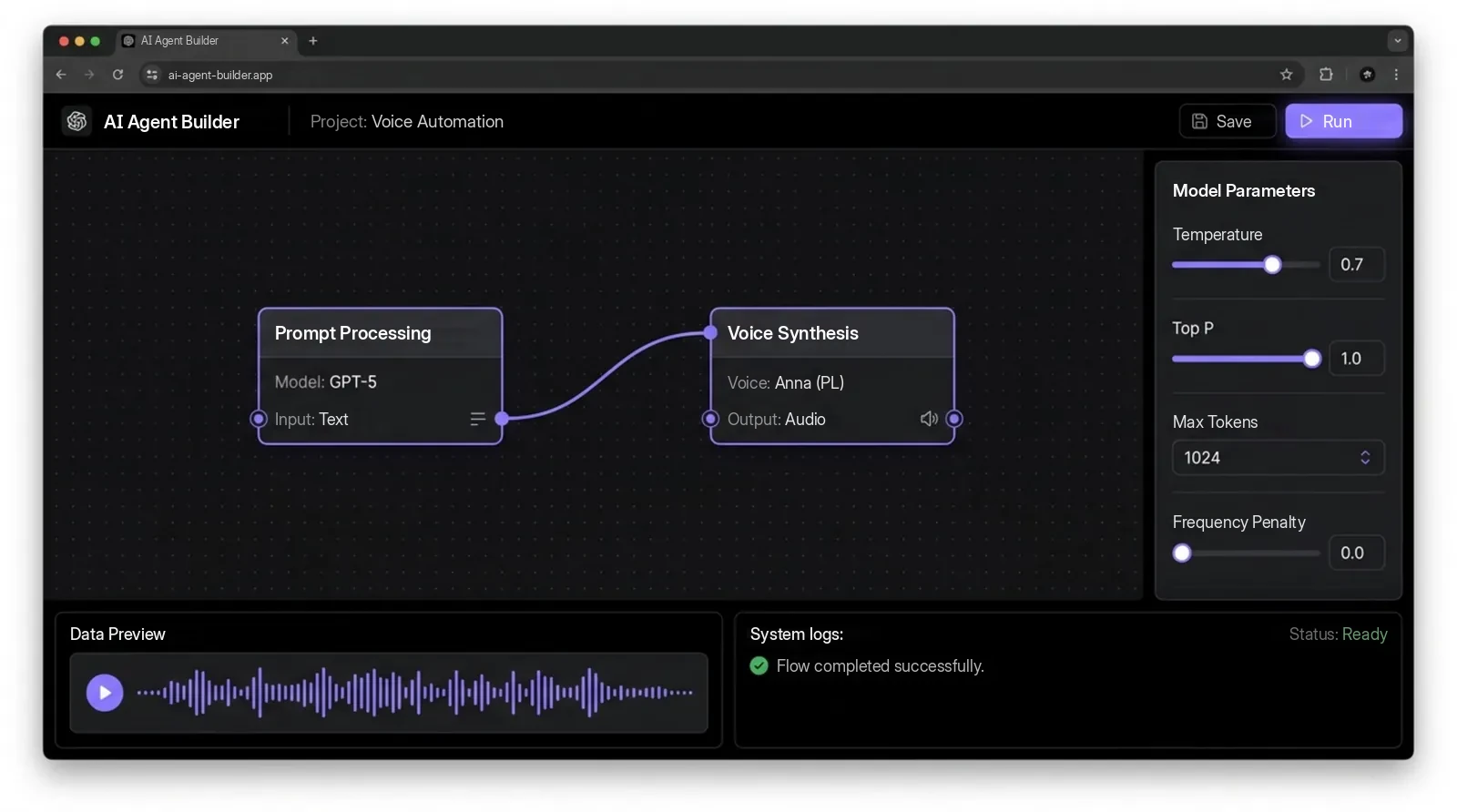
ElevenLabs, which develops generative AI for voice synthesis, reached a valuation of USD 11 billion after a USD 500 million Series D round in February 2026. Its co-founder, Mati Staniszewski, was named on Time magazine's list of the 100 most influential people in AI.
Wordware - a low-code platform for building AI agents - became one of the most widely discussed companies in Silicon Valley after raising a USD 30 million seed round.
These case studies show how Polish products help other companies automate sales, customer service and research. Another practical example is Tidio with its Lyro assistant, which automates customer service for SMEs.
In which areas are Polish startups most innovative?
The deep tech and life sciences sectors are building a very strong position. The value of companies in these industries has grown 15-fold over the last decade, reaching around EUR 6 billion. Poland ranked:
- 1st in the CEE region for Health sector funding (2025),
- 3rd for robotics projects (2025).
There is a clear shift here from simple consumer apps to advanced research and development that requires laboratories and a lot of computing power.
Cybersecurity and HR solutions are developing in parallel. Authologic has earned recognition for its AI-based identity verification technology, and Mindgram responds to the growing demand for workplace wellbeing programmes - in a segment growing in Poland by several dozen percent year on year.
What is driving the growth of e-commerce and fintech in Poland?
The growth of e-commerce and fintech stems from the large scale of the Polish domestic market and the relatively low cost of testing solutions before going abroad, as pointed out by, among others, Tomasz Wykowski of Factorial Poland and Lech Kaniuk.
Examples of companies in this segment:
- Selmo (a live commerce tool for Facebook and Instagram) - with GMV exceeding PLN 1.5 billion in 2024,
- Packhelp (production of custom packaging) - serving global brands, including Google and H&M,
- Autenti (an e-signature platform) - backed by leading banks (PKO BP, Alior Bank, BNP Paribas), genuinely reducing the cost of formal processes.
An additional advantage of Polish companies is full compliance with EU regulations and GDPR, which makes expansion into European markets easier.
Where are the largest Polish startups growing?
Although tech teams are founded all over the country, capital and business infrastructure are concentrated around a few major urban centres.
Which regions and cities are the centres of innovation?
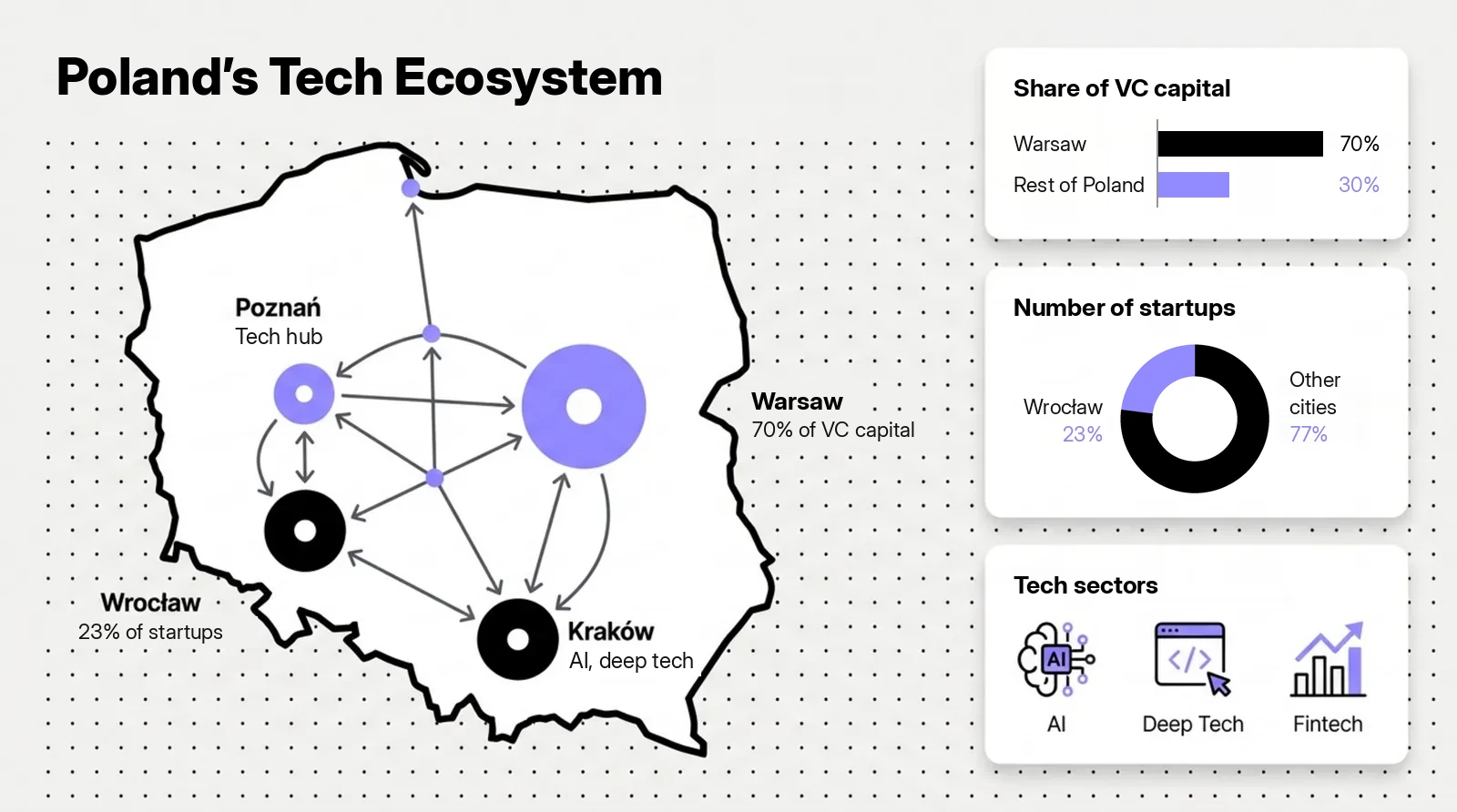
The main points on the map are Warsaw, Kraków and Wrocław. Warsaw remains the leader in terms of capital - in 2025 it accounted for around 70% of VC funding and is the natural centre for enterprise sales.
In terms of technological value, however, the market is more balanced: more than half of the total valuation of companies falls to Lesser Poland (Małopolska), Greater Poland (Wielkopolska) and Lower Silesia (Dolny Śląsk). In 2025, 23% of Polish startups operated in Wrocław, making it the second-largest hub by number of companies. Kraków, in turn, specialises in deep tech, AI and cooperation with technical universities.
The ecosystem is also growing outside the capital thanks to regional programmes such as ARIS in the Podbeskidzie region and the Startup Kraków platform. Local hubs such as Startup Community Poznań also play a key role, creating a space where founders, investors and startup operators can meet.
Why do Warsaw, Kraków and Wrocław attract investors?
Each of these cities offers different advantages:
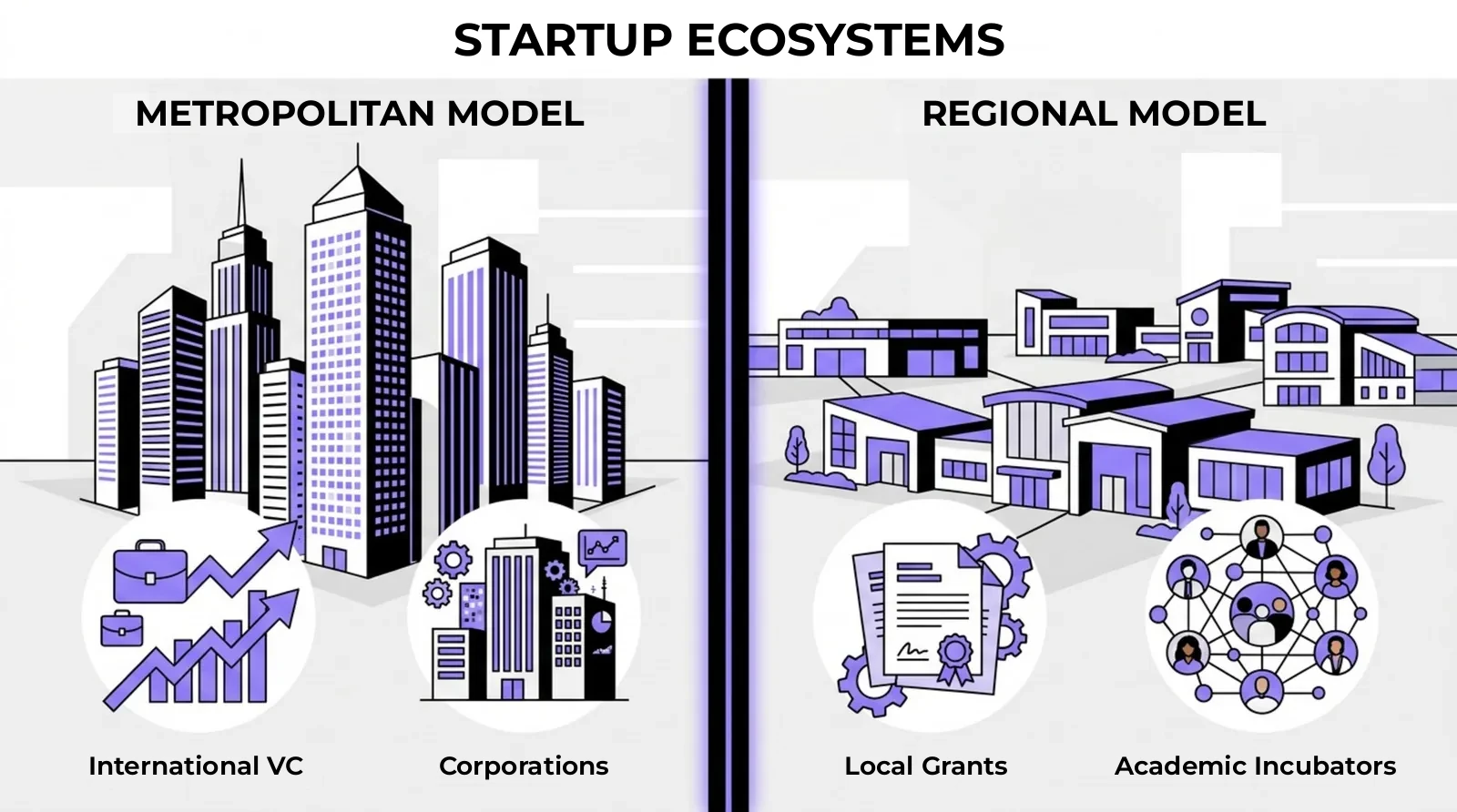
- Warsaw - the largest concentration of VC funds, business angels and headquarters of international corporations, which makes fundraising and enterprise partnerships easier.
- Kraków and Wrocław - academic resources, access to experienced engineers and research laboratories. Kraków leads in AI and deep tech research, while Wrocław successfully combines software with MedTech.
Shared spaces for work and exchanging experience also support growth, such as Startup Poland's base at Kraków Główny railway station.
What are the pros and cons of locating a startup outside the big cities?
Building a company outside the main metropolitan areas comes with specific advantages and limitations.
Pros:
- lower operating costs (office rent, the team's cost of living),
- easier access to regional support programmes and grants,
- proximity to a close-knit local community.
Local initiatives worth mentioning include the ARIS programme, the Radom Academy of Entrepreneurship and Innovation (RAPI) and Akcja Inkubacja in Tarnów.
Cons:
- harder direct access to VC funds based in the capital,
- fewer international business partners on site,
- less frequent meetups and industry events.
This barrier is reduced by nationwide and regional events such as Startup Community Summit and the SP Events Radar database, which make building connections easier regardless of location.
The biggest players on the Polish startup market in 2026
The Polish market includes both mature companies with unicorn status and fast-growing early-stage teams that are successfully validating their products on international markets.
Which Polish startups have reached unicorn status?
In 2026, several companies with Polish roots reached a valuation above USD 1 billion. The leading example is ElevenLabs, valued at USD 11 billion after its Series D round in February 2026.
DocPlanner, which runs a medical platform in more than a dozen markets, has held this status for years. Booksy is approaching this group after a EUR 70 million round. It is also worth mentioning ICEYE - with Polish-Finnish roots - which exceeded a USD 10 billion valuation in satellite technology.
Which companies inspire others in the startup ecosystem?
Alongside the highest-valued companies, there are many Polish teams building stable products with a strong customer base:
| Area | Example companies | What they are known for |
|---|---|---|
| Marketing and sales | Brand24, LiveChat, Tidio, SALESmanago, Edrone | media monitoring, customer service, marketing automation |
| Operations and online sales | Selmo, Packhelp | live selling on social media, packaging for global brands |
| Back office | Autenti, ClickMeeting | online signatures, webinars |
| AI | Wordware | low-code for building AI agents |
| Cybersecurity and HR | Authologic, Mindgram | identity verification, employee wellbeing |
These companies show that building scalable B2B software from Poland is entirely feasible with a good product-market fit.
What sets the market leaders apart from the competition?
The most successful Polish companies share several traits:
- A global approach from the start - projects such as ElevenLabs and Wordware build their product for customers around the world from the very first weeks.
- Proprietary technology and R&D - the advantage in deep tech and AI is based on unique models and solid data infrastructure.
- Cooperation with international funds - growth-stage rounds are most often led by foreign capital.
- A focus on real B2B problems - concentrating on concrete business value helps keep churn low.
- Understanding European specifics - GDPR compliance and integrations with local payment and e-commerce systems (e.g. BLIK, a popular Polish mobile payment method) make it easier to launch in Europe.
Investors, funds and support for Polish startups
Growing a project requires access to capital at different stages of building a company. In 2026 the Polish market offers a diverse mix of private and public funding sources.
What types of support and funding are available?
Founders in Poland can use several paths to raise capital:
- Venture capital - VC funds, which injected PLN 3.4 billion into the Polish market in 2025.
- Business angels - private investors (e.g. Sergey Keller, Tanya Aulachynskaya) who offer not only pre-seed capital but also practical knowledge and mentoring.
- Public capital - PFR Ventures (82 deals in 2025), which co-finances early-stage funds.
- Accelerator programmes - offering workshops, idea validation and first grants.
There is still a visible imbalance, however: the pre-seed and seed markets enjoy broad support, while Series A and later rounds often require bringing in investors from Western markets.
Which VC funds invest most actively in Poland?
PFR Ventures plays a major role, along with institutional initiatives that provide capital to independent management teams.
One example is the EUR 350 million Future Tech Poland programme, financed by BGK (Bank Gospodarstwa Krajowego, the Polish state development bank) and the European Investment Fund (EIF). The programme invests in VC funds, including:
- Expeditions II (defence and dual-use technologies),
- Cogito II (AI and fintech),
- Balnord (tech companies from the Baltic Sea region).
In August 2026, BGK and the EIF allocated an additional EUR 30 million to a fund managed by Inovo.vc. This model supports the development of a professional VC market instead of handing out grants directly.
How do government programmes and accelerators support growth?
Accelerators and public programmes are an important part of the business environment. The Ministry of Development and Technology, together with the startup community (including Startup Poland), is preparing a new "Strategy for Startups and Scaleups 2027-2035".
In education and early incubation, Startup Academy is active, running programmes such as:
- Akcja Inkubacja (developing first ideas in Lesser Poland),
- RAPI (support for students and PhD candidates),
- Radom Business Development Programme (for small and medium-sized enterprises),
- Academy Smolna (expert advisory in Warsaw),
- educational programmes for schools, such as "Przedsiębiorcza Młodzież" (Entrepreneurial Youth) and "Startup dla zawodowców" (Startup for vocational students).
International expansion is supported by the Startup Global programme, run in cooperation with PARP (the Polish Agency for Enterprise Development). Beyond capital, the key elements here are the exchange of know-how, workshops and honest feedback from practitioners.
How to join the startup ecosystem in Poland?
Joining the tech community in 2026 is much easier than a few years ago - whether you are building a product, looking for projects to invest in, or want to share your knowledge as a mentor.
What to use: accelerators, incubators, networks
For people taking their first steps, incubators and validation programmes are a good starting point:
- Akcja Inkubacja - more than 40 hours of workshops and 10 hours of mentoring while building an MVP,
- RAPI - bootcamps and support for academic teams.
It is also worth attending industry events regularly. Conferences such as IE Venture Day Poland and tools like SP Events Radar help you find valuable meetings.
Most important of all, however, is being present in local communities. Hubs such as Startup Community Poznań and events like Startup Community Summit let you talk directly with other founders, share fundraising experiences and meet business angels without unnecessary distance.
How to get involved as an investor, mentor or business partner?
Depending on your role in the market, you have several paths to choose from:
- Investor: you can join a business angel group or a VC fund. Tools such as SP Matcher help filter projects by industry and stage of development.
- Mentor: accelerators are keen to invite founders with operational experience. Sharing knowledge is a practical way to support new teams and stay in constant touch with the market.
- Business partner: companies can work with support organisations (e.g. accounting, legal or technology services) or create pilot programmes for startups.
Regional events and community meetups are the easiest opportunity to check what the market needs and build direct business relationships.
Frequently asked questions about Polish startups - FAQ 2026
Here are answers to the most frequently asked questions about running and funding a startup in Poland in 2026.
Why do Polish startups attract international investors?
The main reasons are:
- Strong engineering skills and ambition - Polish tech teams are valued for their technical skills and are increasingly bold in building global sales.
- A good market for testing an MVP - a large number of users and lower operating costs make it possible to validate a product effectively before expanding abroad.
- A stable macroeconomic environment - a growing economy and availability of early-stage capital.
- Credible success stories - the results of companies such as ElevenLabs show that Polish projects can reach valuations of around USD 11 billion.
Are Polish startups globally competitive?
Yes. Besides unicorns such as ElevenLabs and DocPlanner, companies from Poland serve leading global corporations. LiveChat works with 37,000 customers, SALESmanago operates in more than 50 countries, and Polish SaaS tools are chosen by companies including Microsoft, PayPal and NASA. This confirms that Polish products compete successfully on international markets.
What challenges do startups in Poland face?
The most important challenges include:
- A funding gap for growth rounds - raising capital at the Series B stage still requires turning to foreign funds.
- The legal environment - the market needs further simplification of formal and tax procedures for building holding structures.
- A limited number of exits on the Warsaw Stock Exchange - the lack of frequent tech IPOs means that most exits take place through mergers and acquisitions involving foreign investors.
What should you do to set up a startup in Poland in 2026?
It is worth breaking the process of building a company into concrete stages:
- Define a real market problem and check exactly who you are building the solution for.
- Build a simple MVP focused on one key feature instead of developing a complicated system.
- Appoint a person responsible for implementation and regular contact with the first users.
- Join incubation programmes (e.g. Akcja Inkubacja or RAPI) to benefit from mentoring and prepare for conversations with business angels.
- Collect honest feedback, measure engagement and verify customers' willingness to pay for the product.
- If the metrics are promising - scale sales. If not - pivot or test a different approach.
In 2026 the Polish ecosystem has strong technical resources, access to early-stage capital and a growing network of founders who share practical experience. The most important thing is to draw on the knowledge of people who have walked this path before.

Direct exchange of experience is the foundation of faster growth. Initiatives and events such as Startup Community Poznań and Startup Community Summit create a space where founders, business angels and startup operators can talk openly about real challenges and build strong companies together.
Keep reading
All articles →
What Is a Startup and When Does It Stop Being One?
What is a startup, how does it differ from a small business and when does it stop being one? Blank and Ries definitions, growth stages, signs of maturity.
Cost of Starting a Company in Poland: Sole Proprietorship (JDG) vs sp. z o.o.
What does starting a company in Poland cost? Compare JDG and sp. z o.o.: registration fees, accounting, ZUS, taxes and a realistic startup budget.
How to Build an MVP Without Losing Your Mind: A Practical Guide
How to build an MVP step by step: definition, process, key metrics, common mistakes, legal basics and examples of companies that started with an MVP.