
How to Find a Co-Founder Without Destroying Your Startup
How to find a co-founder for your startup: where to look, how to test the fit in a trial project and what to put in your founders' agreement.
Contents
How do you find a co-founder you can get through the toughest moments of a startup with, without the company falling apart? The key is to test the fit in real work and to secure the rules of your cooperation before you even split the equity. Instead of looking only for the missing line in your CV, you need to test working style, mutual trust and how you make difficult decisions together.
Building a company alone can be lonely and exhausting. Market experience shows that teams of two or three people usually do better than solo founders. A good co-founder lets you share day-to-day tasks, fills your skill gaps, brings a different perspective and gives you real psychological support in the everyday startup reality.
What is a co-founder and why does the choice of partner matter for the company?
A co-founder is someone far more important than a first employee or an external advisor. It is a person who co-creates the vision with you, takes on risk and is responsible for growing the business. Instead of expecting a standard salary from day one, they invest their time, know-how and often their own money in exchange for equity in the company. At the early stage you validate the idea together, build the product and fight for your first paying customers.
The choice of co-founder directly shapes the organisational culture, the ownership structure (cap table), the pace of growth and the project's chances of survival. A well-matched partner raises the quality of business decisions and covers the areas where you lack practice.
The co-founder's role in growing a startup
This role evolves dynamically as the project grows. At the beginning, when the budget is limited, the co-founder takes over key operational areas you cannot delegate yet - from programming and product development, through sales and marketing, to finance and formalities.
The psychological side is just as important. Building a startup is a constant rollercoaster of successes and problems. A partner who can keep a cool head in a crisis gives you room to assess the situation calmly and draw conclusions. Different perspectives help you avoid costly mistakes, and VC funds and business angels are much more willing to talk to complementary teams than to solo founders.
Founder vs co-founder: differences and scope of responsibility
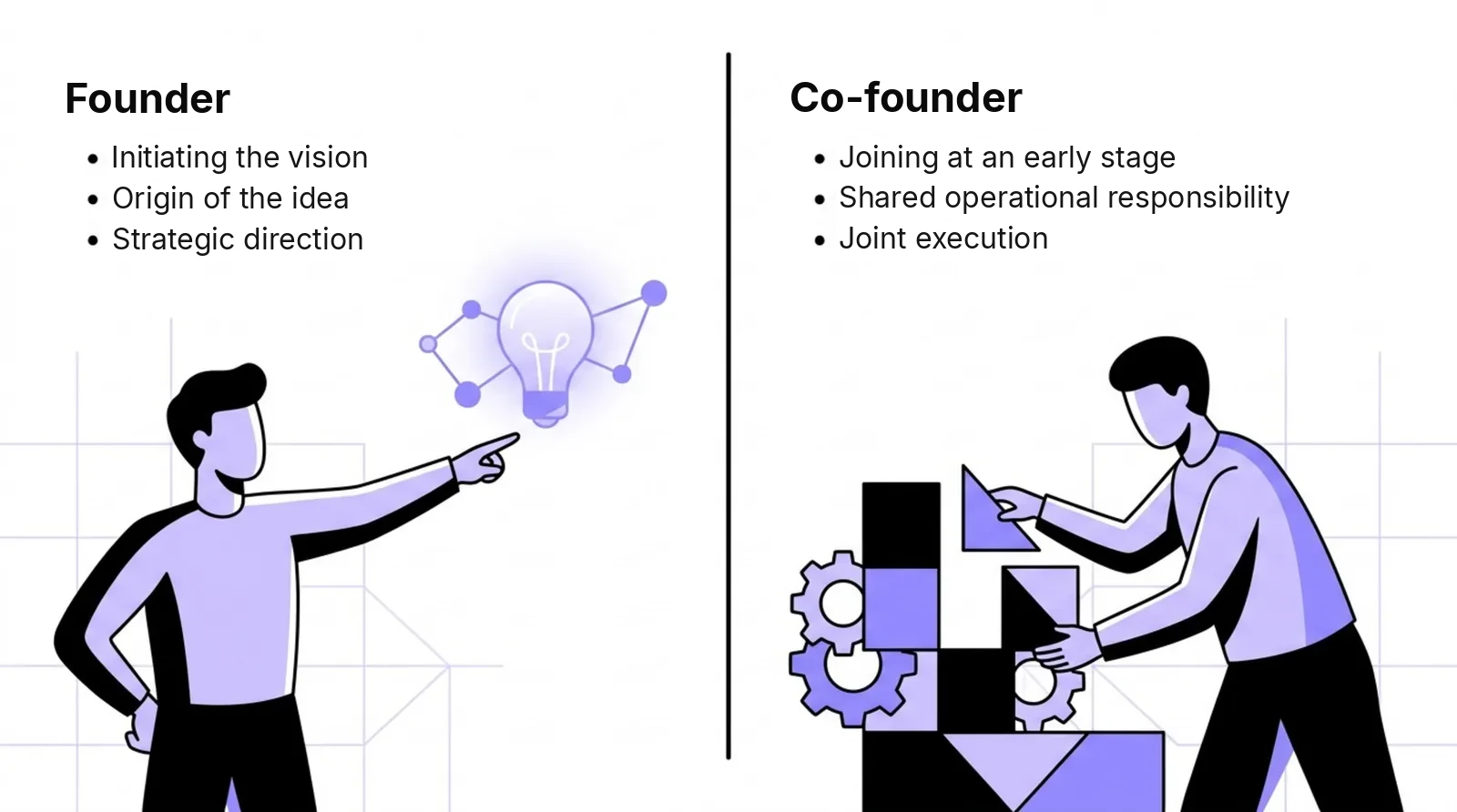
In practice, the founder is usually the author of the original idea and the initiator of the project, while the co-founder joins at a very early stage to share responsibility for building the company from scratch. Both roles require full commitment and a willingness to take risks.
It is worth agreeing on the division of responsibilities as early as possible. Even if everyone does everything at the beginning, clearly name the domains: who has the final say on technology, who on sales and who on finance. Without a clear division of roles you get misunderstandings and decision paralysis.
Why do co-founder relationships so often break down?
Statistics show that conflicts between founders account for more than 60% of early-stage startup failures. The reason is rarely a lack of technical skills. Most often the problem is eroding trust, diverging visions of growth, unequal workload or disputes over the equity split.
Unspoken frustrations escalate quickly. Without open communication and regular feedback, small frictions turn into open conflict. Differences in financial risk tolerance or life priorities can block the company's growth and lead to a costly split between the partners.
Benefits and challenges of working with a founding partner
Working with a business partner brings enormous value, but it also carries specific risks that need to be handled pragmatically.
The advantages of combining skills and experience
Combining complementary skills is the foundation of a stable business. It is rare to find a person who writes code, designs system architecture and runs effective B2B sales with equal ease. Pairing a technical profile with a business one lets you build an MVP faster, test the market and avoid overload.
Shared responsibility makes it easier to keep up the pace of work and lets you test ideas on the go. A good partner can challenge your assumptions, point out blind spots in your strategy and bring the discussion back down to earth when emotions take over.
The risk of conflict and the consequences of a poorly chosen co-founder
A mismatch in values or work ethic can paralyse even a promising product. When there are no agreements on intellectual property, division of duties or success criteria, tension builds quickly.
The consequences of choosing the wrong partner can be severe: loss of liquidity, wasted months of work, decision deadlock and, in extreme cases, liquidation of the company. Instead of focusing on talking to customers and developing the product, the founders start losing energy on internal disputes. That is why choosing a co-founder must be based on facts and observations from working together, not just on a good impression after one coffee.
How to define what kind of co-founder you are looking for?
Before you start searching, take an honest inventory of your resources and the project's needs. Don't write an unrealistic wish list - define precisely the skills your company is actually missing.
Analysing your own strengths and weaknesses
Start with an honest audit of your skills. List the key areas of how a startup operates and rate your level in each of them:
| Area | Your rating (expert / average / none) | Priority for the project right now |
|---|---|---|
| Technology and product development | ... | ... |
| Sales and customer acquisition | ... | ... |
| Marketing and community building | ... | ... |
| Finance, legal and operations | ... | ... |
Identify the bottlenecks. If your main challenge is validating the idea and winning your first ten paying customers, you need someone with hands-on sales experience, not another developer. Also consider your preferences: which tasks you feel confident about and which ones you keep putting off.
The ideal profile: skills, values and working style
Beyond hard skills, personality traits, resilience under pressure and shared values are crucial. Agreement on fundamental principles makes it easier to make decisions in difficult moments.
Define your expectations on the following:
- Motivation: why you want to build this particular startup and what your long-term goals are.
- Division of roles: who takes the CEO role and bears final responsibility for the company's direction.
- Approach to capital: whether you are bootstrapping or planning to fundraise with pre-seed/seed rounds.
- Working mode: preference for on-site, remote or hybrid work.
- Flexibility: readiness to pivot when the market disproves your initial hypotheses.
- Financial situation: whether the partner can work without a salary for a while or needs a steady income right away.
- Availability: immediate full-time (100%) commitment or gradually joining the project.
Defining key roles and complementary skills
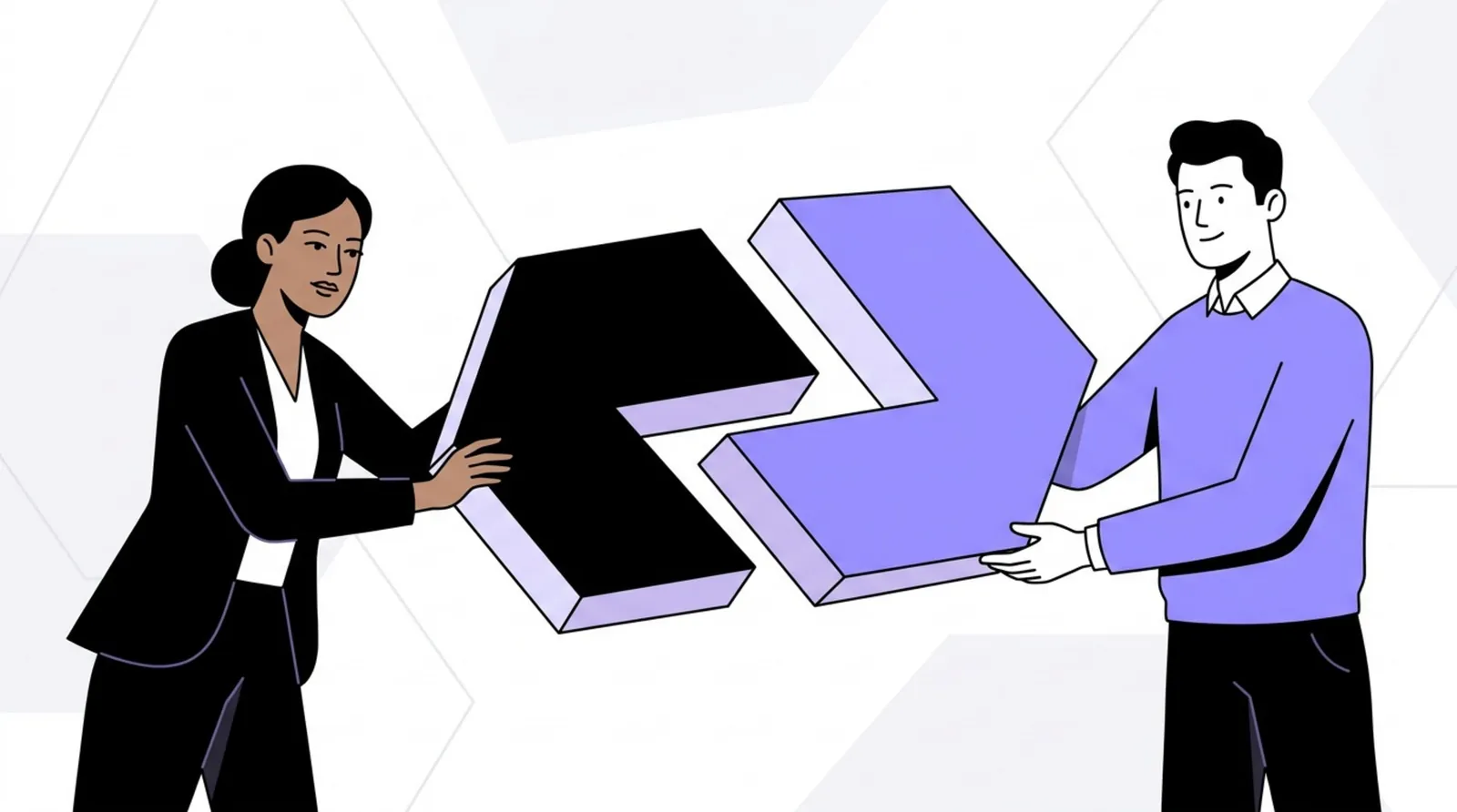
Tech + business is the classic, proven duo, but skills alone are not enough. At the early stage the product often changes, so the ability to learn fast, pragmatism and a willingness to take on tasks outside your narrow specialisation become critical.
Look for people with sound judgement, accountability for delivering on agreements and the ability to admit a mistake. These traits build a partnership based on facts rather than on fighting over who is right.
Where and how to look for a co-founder effectively?
The best founding teams do not come from random ads but from gradually building relationships among people who actually create things. Direct contact and joint initiatives let you quickly see how a person thinks and solves problems.
Using your own network
Your existing network of relationships is the safest starting point. You know the working style of former colleagues, friends from projects or university, which lowers the risk of a mismatch.
Make a list of people who combine strong skills with a work ethic you trust. Instead of asking general questions, ask directly: "Who would you recommend in B2B sales who has early-stage experience and is thinking about building their own project?". Recommendations from trusted acquaintances save time.
Online platforms and startup communities
The internet lets you go beyond local contacts, especially when you are looking for niche technology or industry skills. You can use platforms such as YC Co-founder Matching, CoFoundersLab or industry groups on Reddit (e.g. r/cofounder, r/SaaS) and Indie Hackers.
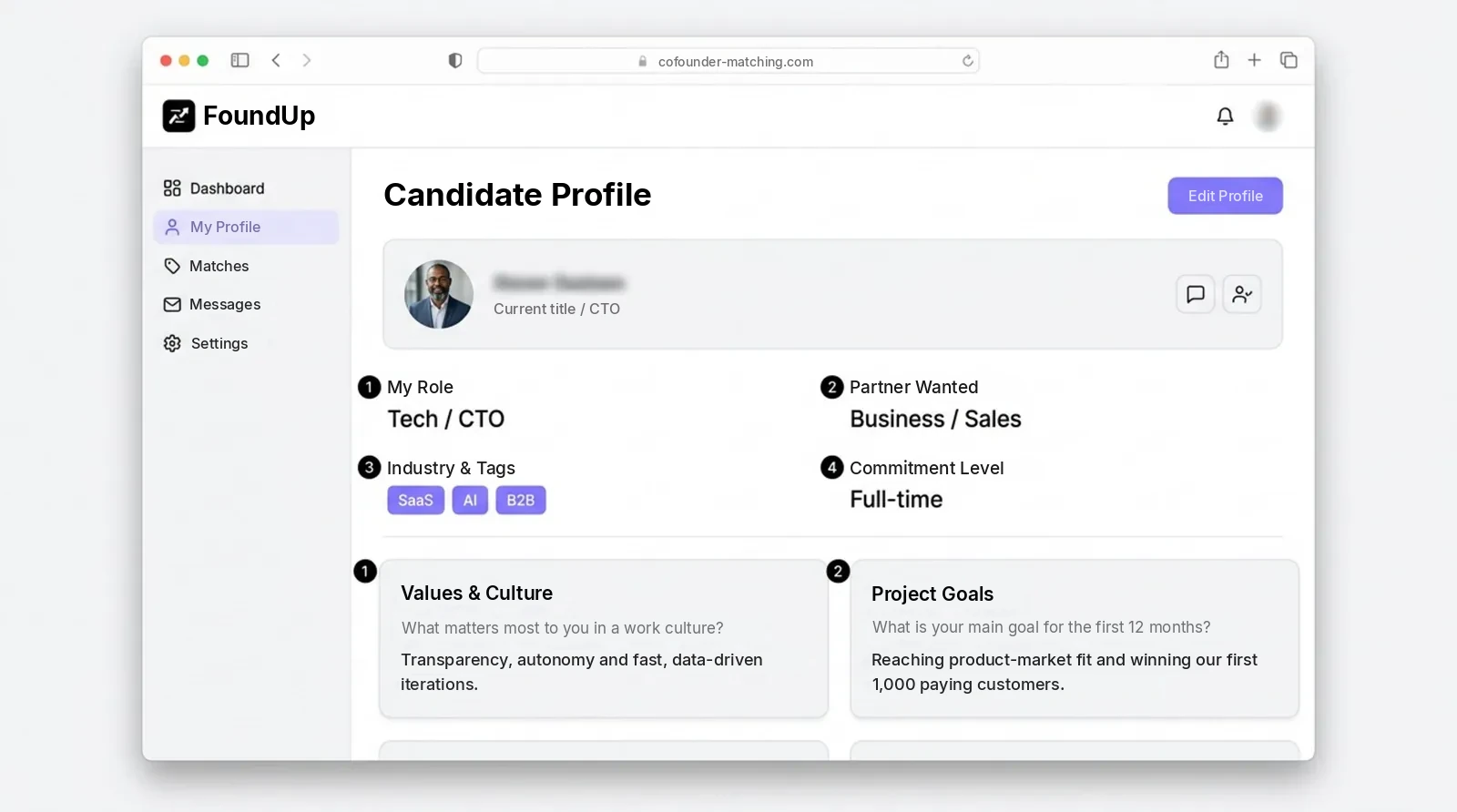
Treat an online platform only as an initial filter. Before you make a decision, you need to test the cooperation in action. Prepare a specific profile:
- What real problem you are solving and what stage of validation your project is at.
- What skill profile you are looking for and what you bring to the table.
- How you picture the first weeks of working together.
Industry events, meetups and startup competitions
In-person meetings let you check personal fit quickly. Good places to meet the right people are local ecosystem gatherings, such as Startup Community Poznań meetups or larger events like Startup Community Summit, as well as Startup Weekend and technology conferences.
Instead of collecting random contacts, focus on valuable conversations. Prepare a simple, concrete description of what you are building, what stage you are at and who you are looking for to join the team. If you meet someone interesting, suggest a short 1:1 conversation and a joint discussion of the project's challenges.
What to watch out for when using co-founder matching platforms?
Online profiles tend to be idealised. Declared skills do not always translate into the ability to deliver on a limited budget and under time pressure. A match makes sense when you share an understanding of the market problem, not just a desire to "start some startup".
How to select and vet potential partners?
Conversations about vision and strategy are not enough. A co-founder candidate's real value is verified while delivering specific tasks under deadline pressure.
First conversations and testing personal chemistry
Meet on neutral ground - over coffee or on a short working call. Check whether the conversation is based on specifics and whether you can discuss difficult topics without tension: money, time commitment and the equity split.
Pay attention to how the candidate reacts to critical feedback about the idea. If they take every remark personally or avoid answering uncomfortable questions, day-to-day operational cooperation will be difficult in the future.
Checking experience, motivation and values
Analyse the candidate's career path so far. Ask about specific situations from the past: failed launches, team conflicts, managing a crisis with no budget.
Pay attention to whether the person you are talking to:
- Talks about facts and numbers, not just general ideas.
- Can admit mistakes from previous projects and learns from them.
- Moves from analysing a problem to a concrete action plan.
- Understands the realities of the early stage and is ready for tougher moments without a quick return on investment.
Running a trial project or a test collaboration
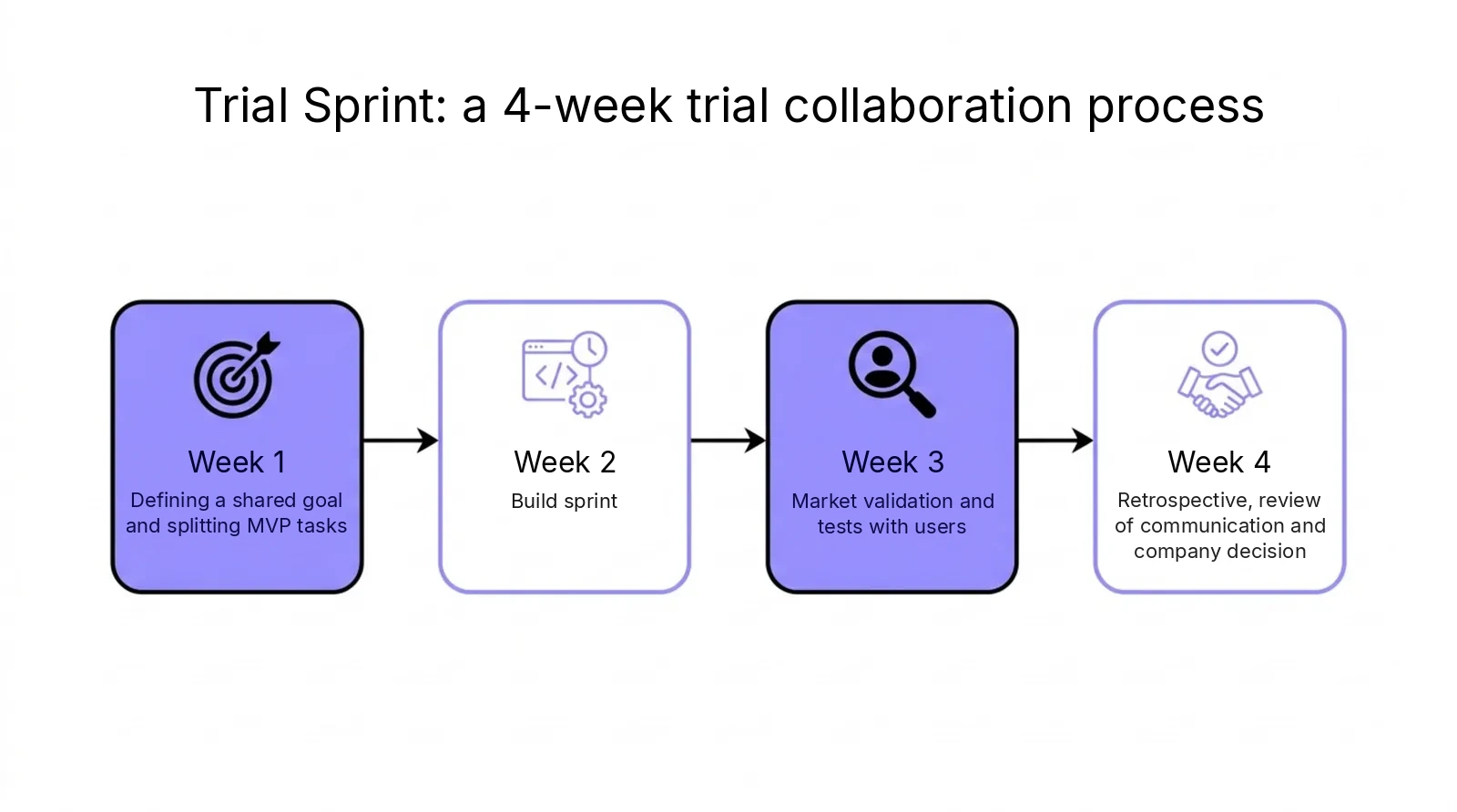
This is a key step before formally setting up a company or splitting equity. Plan a joint test sprint lasting 2 to 4 weeks with a clear, measurable goal. It could be:
- Building and launching a simple prototype (MVP).
- Preparing a landing page and running validation tests with users.
- Conducting 15 in-depth interviews (customer discovery) with potential customers.
- Building a financial model and the technical architecture.
During this mini-project, observe how things work in practice: whether tasks are delivered on time, how you deal with unexpected obstacles and what your everyday working communication looks like. A practical test tells you more about a partner than hours of conversation.
The importance of references and talking to former colleagues
Ask for contact details of 2-3 people who have worked with the candidate in the past - ideally direct managers or people who delivered joint projects with them under time pressure. Ask directly:
- How does the candidate behave under heavy stress and delays?
- What are their biggest professional limitations?
- Would the referee go into business with them again?
Common mistakes when choosing a co-founder and how to avoid them
Mistakes made at the early stage of building a founding team cost the most. It is worth knowing the typical traps so you don't repeat other founders' mistakes.
Deciding too quickly
The urge to get moving on the product often leads founders to formalise the partnership right away with the first willing person. Haste can be fatal. Give yourself time to test the fit in practice - 2-3 months of working together before signing the articles of association is a safe standard.
Choosing partners with very similar profiles
We naturally gravitate towards people who think like us. However, if two developers with similar skills meet in a project, the company will quickly lack sales and operational skills. Look for people who bring to the team what you cannot do yourself.
No clear agreement on duties and equity
Putting off the equity question ("we'll work it out once the product starts making money") is a straight road to destroying the relationship. Equity, roles and responsibilities must be named explicitly at the very beginning, ideally using tools that make it easier to calculate contributions objectively (e.g. dynamic equity split models).
Ignoring formal and legal issues and contracts
Relying on verbal agreements in a tech business carries huge risk. Without formalised rules on the transfer of copyright, exiting the company or making key decisions, later fundraising becomes impossible and VC investors are put off.
Key legal aspects and securing the partnership
When, after testing, you decide to formalise the company, have the documents reviewed by a lawyer with real experience in startup transactions.
Founders' agreement: the most important clauses it must contain
A good founders' agreement (Founders' Agreement / Shareholders' Agreement) precisely regulates how the business operates. Its key elements are:
- Division of roles and powers: the scope of responsibility of the CEO, CTO and other board members.
- Equity split and ownership structure: a precise split of equity tied to commitment.
- Transfer of intellectual property rights (IP transfer): all code, patents, databases and materials created by the founders must belong 100% to the company, not to individuals.
- Reserved matters: decisions requiring unanimity (e.g. taking on large liabilities, issuing new shares, selling the company) vs. day-to-day operational decisions.
- Exit rules (Exit, Buy-Sell): procedures in case of a partner's resignation, illness or death.
- Confidentiality (NDA) and non-compete clauses: protecting the company's interests during the cooperation and after it ends.
Vesting and protection against losing equity
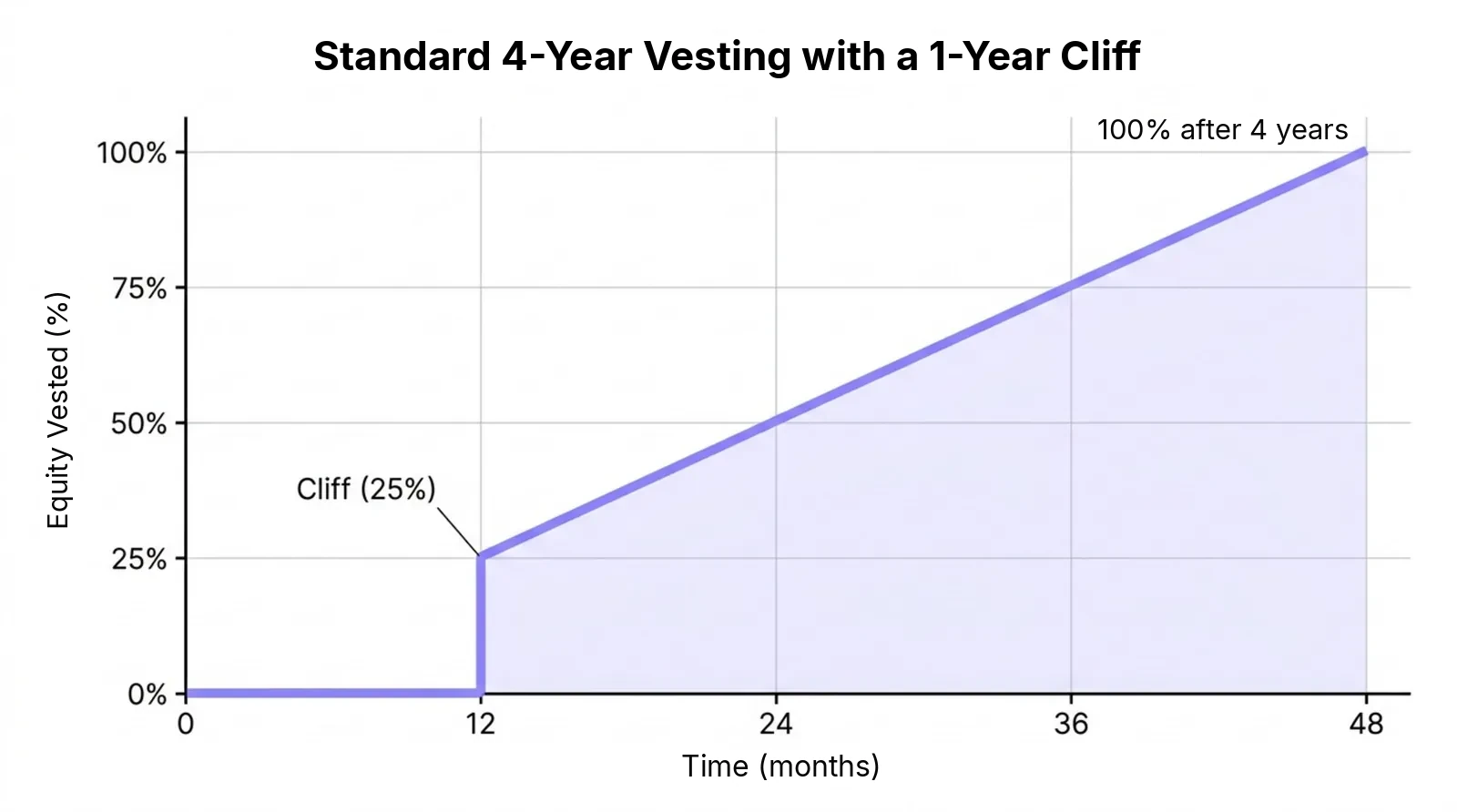
Vesting is a mechanism in which equity is acquired gradually over time or as specific milestones are reached. The market standard is a 4-year vesting period with a one-year "cliff" (after 12 months 25% of the equity vests, and the rest accrues in monthly or quarterly instalments over the following 3 years).
This mechanism protects the company from a situation in which one of the co-founders leaves after three months with 50% of the equity in their pocket, blocking the ability to raise funding and bring in new partners. The agreement should also clearly define Good Leaver status (leaving for reasons beyond one's control) and Bad Leaver status (leaving through the partner's fault or breach of the agreement), which determines the terms on which the company buys back the shares (reverse vesting).
Splitting capital, setting equity and areas of responsibility
The default 50/50 split, although it seems the most natural, leads to decision deadlock when there is no unanimity. It is worth considering proportions that reflect the actual initial contribution (e.g. 55/45, 60/40) or introducing a precise dispute resolution mechanism with the final say assigned to a specific area.
The agreement should clearly set out procedures for:
- Hiring and firing key employees.
- Raising subsequent funding rounds from business angels and VC funds.
- Setting the pay of board members.
- Handling a permanent decision deadlock (e.g. mediation, a buyout of shares at market value).
Practical tools and resources to support your co-founder search
Using proven market tools makes it easier to systematise the search for and vetting of candidates.
Online platforms and co-founder matching apps
It is worth keeping an eye on selected databases and networking tools:
- YC Co-founder Matching: an extensive platform with profiles verified by Y Combinator.
- AngelList / Wellfound: a database connecting founders, employees and investors from all over the world.
- CoFoundersLab: a global community that makes it easier to find business partners.
Checklist: the most important questions for a potential partner
Before making the final decision, have a structured conversation based on specific scenarios:
- Personal goals: are we building the company for a quick sale (trade sale), or are we creating a long-term, profitable bootstrapped business?
- Commitment: how many hours a week can you devote to the project over the next 12 months?
- Finances: at what level of savings do you need to start drawing a salary from the company?
- Crisis management: how do you react when, three months after launch, the product is not generating the expected traction?
- Work culture: how do we give each other critical feedback and how do we resolve strategic disputes?
Contract templates and legal checklists
To get an initial overview of the structure of the documentation, market templates will come in handy (e.g. Orrick Startup Forms, free Seedcamp templates or guidelines from venture capital funds). Remember, however, that the documents must be adapted to Polish commercial law by a legal adviser (radca prawny) or attorney (adwokat) specialising in startups.
Frequently asked questions about choosing a co-founder
Does every company need a co-founder?
No. There are profitable tech companies and SaaS projects built by single founders (solo founders). If you have a broad range of skills and make good use of external contractors or a fractional CTO, you can successfully start on your own. Having a partner, however, increases the pace of work, reduces the risk of burnout and makes conversations with investment funds easier.
How should equity be split between co-founders?
Instead of automatically splitting it equally, it is worth taking real contribution into account: who brought the original IP, who works full-time without pay, who contributes the initial capital and who is responsible for the key technology. Regardless of the percentage split you agree on, always introduce a 4-year vesting mechanism with a one-year cliff.
How do you check whether someone is fit to be a co-founder?
The best way to verify is to complete a joint, 2-4 week test project with hard deadlines. Watch the quality of the work delivered, communication in difficult moments and the reaction to unforeseen obstacles. Add reference conversations with people who have worked with the candidate in the past.
What is vesting and why is it important?
Vesting is the right to acquire equity in the company gradually over time or as project goals are achieved. It protects the company from a situation in which a partner quits after a short time while keeping a large block of shares. It allows the company to buy back the unvested equity pool and give it to someone who will actually grow the business.
Where NOT to look for a co-founder?
Avoid going into business purely on the basis of social liking or family ties if you have not had a chance to test each other working together under pressure. Random contacts from networking parties also require cool-headed vetting - a good conversation at the bar rarely guarantees professionalism and resilience to the difficulties of daily work on the product.
Summary: how to choose a co-founder while building solid foundations for your company
Choosing a co-founder is one of the most consequential decisions on your business journey. It is not about finding the ideal profile on paper, but about building a lasting partnership based on mutual trust, transparency and shared values.
In the reality of building a startup, the title of co-founder makes sense when the other person takes on full ownership responsibility and can operate under high uncertainty. If you only need someone to carry out specific tasks, a better solution may be to hire a contractor or use the support of external advisors.
Make sure all intellectual property, processes and market relationships are safely embedded in the company. Taking the time for observation, honest feedback, a trial project and formally securing the rules of cooperation in a founders' agreement is the best investment in the stable future of your startup.
Keep reading
All articles →
Startup Networking: Why Most Opportunities Come Through People, Not LinkedIn
Startup networking: why investments, partnerships and hires come through referrals and in-person meetings, and how to combine them with LinkedIn.
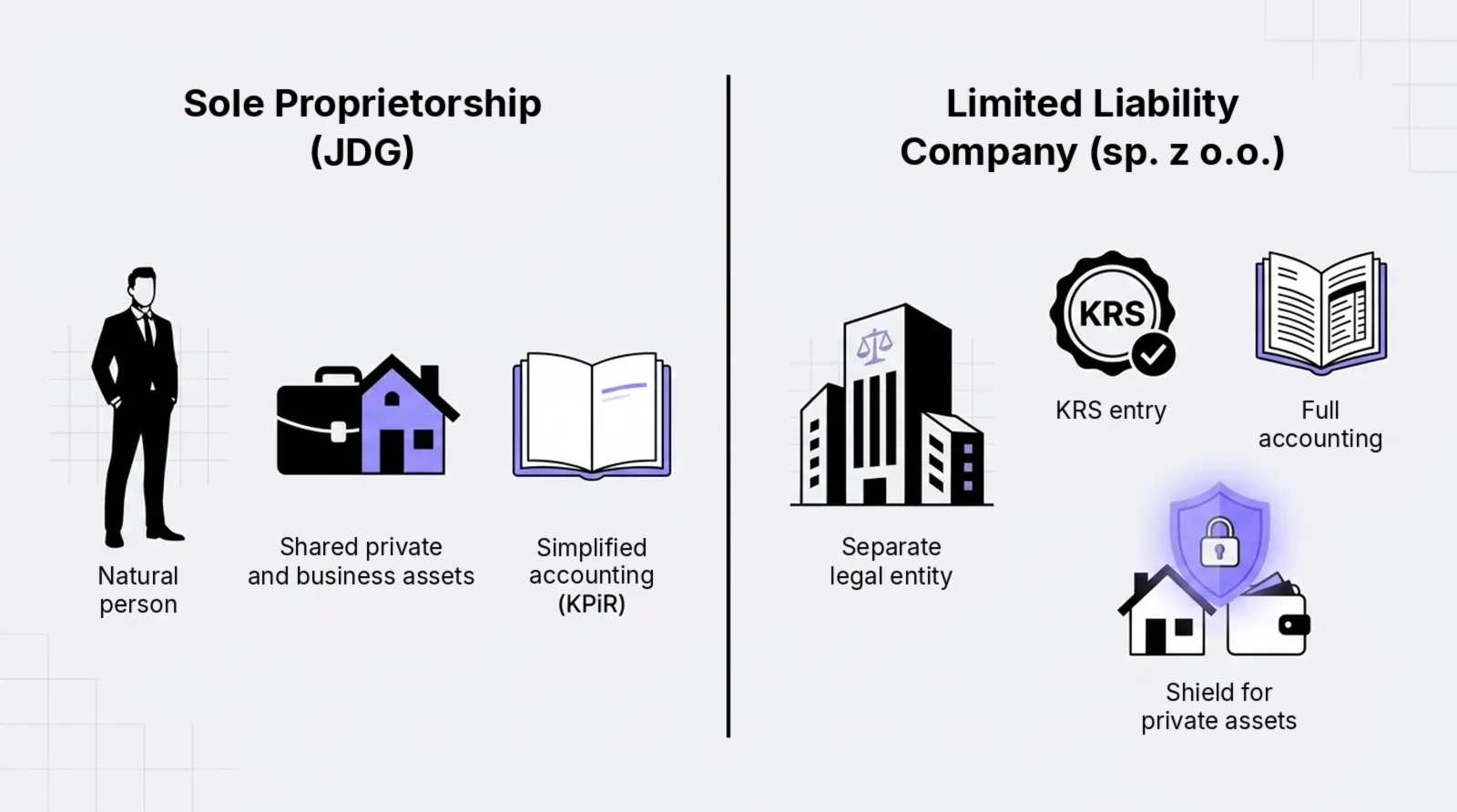
Cost of Starting a Company in Poland: Sole Proprietorship (JDG) vs sp. z o.o.
What does starting a company in Poland cost? Compare JDG and sp. z o.o.: registration fees, accounting, ZUS, taxes and a realistic startup budget.
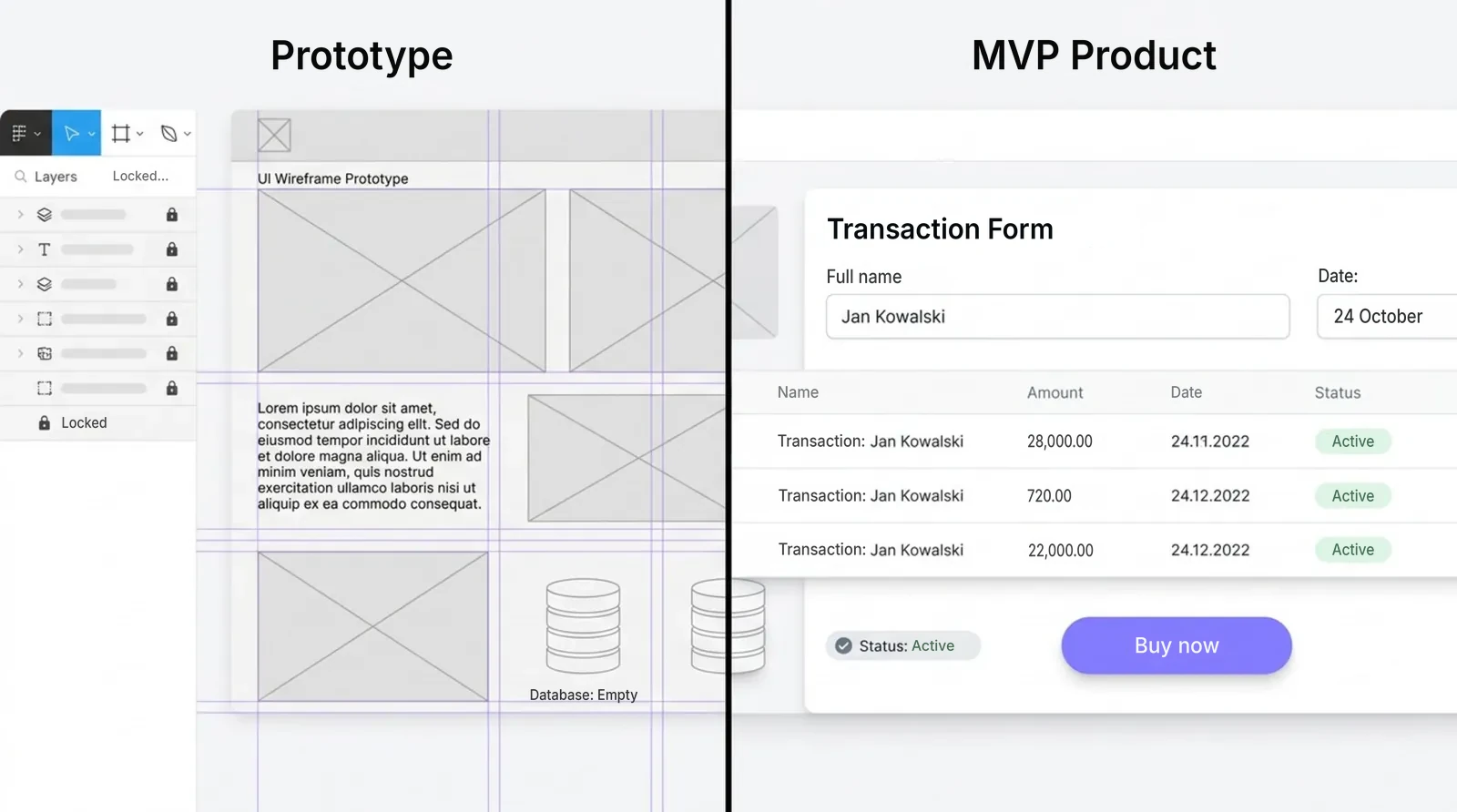
How to Build an MVP Without Losing Your Mind: A Practical Guide
How to build an MVP step by step: definition, process, key metrics, common mistakes, legal basics and examples of companies that started with an MVP.